Habenaria digitata
Habenaria digitata · Accepted scientific name
Scientific literature: Very Sparse (5 studies) · ★☆☆☆☆
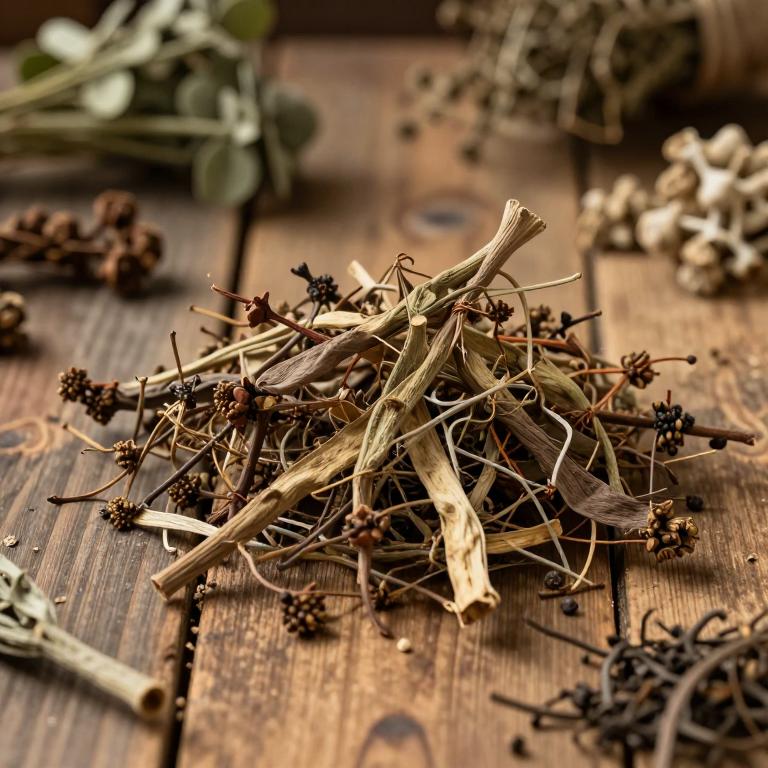
Habenaria digitata, scientifically known as Habenaria digitata, is a remarkable medicinal orchid valued in traditional healing practices. Renowned for its unique tuberous roots, this plant is frequently utilized in various cultures to treat ailments ranging from respiratory issues to hormonal imbalances, showcasing the profound intersection of botany and medicine.
- Family
- Orchidaceae
- Native range
- Asia-Tropical
- Parts used
- Not available
- Common names
- Not available
- Scientific synonyms
- Habenaria Travancorica · Bonatea Benghalensis · 3 more
Names and Synonyms
Scientific Names
Accepted name
Habenaria digitataSynonyms
- Habenaria travancorica
- Bonatea benghalensis
- Habenaria digitata var. travancorica
- Habenaria graveolens
- Habenaria trinervia
Sources: Wikidata
Taxonomical Classification
This plant belongs to the kingdom Plantae and the phylum Streptophyta, falling under the class Equisetopsida and subclass Magnoliidae. Within the order Asparagales, it is classified under the family Orchidaceae. Finally, it is identified by the genus Habenaria.
| Rank | Classification |
|---|---|
| Kingdom | Plantae |
| Phylum | Streptophyta |
| Class | Equisetopsida |
| Subclass | Magnoliidae |
| Order | Asparagales |
| Family | Orchidaceae |
| Genus | Habenaria |
Sources: The World Checklist of Vascular Plants (WCVP)
Distribution
This plant is widely distributed across several key regions within the Indian Subcontinent. Its presence can be specifically noted in the state of Assam and throughout the country of India. Furthermore, it is commonly found within the borders of Bangladesh. The species also inhabits the mountainous terrains of the East Himalaya. Additionally, its geographical range extends into the diverse landscapes of Nepal.
| Region | Area |
|---|---|
| Indian Subcontinent | Assam |
| Indian Subcontinent | Bangladesh |
| Indian Subcontinent | East Himalaya |
| Indian Subcontinent | India |
| Indian Subcontinent | Nepal |
| Indian Subcontinent | Pakistan |
| Indian Subcontinent | West Himalaya |
| Indo-China | Cambodia |
| Indo-China | Laos |
| Indo-China | Myanmar |
Sources: The World Checklist of Vascular Plants (WCVP)
Botanical Identification
Life history
The life history of Habenaria digitata is characterized by a perennial lifecycle, allowing the plant to persist through multiple growing seasons. As a member of the cryptophyte group, it survives unfavorable periods by keeping its vital organs protected beneath the soil surface. Specifically, its life form is classified as a geophyte, utilizing underground storage organs to endure environmental fluctuations and facilitate regrowth.
- Life form :
- geophyte
- Life form :
- cryptophyte
- Lifecycle :
- perennial
Morphology
The morphology of Habenaria digitata is characterized by its growth form as a non-woody herb, functioning as a self-supporting organism rather than a climber. It is a terrestrial species, existing independently without parasitic behavior, and it does not exhibit epiphytic tendencies. As a herbaceous plant, it lacks woody tissue, maintaining a soft, non-woody structure throughout its development.
- Aquatic :
- terrestrial
- Climber :
- self-supporting
- Epiphyte :
- terrestrial
- Growth form :
- herb
- Parasite :
- independent
- Woodiness :
- non-woody
Sources: Global Inventory of Floras and Traits (GIFT)
Activities
Habenaria digitata has 1 reported activities identified across 0 scientific publications and several other databases. The most consistently reported activities include Analgesic.
| Activity | Supporting sources | Consensus |
|---|---|---|
| Analgesic | 1 supporting sources | ★☆☆☆☆ |
Analgesic
- Journal of ethnopharmacology
Conditions
Habenaria digitata has 3 reported investigations on conditions identified across 0 scientific publications and several other databases. The most consistently reported conditions include analgesia, fever, inflammation.
| Condition | Supporting sources | Consensus |
|---|---|---|
| Analgesia | 1 supporting sources | ★☆☆☆☆ |
| Fever | 1 supporting sources | ★☆☆☆☆ |
| Inflammation | 1 supporting sources | ★☆☆☆☆ |
Analgesia
- Journal of ethnopharmacology
Fever
- Plants (Basel, Switzerland)
Inflammation
- Journal of ethnopharmacology
Preparations
Habenaria digitata has 1 reported preparations identified across 0 scientific publications and several other databases. The most consistently reported preparations include tuber juice.
| Preparation | Supporting sources | Consensus |
|---|---|---|
| Tuber juice | 1 supporting sources | ★☆☆☆☆ |
Tuber juice
- Plants (Basel, Switzerland)