Spanish cockle
Gypsophila vaccaria · Accepted scientific name
Scientific literature: Very Sparse (23 studies) · ★☆☆☆☆
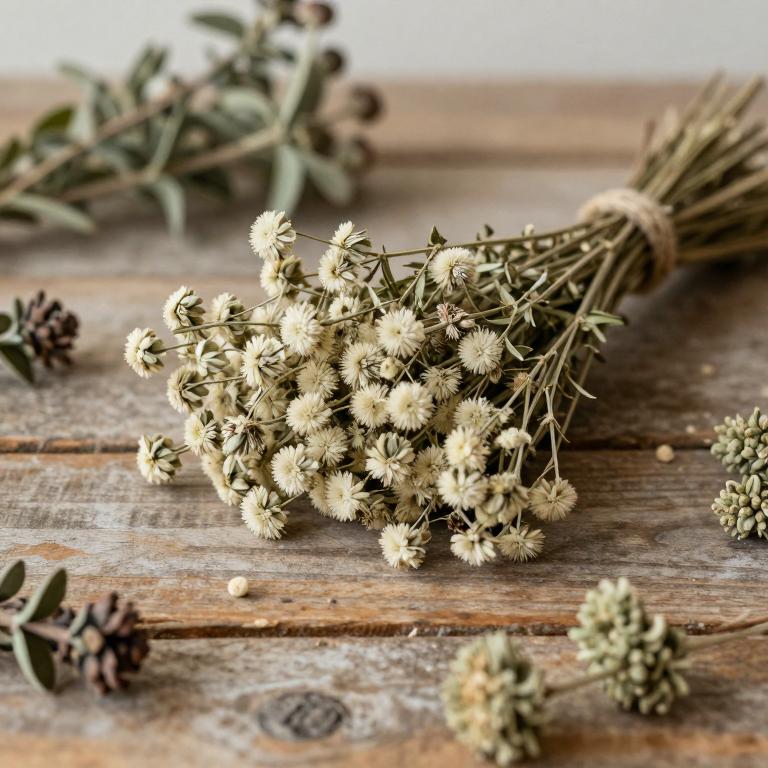
Spanish cockle, scientifically known as Gypsophila vaccaria, is a resilient herbaceous plant native to the Mediterranean region. Often found in disturbed soils, it holds significant ethnobotanical interest. Traditionally, various parts of the plant have been utilized in folk medicine to address inflammatory conditions and support overall systemic wellness.
Names and Synonyms
Common Names
- Spanish cockle
- Spanish cowherb
- cow soapwort
- cowbasil
- cowcockle
- cowherb
- China cockle
- bladder-soapwort
- cow-soapwort
Scientific Names
Accepted name
Gypsophila vaccariaSynonyms
- Lychnis vaccaria
- Vaccaria hispanica subsp. liniflora
- Vaccaria hispanica subsp. grandiflora
- Vaccaria hispanica var. liniflora
- Vaccaria hispanica var. vaccaria
- Vaccaria pyramidata var. grandiflora
- Vaccaria pyramidata subsp. grandiflora
- Vaccaria hispanica var. oxyodonta
- Vaccaria pyramidata var. oxyodonta
- Saponaria vaccaria var. grandiflora
- Dianthus inclusus
- Vaccaria inclusa
- Vaccaria pyramidata
- Vaccaria brachycalyx
- Vaccaria grandiflora
- Silene vaccaria
- Saponaria amplissima
- Saponaria inclusa
- Saponaria hispanica
- Saponaria liniflora
- Saponaria oxyodonta
- Saponaria perfoliata
- Saponaria pentagona
- Saponaria vaccaria
- Saponaria segetalis
- Vaccaria segetalis subsp. pyramidata
- Vaccaria hispanica subsp. vaccaria
- Vaccaria pyramidata var. liniflora
- Vaccaria hispanica
- Vaccaria hispanica subsp. oxyodonta
- Vaccaria hispanica subsp. pyramidata
- Saponaria vaccaria f. grohii
- Vaccaria hispanica var. grandiflora
- Vaccaria pyramidalis
- Vaccaria segetalis
- Vaccaria liniflora
- Vaccaria oxyodonta
- Vaccaria parviflora
- Vaccaria perfoliata
Regional and Traditional Names
German:
- Kuhlkraut
- Kuhkraut
- Saat-Kuhnelke
- Saat-Kuhnelke (Unterart)
French:
- saponaire des vaches
- vaccaire d'Espagne
- vachère
Sources: Wikidata, Catalogue of Life
Taxonomical Classification
This plant belongs to the kingdom Plantae and the phylum Streptophyta, falling under the class Equisetopsida and subclass Magnoliidae. Within the order Caryophyllales, it is classified under the family Caryophyllaceae. It is specifically identified by the genus Gypsophila, which includes the species Gypsophila vaccaria.
| Rank | Classification |
|---|---|
| Kingdom | Plantae |
| Phylum | Streptophyta |
| Class | Equisetopsida |
| Subclass | Magnoliidae |
| Order | Caryophyllales |
| Family | Caryophyllaceae |
| Genus | Gypsophila |
Sources: The World Checklist of Vascular Plants (WCVP)
Distribution
This plant exhibits a specific distribution pattern across several regions of Northern Europe. It can be found growing within the coastal and inland areas of Denmark. Its presence is also documented across the various landscapes of Finland. Furthermore, the species inhabits the territories of both Great Britain and Ireland. Finally, its geographical range extends northward into the country of Norway.
| Region | Area |
|---|---|
| Northern Europe | Denmark |
| Northern Europe | Finland |
| Northern Europe | Great Britain |
| Northern Europe | Ireland |
| Northern Europe | Norway |
| Northern Europe | Sweden |
| Middle Europe | Austria |
| Middle Europe | Belgium |
| Middle Europe | Czechia-Slovakia |
| Middle Europe | Germany |
Sources: The World Checklist of Vascular Plants (WCVP)
Botanical Identification
Ecology
The ecology of Gypsophila vaccaria is characterized by a broad altitudinal distribution, spanning from sea level up to a maximum elevation of 3000 m AMSL. This species demonstrates significant adaptability to various landscapes, frequently colonizing anthropogenic areas (Área Antrópica) and open grassland environments (Campo Limpo). Such habitat preferences suggest a capability to thrive in disturbed sites and sun-exposed, low-vegetation zones across a wide vertical gradient.
- Elevational range max:
- 3000 m AMSL
- Elevational range min:
- 0 m AMSL
- Habitat :
- Área Antrópica, Campo Limpo
Life history
The life history of Gypsophila vaccaria is characterized by its existence as an annual plant, completing its entire developmental cycle from germination to seed production within a single growing season. As a therophyte, its life form is defined by its reliance on seeds to survive unfavorable periods, with the vegetative structures dying off completely once the reproductive phase is concluded. This lifecycle is further defined by its deciduous nature, as the plant sheds its foliage as it reaches maturity or responds to seasonal changes. Through this strategy of rapid growth and seed dispersal, the species efficiently utilizes available resources to ensure the continuity of its population.
- Deciduousness :
- deciduous
- Life form :
- therophyte
- Lifecycle :
- annual
Morphology
The morphology of Gypsophila vaccaria is characterized by its growth form as a non-woody herb and forb. This terrestrial, independent plant exhibits an erect shoot orientation and is a self-supporting species rather than a climber or liana. In terms of stature, it is a relatively low-growing organism, with a plant height that typically ranges from a minimum of 0.15 m to a maximum of 1 m, maintaining an average height of approximately 0.532 m. As a non-epiphytic terrestrial plant, it lacks any parasitic or climbing dependencies, maintaining a stable, self-supporting structural habit.
- Aquatic :
- terrestrial
- Climber :
- self-supporting
- Epiphyte :
- terrestrial
- Growth form :
- herb
- Growth form :
- forb
- Parasite :
- independent
- Plant height max:
- 1 m
- Plant height mean:
- 0.532 m
- Plant height min:
- 0.15 m
- Shoot orientation :
- erect
- Woodiness :
- non-woody
Physiology
The physiology of Gypsophila vaccaria is characterized by a C3 photosynthetic pathway, indicating a reliance on the standard Calvin cycle for carbon fixation. The plant exhibits a non-carnivorous nutritional strategy, deriving all necessary nutrients from the soil through its root system. Its foliar morphology is defined by elliptic leaf forms, which vary significantly in dimensions; leaf length typically ranges from a minimum of 1.5 cm to a maximum of 9 cm, while leaf width fluctuates between 0.5 cm and 2 cm. These morphological variations contribute to a mean leaf size of approximately 26.8436 cm². Furthermore, the plant possesses a mean Specific Leaf Area (SLA) of 187.3 cm²/g, reflecting its internal leaf structure and its physiological approach to optimizing light interception and resource allocation.
- Carnivory :
- non-carnivorous
- Leaf form :
- elliptic
- Leaf length max:
- 9 cm
- Leaf length min:
- 1.5 cm
- Leaf size mean:
- 26.8436 cm²
- Leaf width max:
- 2 cm
- Leaf width min:
- 0.5 cm
- Photosynthetic pathway :
- C3
- Specific Leaf Area (SLA) mean:
- 187.3 cm²/g
Reproduction
The reproduction of Gypsophila vaccaria is characterized by a sexual reproductive cycle that relies on biotic pollination mechanisms. The flowering period typically commences in June and concludes in August, featuring pink-colored flowers that attract pollinators. The pollination syndrome is classified as biotic, specifically involving insects such as butterflies. Notably, self-fertilization is absent in this species, emphasizing the importance of cross-pollination. Once fertilization occurs, the plant develops a capsule as its fruit type, which is a dehiscent structure, meaning it opens at maturity to release its seeds. The seeds produced are relatively small, with a mean mass of 0.0060254 g, ranging from a minimum of 0.0028 g to a maximum of 0.0088 g. For the spread of the next generation, the plant utilizes an anemochorous dispersal syndrome, where seeds are dispersed by the wind. There is no evidence of asexual reproduction in this species.
- Dehiscence :
- dehiscent
- Dispersal syndrome :
- anemochorous
- Flower colour :
- pink
- Flowering time :
- Jun
- Flowering time :
- Aug
- Fruit type :
- capsule
- Pollination syndrome :
- insect
- Pollination syndrome :
- butterfly
- Pollination syndrome :
- biotic
- Reproduction asexual :
- absent
- Seed mass max:
- 0.0088 g
- Seed mass mean:
- 0.0060254 g
- Seed mass min:
- 0.0028 g
- Self fertilization :
- absent
Sources: Global Inventory of Floras and Traits (GIFT)
Plant Parts
Gypsophila vaccaria has 1 reported plant parts identified across 7 scientific publications and several other databases that are studied for medicinal purposes. The most consistently reported plant part include seed.
| Plant part | Supporting sources | Consensus |
|---|---|---|
| Seed | 7 supporting sources | ★★★★☆ |
Seed
- Journal of Asian natural products research
- Journal of ethnopharmacology
- Frontiers in cellular and infection microbiology
- Zhongguo Zhong yao za zhi = Zhongguo zhongyao zazhi = China journal of Chinese materia medica
- Journal of natural products
View 2 additional sources
- Phytochemistry
- Archiv der Pharmazie
Chemicals
Gypsophila vaccaria has 10 reported phytochemicals identified across 7 scientific publications and several other databases. The most consistently reported chemicals include Dianoside G, Polysaccharide, Segetalin E, Vaccarin, Vaccaroid B.
| Chemical | Supporting sources | Consensus |
|---|---|---|
| Dianoside G | 1 supporting sources | ★☆☆☆☆ |
| Polysaccharide | 1 supporting sources | ★☆☆☆☆ |
| Segetalin E | 1 supporting sources | ★☆☆☆☆ |
| Vaccarin | 1 supporting sources | ★☆☆☆☆ |
| Vaccaroid B | 1 supporting sources | ★☆☆☆☆ |
| Vaccaroside A | 1 supporting sources | ★☆☆☆☆ |
| apigenin-6-C-arabinosylglucoside | 1 supporting sources | ★☆☆☆☆ |
| apigenin-6-C-glucosylglucoside | 1 supporting sources | ★☆☆☆☆ |
| segetoside C | 1 supporting sources | ★☆☆☆☆ |
| vaccaroid A | 1 supporting sources | ★☆☆☆☆ |
Dianoside G
- Journal of Asian natural products research
Polysaccharide
- Journal of ethnopharmacology
Segetalin E
- Phytochemistry
Vaccarin
- Zhongguo Zhong yao za zhi = Zhongguo zhongyao zazhi = China journal of Chinese materia medica
Vaccaroid B
- Phytochemistry
Vaccaroside A
- Journal of Asian natural products research
apigenin-6-C-arabinosylglucoside
- Zhongguo Zhong yao za zhi = Zhongguo zhongyao zazhi = China journal of Chinese materia medica
apigenin-6-C-glucosylglucoside
- Zhongguo Zhong yao za zhi = Zhongguo zhongyao zazhi = China journal of Chinese materia medica
segetoside C
- Journal of Asian natural products research
vaccaroid A
- Journal of Asian natural products research
Activities
Gypsophila vaccaria has 3 reported activities identified across 7 scientific publications and several other databases. The most consistently reported activities include Analgesic, Antioxidant, Antitumor.
| Activity | Supporting sources | Consensus |
|---|---|---|
| Analgesic | 1 supporting sources | ★☆☆☆☆ |
| Antioxidant | 1 supporting sources | ★☆☆☆☆ |
| Antitumor | 1 supporting sources | ★☆☆☆☆ |
Analgesic
- Pakistan journal of pharmaceutical sciences
Antioxidant
- Frontiers in chemistry
Antitumor
- Frontiers in chemistry
Preparations
Gypsophila vaccaria has 4 reported preparations identified across 7 scientific publications and several other databases. The most consistently reported preparations include seeds, Aqueous extracts, alcohol extract of the seeds of V. segetalis, polysaccharides from Vaccaria segetalis seeds.
| Preparation | Supporting sources | Consensus |
|---|---|---|
| Seeds | 2 supporting sources | ★☆☆☆☆ |
| Aqueous extracts | 1 supporting sources | ★☆☆☆☆ |
| Alcohol extract of the seeds of v. segetalis | 1 supporting sources | ★☆☆☆☆ |
| Polysaccharides from vaccaria segetalis seeds | 1 supporting sources | ★☆☆☆☆ |
Seeds
- Journal of Asian natural products research
- Phytochemistry
Aqueous extracts
- Phytotherapy research : PTR
Alcohol extract of the seeds of v. segetalis
- Zhongguo Zhong yao za zhi = Zhongguo zhongyao zazhi = China journal of Chinese materia medica
Polysaccharides from vaccaria segetalis seeds
- Frontiers in cellular and infection microbiology