Gypsophila laricina
Gypsophila laricina · Accepted scientific name
Scientific literature: Very Sparse (2 studies) · ★☆☆☆☆
Gypsophila laricina, scientifically known as Gypsophila laricina, is a delicate perennial herb native to North American wetlands. Often called bladder campion, this plant is characterized by its airy, white blossoms. While primarily valued for its ornamental beauty, it holds traditional significance within specific botanical studies and local ecosystems.
- Family
- Caryophyllaceae
- Native range
- Asia-Temperate
- Parts used
- Not available
- Common names
- Not available
- Scientific synonyms
- Gypsophila Sphaerocephala Var. Cappadocica · Gypsophila Exaltata · 2 more
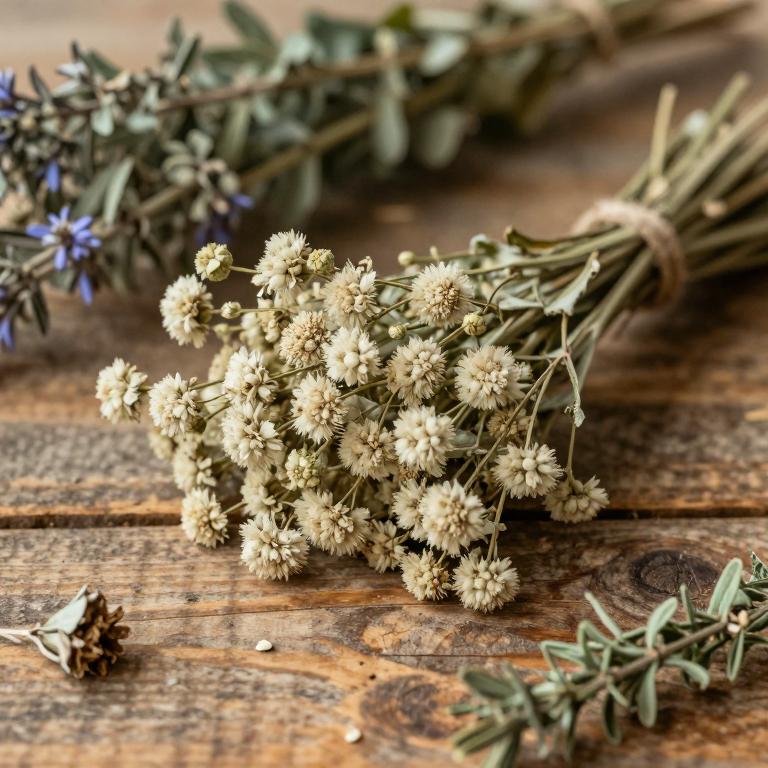
Names and Synonyms
Scientific Names
Accepted name
Gypsophila laricinaSynonyms
- Gypsophila sphaerocephala var. cappadocica
- Gypsophila exaltata
- Gypsophila cappadocica
- Gypsophila sphaerocephala
Sources: Wikidata, Catalogue of Life
Taxonomical Classification
This plant belongs to the kingdom Plantae and the phylum Streptophyta, falling within the class Equisetopsida and the subclass Magnoliidae. It is classified under the order Caryophyllales and the family Caryophyllaceae. Ultimately, its taxonomic identity is defined by its membership in the genus Gypsophila.
| Rank | Classification |
|---|---|
| Kingdom | Plantae |
| Phylum | Streptophyta |
| Class | Equisetopsida |
| Subclass | Magnoliidae |
| Order | Caryophyllales |
| Family | Caryophyllaceae |
| Genus | Gypsophila |
Sources: The World Checklist of Vascular Plants (WCVP)
Distribution
This plant, known scientifically as Gypsophila laricina, exhibits a specific geographical range within the Western Asia region. Its distribution is notably recorded across several distinct countries in this part of the world. Specifically, it can be found growing in the natural landscapes of Iran. Additionally, the species is present within the borders of Iraq. Finally, its occurrence is also documented throughout the territory of Türkiye.
| Region | Area |
|---|---|
| Western Asia | Iran |
| Western Asia | Iraq |
| Western Asia | Türkiye |
Sources: The World Checklist of Vascular Plants (WCVP)
Botanical Identification
Ecology
The ecology of Gypsophila laricina is defined by its preference for specialized, well-drained environments, specifically inhabiting stony places where competition from more vigorous vegetation is limited. These rocky substrates provide the necessary aeration and drainage required for its root systems to thrive. By occupying these nutrient-poor, mineral-rich niches, the species avoids the dense shade and high competition found in more fertile soils, allowing it to establish itself within specific geological formations. This preference for stony terrain dictates its distribution patterns, linking its presence to areas where soil development is minimal and geological exposure is high.
- Habitat :
- stony places
Life history
The life history of Gypsophila laricina is characterized by its classification as a perennial species, meaning it persists through multiple growing seasons rather than completing its cycle in a single year. This perennial nature allows the plant to establish a stable presence within its ecological niche, often relying on a robust root system to survive periods of dormancy. Throughout its life cycle, it undergoes seasonal stages of vegetative growth, flowering, and seed production, which can vary depending on environmental conditions and resource availability. As a perennial, it possesses the capacity to regrow from its established structures after the winter months, contributing to its long-term survival and ability to colonize specific habitats over successive years.
- Lifecycle :
- perennial
Morphology
The morphology of Gypsophila laricina is characterized by an erect shoot orientation, where the stems grow upright from the base. The plant maintains a relatively compact stature, with a height that typically ranges from a minimum of 0.4 m to a maximum of 0.6 m.
- Plant height max:
- 0.6 m
- Plant height min:
- 0.4 m
- Shoot orientation :
- erect
Reproduction
The reproduction of Gypsophila laricina is characterized by a specific seasonal flowering window that facilitates its reproductive cycle. The flowering process typically commences in June and continues through the month of July. This relatively brief reproductive period is timed to coincide with specific environmental conditions necessary for successful pollination and seed development.
- Flowering time :
- Jun
- Flowering time :
- Jul
Sources: Global Inventory of Floras and Traits (GIFT)
Chemicals
Gypsophila laricina has 2 reported phytochemicals identified across 0 scientific publications and several other databases. The most consistently reported chemicals include HENTRIACONTANE, Hexadecanoic acid.
| Chemical | Supporting sources | Consensus |
|---|---|---|
| HENTRIACONTANE | 1 supporting sources | ★☆☆☆☆ |
| Hexadecanoic acid | 1 supporting sources | ★☆☆☆☆ |
HENTRIACONTANE
- Turkish journal of pharmaceutical sciences
Hexadecanoic acid
- Turkish journal of pharmaceutical sciences