Gynura nepalensis
Gynura nepalensis · Accepted scientific name
Scientific literature: Very Sparse (2 studies) · ★☆☆☆☆
Gynura nepalesis, scientifically known as Gynura nepalesis, is a versatile medicinal herb native to the Himalayan region. Renowned for its potent bioactive compounds, this plant is traditionally used to treat inflammation, digestive issues, and skin ailments. Its unique nutritional profile makes it a valuable resource in traditional herbal medicine.
- Family
- Asteraceae
- Native range
- Asia-Temperate
- Parts used
- Not available
- Common names
- Not available
- Scientific synonyms
- Senecio Foetens · Cacalia Flava · 6 more
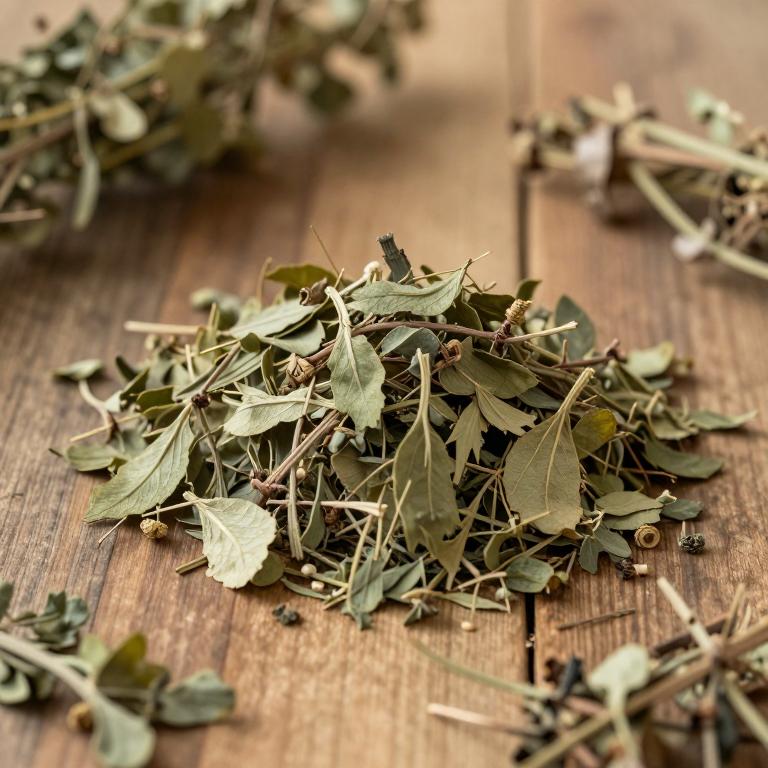
Names and Synonyms
Scientific Names
Accepted name
Gynura nepalensisSynonyms
- Senecio foetens
- Cacalia flava
- Cacalia foetens
- Gynura dielsii
- Gynura foetens
- Gynura nudibasis
- Senecio nepalensis
- Senecio nudibasis
Sources: Wikidata, Catalogue of Life
Taxonomical Classification
This plant belongs to the kingdom Plantae and is classified under the phylum Streptophyta and class Equisetopsida. Within the subclass Magnoliidae, it is ordered as Asterales and situated in the family Asteraceae. Ultimately, its taxonomic identity is defined by the genus Gynura, specifically the species Gynura nepaliensis.
| Rank | Classification |
|---|---|
| Kingdom | Plantae |
| Phylum | Streptophyta |
| Class | Equisetopsida |
| Subclass | Magnoliidae |
| Order | Asterales |
| Family | Asteraceae |
| Genus | Gynura |
Sources: The World Checklist of Vascular Plants (WCVP)
Distribution
This plant exhibits a wide distribution across several key regions in Asia. In China, its presence is specifically noted within the South-Central territories. Within the Indian Subcontinent, it can be found spanning from the state of Assam to the country of Bangladesh. Furthermore, the species is well-established throughout the East Himalaya region. Finally, its range extends significantly into the mountainous landscapes of Nepal.
| Region | Area |
|---|---|
| China | China South-Central |
| Indian Subcontinent | Assam |
| Indian Subcontinent | Bangladesh |
| Indian Subcontinent | East Himalaya |
| Indian Subcontinent | Nepal |
| Indian Subcontinent | West Himalaya |
| Indo-China | Myanmar |
| Indo-China | Thailand |
Sources: The World Checklist of Vascular Plants (WCVP)
Botanical Identification
Ecology
The ecology of Gynura nepaliensis is characterized by a broad altitudinal distribution across diverse montane landscapes. This species is found inhabiting various terrains at elevations ranging from a minimum of 200 m AMSL to a maximum of 2100 m AMSL. Within this vertical gradient, the plant maintains a mean elevation of approximately 1600 m AMSL, suggesting a preference for mid-elevation ecological zones where it can thrive amidst specific microclimatic conditions.
- Elevational range max:
- 2100 m AMSL
- Elevational range mean:
- 1600 m AMSL
- Elevational range min:
- 200 m AMSL
Life history
The life history of Gynura nepalsis is characterized by its status as a perennial organism, allowing it to persist through multiple growing seasons. As a perennial species, it does not complete its life cycle in a single year like annuals or two years like biennials, but instead establishes a long-term presence in its habitat. This enduring lifecycle enables the plant to develop robust vegetative structures and invest energy into reproductive cycles over several years, often adapting its growth patterns to the specific environmental stability of its native ecosystem.
- Lifecycle :
- perennial
Morphology
The morphology of Gynura nepaliensis is characterized by a non-woody, herbaceous growth form, functioning as a self-supporting herb rather than a climber or a liana. As an independent organism, it does not exhibit parasitic or epiphytic behavior, maintaining a strictly terrestrial existence. The plant typically reaches a height ranging from a minimum of 0.3 m to a maximum of 0.45 m, with an average plant height of approximately 0.5875 m.
- Aquatic :
- terrestrial
- Climber :
- self-supporting
- Epiphyte :
- terrestrial
- Growth form :
- herb
- Parasite :
- independent
- Plant height max:
- 0.45 m
- Plant height mean:
- 0.5875 m
- Plant height min:
- 0.3 m
- Woodiness :
- non-woody
Physiology
The physiology of Gynura nepalesis is characterized by distinct morphological variations in its foliage and specific metabolic limitations regarding nutrient acquisition. The leaves exhibit a wide range of dimensions, with lengths varying from a minimum of 3 cm to a maximum of 20 cm, while maintaining a mean leaf length of approximately 11.5 cm. In terms of lateral expansion, the leaf width ranges from a minimum of 1 cm to a maximum of 6 cm, resulting in a mean width of 3.5 cm. These structural dimensions influence the plant's photosynthetic surface area and transpiration rates. Furthermore, from a biochemical and symbiotic perspective, the plant does not function as a nitrogen fixer, meaning it lacks the physiological capacity to convert atmospheric nitrogen into a usable form and must rely on the uptake of available nitrogen from the soil substrate.
- Leaf length max:
- 20 cm
- Leaf length mean:
- 11.5 cm
- Leaf length min:
- 3 cm
- Leaf width max:
- 6 cm
- Leaf width mean:
- 3.5 cm
- Leaf width min:
- 1 cm
- Nitrogen fixer :
- no
Reproduction
Reproduction in Gynura nepalesis is characterized by the development of specialized fruit structures that follow a specific morphological range. The fruit length of this species exhibits measurable variation, with a recorded minimum length of 0.3 cm and a maximum length reaching up to 0.4 cm. On average, the fruit maintains a mean length of 0.35 cm, representing the central tendency of its reproductive output. These small-scale dimensions are critical parameters in understanding the dispersal potential and developmental consistency of the plant's progeny.
- Fruit length max:
- 0.4 cm
- Fruit length mean:
- 0.35 cm
- Fruit length min:
- 0.3 cm
Sources: Global Inventory of Floras and Traits (GIFT)
Activities
Gynura nepalensis has 2 reported activities identified across 0 scientific publications and several other databases. The most consistently reported activities include Antioxidant, Hepatoprotective.
| Activity | Supporting sources | Consensus |
|---|---|---|
| Antioxidant | 1 supporting sources | ★☆☆☆☆ |
| Hepatoprotective | 1 supporting sources | ★☆☆☆☆ |
Antioxidant
- Molecules (Basel, Switzerland)
Hepatoprotective
- Molecules (Basel, Switzerland)
Preparations
Gynura nepalensis has 1 reported preparations identified across 0 scientific publications and several other databases. The most consistently reported preparations include ethanol extracts.
| Preparation | Supporting sources | Consensus |
|---|---|---|
| Ethanol extracts | 1 supporting sources | ★☆☆☆☆ |
Ethanol extracts
- Frontiers in bioscience (Scholar edition)