Gynura elliptica
Gynura elliptica · Accepted scientific name
Scientific literature: Very Sparse (5 studies) · ★☆☆☆☆
Gynura elliptica, scientifically known as Gynura elliptica, is a versatile medicinal herb revered in traditional Southeast Asian medicine. Often referred to as "heartleaf," this plant is prized for its nutritional density and therapeutic properties, frequently used to support digestive health, reduce inflammation, and promote overall vitality through its bioactive compounds.
- Family
- Asteraceae
- Native range
- Asia-Temperate
- Parts used
- Root
- Common names
- Not available
- Scientific synonyms
- Not available
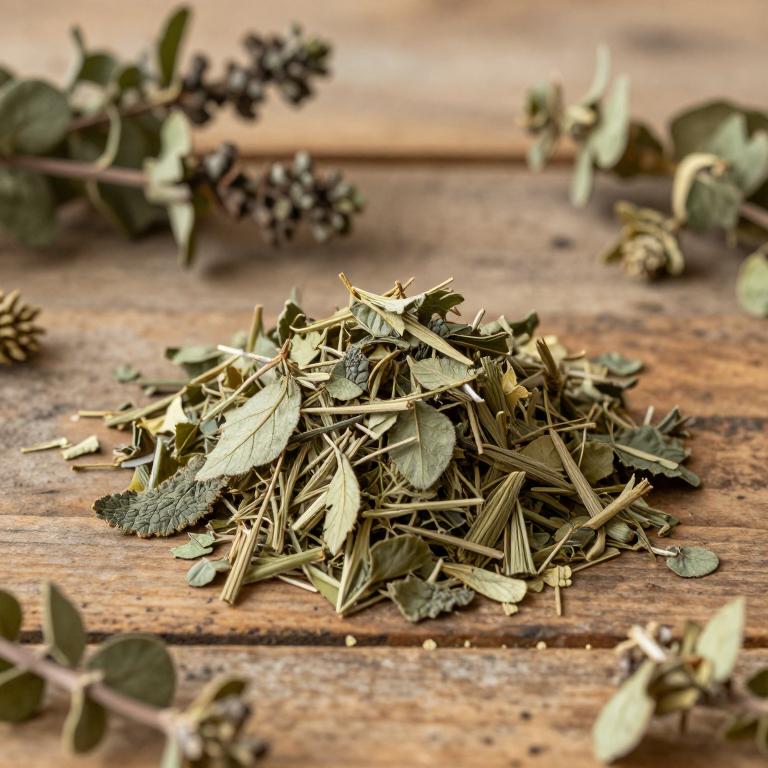
Names and Synonyms
Scientific Names
Accepted name
Gynura ellipticaSources: Wikidata, Catalogue of Life
Taxonomical Classification
This plant belongs to the kingdom Plantae and is classified under the phylum Streptophyta and class Equisetopsida. Within the subclass Magnoliidae, it is further organized into the order Asterales and the family Asteraceae. Finally, it is identified by its specific genus, Gynura.
| Rank | Classification |
|---|---|
| Kingdom | Plantae |
| Phylum | Streptophyta |
| Class | Equisetopsida |
| Subclass | Magnoliidae |
| Order | Asterales |
| Family | Asteraceae |
| Genus | Gynura |
Sources: The World Checklist of Vascular Plants (WCVP)
Distribution
This plant exhibits a specific geographical distribution concentrated within certain tropical and subtropical regions. In Eastern Asia, its presence is notably documented in Taiwan. Moving towards the Malesia region, the species can also be found in the Philippines. These locations represent the primary areas where the plant naturally occurs. Consequently, its habitat is limited to these specific island territories in the Western Pacific.
| Region | Area |
|---|---|
| Eastern Asia | Taiwan |
| Malesia | Philippines |
Sources: The World Checklist of Vascular Plants (WCVP)
Botanical Identification
Morphology
The morphology of Gynura elliptica is characterized by its growth form as a non-woody herb. As a self-supporting plant, it does not require external structures for climbing, maintaining a consistent herbaceous structure throughout its development. In terms of stature, the plant typically reaches a height ranging from a minimum of 0.35 m to a maximum of 0.5 m, with an average plant height of approximately 0.425 m.
- Climber :
- self-supporting
- Growth form :
- herb
- Plant height max:
- 0.5 m
- Plant height mean:
- 0.425 m
- Plant height min:
- 0.35 m
- Woodiness :
- non-woody
Physiology
The physiological profile of Gynura elliptica is characterized by distinct morphological variations in its foliar development, which directly influence its photosynthetic surface area and metabolic capacity. The leaf dimensions exhibit significant plasticity, with leaf length ranging from a minimum of 4 cm to a maximum of 12 cm, maintaining an average length of approximately 8 cm. This longitudinal growth is complemented by a varying width, where leaf width fluctuates between a minimum of 2 cm and a maximum of 6 cm, resulting in a mean width of 4 cm. These structural dimensions suggest a specialized adaptation for light interception and gas exchange, as the variance in leaf size allows the plant to optimize its physiological response to varying environmental conditions and light intensities.
- Leaf length max:
- 12 cm
- Leaf length mean:
- 8 cm
- Leaf length min:
- 4 cm
- Leaf width max:
- 6 cm
- Leaf width mean:
- 4 cm
- Leaf width min:
- 2 cm
Sources: Global Inventory of Floras and Traits (GIFT)
Plant Parts
Gynura elliptica has 1 reported plant parts identified across 1 scientific publications and several other databases that are studied for medicinal purposes. The most consistently reported plant part include root.
| Plant part | Supporting sources | Consensus |
|---|---|---|
| Root | 1 supporting sources | ★☆☆☆☆ |
Root
- Phytochemistry
Chemicals
Gynura elliptica has 4 reported phytochemicals identified across 1 scientific publications and several other databases. The most consistently reported chemicals include (+)-Gynunone, 6-acetyl-2,2-dimethylchroman-4-one, Chromane, vanillin.
| Chemical | Supporting sources | Consensus |
|---|---|---|
| (+)-Gynunone | 1 supporting sources | ★☆☆☆☆ |
| 6-acetyl-2,2-dimethylchroman-4-one | 1 supporting sources | ★☆☆☆☆ |
| Chromane | 1 supporting sources | ★☆☆☆☆ |
| vanillin | 1 supporting sources | ★☆☆☆☆ |
(+)-Gynunone
- Phytochemistry
6-acetyl-2,2-dimethylchroman-4-one
- Phytochemistry
Chromane
- Phytochemistry
vanillin
- Phytochemistry
Preparations
Gynura elliptica has 1 reported preparations identified across 1 scientific publications and several other databases. The most consistently reported preparations include CHCl3 fraction of the roots.
| Preparation | Supporting sources | Consensus |
|---|---|---|
| Chcl3 fraction of the roots | 1 supporting sources | ★☆☆☆☆ |
Chcl3 fraction of the roots
- Phytochemistry