Fish Eyes
Gynotroches axillaris · Accepted scientific name
Scientific literature: Very Sparse (9 studies) · ★☆☆☆☆
Fish Eyes, scientifically known as Gynotroches axillaris, is a versatile medicinal shrub native to tropical coastal regions. Renowned for its unique appearance, this plant is deeply embedded in traditional medicine. It is frequently utilized for its potent antimicrobial, anti-inflammatory, and healing properties to treat various skin and systemic ailments.
- Family
- Rhizophoraceae
- Native range
- Asia-Tropical
- Parts used
- Leaf
- Common names
- Fish Eyes
- Scientific synonyms
- Gynotroches Dryptopetala Var. Lanceolata · Gynotroches Dryptopetala · 7 more
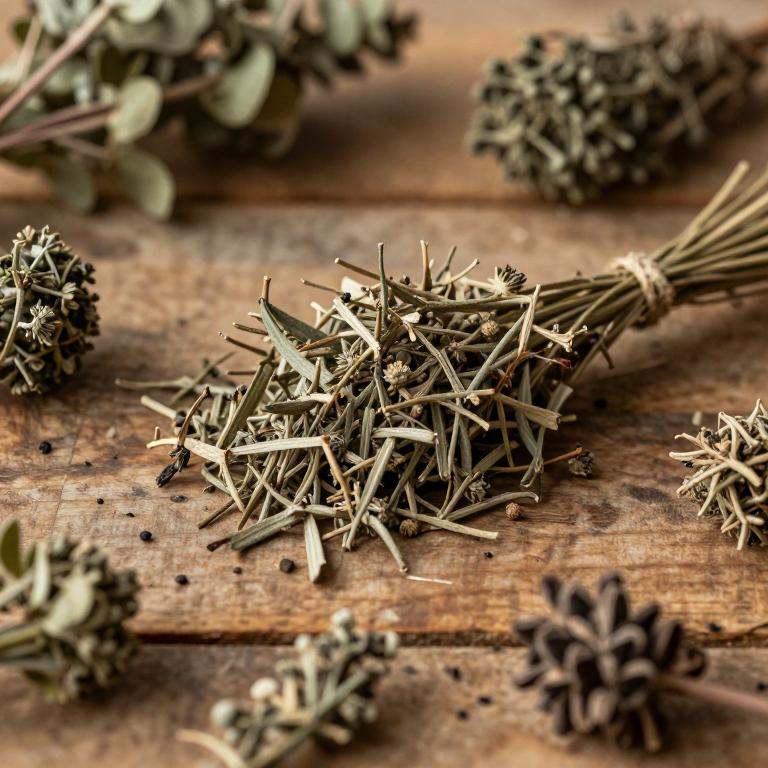
Names and Synonyms
Common Names
- Fish Eyes
Scientific Names
Accepted name
Gynotroches axillarisSynonyms
- Gynotroches dryptopetala var. lanceolata
- Gynotroches dryptopetala
- Gynotroches lanceolata
- Gynotroches micrantha
- Gynotroches parvifolia
- Gynotroches puberula
- Gynotroches reticulata
- Dryptopetalum coriaceum
- Gynotroches micrantha var. tuberculata
Sources: Wikidata, Catalogue of Life
Taxonomical Classification
This plant belongs to the kingdom Plantae and is classified under the phylum Streptophyta and the class Equisetopsida. Within the subclass Magnoliidae, it is further organized under the order Malpighiales and the family Rhizophoraceae. Finally, it is categorized under the genus Gynotroches.
| Rank | Classification |
|---|---|
| Kingdom | Plantae |
| Phylum | Streptophyta |
| Class | Equisetopsida |
| Subclass | Magnoliidae |
| Order | Malpighiales |
| Family | Rhizophoraceae |
| Genus | Gynotroches |
Sources: The World Checklist of Vascular Plants (WCVP)
Distribution
This plant exhibits a diverse geographical distribution spanning across several key regions in Asia. Within the Indo-China zone, it can be found in Myanmar, Thailand, and the Nicobar Islands. Its presence also extends into the Malesia region, where it is documented in Borneo. Additionally, the species is located on the island of Jawa. Collectively, these locations highlight the plant's wide range across both mainland and island ecosystems.
| Region | Area |
|---|---|
| Indo-China | Myanmar |
| Indo-China | Nicobar Is. |
| Indo-China | Thailand |
| Malesia | Borneo |
| Malesia | Jawa |
| Malesia | Malaya |
| Malesia | Maluku |
| Malesia | Philippines |
| Malesia | Sulawesi |
| Malesia | Sumatera |
Sources: The World Checklist of Vascular Plants (WCVP)
Botanical Identification
Morphology
The morphology of Gynotrochus axillaris is characterized by a woody structure, manifesting primarily as a tree in its growth form. Although it exhibits characteristics associated with climbing habits, specifically acting as a self-supporting liana or vine, it maintains a robust, woody constitution. In terms of its ecological positioning and life habit, the plant is strictly terrestrial rather than epiphytic, lacking any hemi-epiphytic or obligate epiphytic tendencies.
- Climber :
- self-supporting
- Epiphyte :
- terrestrial
- Growth form :
- tree
- Woodiness :
- woody
Physiology
The physiology of Gynotroches axillaris is characterized by a C3 photosynthetic pathway, which dictates its carbon fixation processes and metabolic efficiency. The morphological aspects of its foliage reflect specific adaptations in surface area and structural density, with leaves exhibiting a mean length of 13.9 cm and a mean width of 4.8 cm. Furthermore, the leaf structure is notably thin, maintaining a mean thickness of 0.029 mm, which influences its gas exchange capabilities and transpiration rates within its ecological niche.
- Leaf length mean:
- 13.9 cm
- Leaf thickness mean:
- 0.029 mm
- Leaf width mean:
- 4.8 cm
- Photosynthetic pathway :
- C3
Reproduction
The reproduction of Gynotroches axillaris is characterized by the production of fleshy fruits that serve as the primary vessel for seed dispersal. The seeds contained within these fleshy fruits are remarkably small and uniform in their physical dimensions. On average, a single seed possesses a mass of 0.00033 g, a value that represents both the minimum and maximum recorded mass for the species. In terms of morphology, the seeds exhibit a mean length of 1.5 mm, with a maximum width of 1 mm and a maximum height of 1 mm. The volumetric profile of the seeds is also highly consistent, maintaining a mean, minimum, and maximum seed volume of 0.79 mm³. These specific morphological traits highlight a highly standardized reproductive output geared toward efficient distribution through its fleshy fruit structures.
- Fruit dryness :
- fleshy
- Seed height max:
- 1 mm
- Seed length mean:
- 1.5 mm
- Seed mass mean:
- 0.00033 g
- Seed volume max:
- 0.79 mm³
- Seed width max:
- 1 mm
Sources: Global Inventory of Floras and Traits (GIFT)
Plant Parts
Gynotroches axillaris has 1 reported plant parts identified across 1 scientific publications and several other databases that are studied for medicinal purposes. The most consistently reported plant part include leaf.
| Plant part | Supporting sources | Consensus |
|---|---|---|
| Leaf | 1 supporting sources | ★☆☆☆☆ |
Leaf
- Pakistan journal of pharmaceutical sciences
Chemicals
Gynotroches axillaris has 5 reported phytochemicals identified across 1 scientific publications and several other databases. The most consistently reported chemicals include Epicatechin, MYRISTIC ACID, palmitic acid, quercitrin, squalene.
| Chemical | Supporting sources | Consensus |
|---|---|---|
| Epicatechin | 1 supporting sources | ★☆☆☆☆ |
| MYRISTIC ACID | 1 supporting sources | ★☆☆☆☆ |
| palmitic acid | 1 supporting sources | ★☆☆☆☆ |
| quercitrin | 1 supporting sources | ★☆☆☆☆ |
| squalene | 1 supporting sources | ★☆☆☆☆ |
Epicatechin
- Pakistan journal of pharmaceutical sciences
MYRISTIC ACID
- Pakistan journal of pharmaceutical sciences
palmitic acid
- Pakistan journal of pharmaceutical sciences
quercitrin
- Pakistan journal of pharmaceutical sciences
squalene
- Pakistan journal of pharmaceutical sciences
Activities
Gynotroches axillaris has 3 reported activities identified across 1 scientific publications and several other databases. The most consistently reported activities include Antibacterial, Antifungal, Antimicrobial.
| Activity | Supporting sources | Consensus |
|---|---|---|
| Antibacterial | 1 supporting sources | ★☆☆☆☆ |
| Antifungal | 1 supporting sources | ★☆☆☆☆ |
| Antimicrobial | 1 supporting sources | ★☆☆☆☆ |
Antibacterial
- Pakistan journal of pharmaceutical sciences
Antifungal
- Pakistan journal of pharmaceutical sciences
Antimicrobial
- Pakistan journal of pharmaceutical sciences
Preparations
Gynotroches axillaris has 3 reported preparations identified across 1 scientific publications and several other databases. The most consistently reported preparations include chloroform, methanol extract, petroleum ether extract.
| Preparation | Supporting sources | Consensus |
|---|---|---|
| Chloroform | 1 supporting sources | ★☆☆☆☆ |
| Methanol extract | 1 supporting sources | ★☆☆☆☆ |
| Petroleum ether extract | 1 supporting sources | ★☆☆☆☆ |
Chloroform
- Pakistan journal of pharmaceutical sciences
Methanol extract
- Pakistan journal of pharmaceutical sciences
Petroleum ether extract
- Pakistan journal of pharmaceutical sciences