sticky selloa
Gymnosperma glutinosum · Accepted scientific name
Scientific literature: Very Sparse (7 studies) · ★☆☆☆☆
Sticky selloa, scientifically known as Gymnosperma glutinosum, is a versatile medicinal plant prized in traditional healing. Known for its resinous properties, it is frequently utilized to treat skin ailments, inflammation, and respiratory issues. This botanical powerhouse offers significant therapeutic potential, serving as a vital resource in natural pharmacology.
- Family
- Asteraceae
- Native range
- Northern America
- Parts used
- Leaf
- Common names
- Sticky Selloa
- Scientific synonyms
- Xanthocephalum Glutinosum · Denekia Glutinosa · 8 more
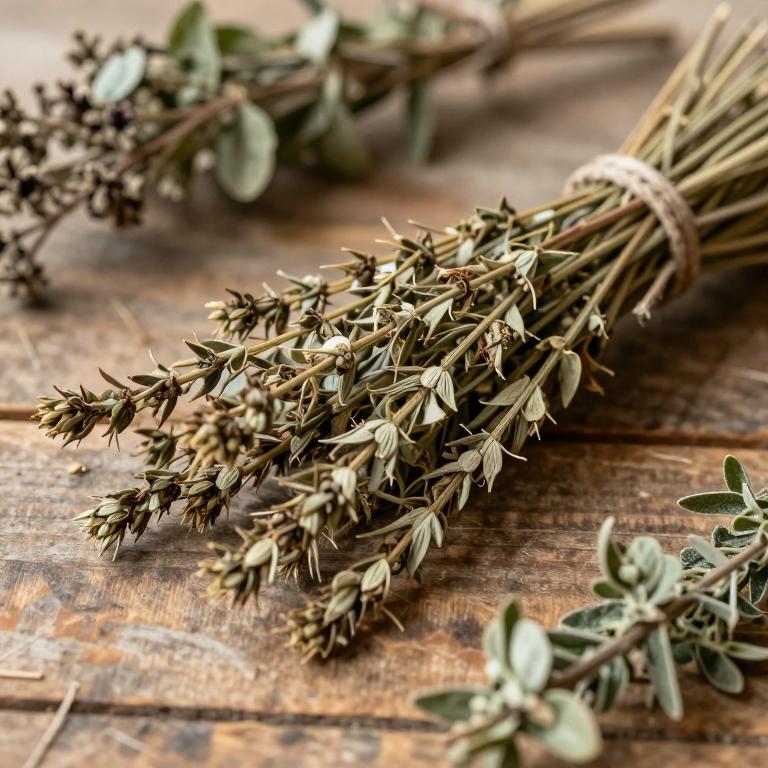
Names and Synonyms
Common Names
- sticky selloa
Scientific Names
Accepted name
Gymnosperma glutinosumSynonyms
- Xanthocephalum glutinosum
- Denekia glutinosa
- Selloa scoparia
- Baccharis fasciculosa
- Gymnosperma corymbosum
- Gymnosperma multiflorum
- Gymnosperma scoparium
- Selloa corymbosa
- Selloa glutinosa
- Selloa multiflora
Regional and Traditional Names
Spanish:
- tatalencho
- Cola de zorra
- Popote
- Popotillo
- tatalencho
Sources: Wikidata, Catalogue of Life
Taxonomical Classification
This plant belongs to the kingdom Plantae within the phylum Streptophyta and the class Equisetopsida. It is further classified under the subclass Magnoliidae and the order Asterales. Ultimately, Gymnosperma glutinosum is a member of the family Asteraceae and falls under the genus Gymnosperma.
| Rank | Classification |
|---|---|
| Kingdom | Plantae |
| Phylum | Streptophyta |
| Class | Equisetopsida |
| Subclass | Magnoliidae |
| Order | Asterales |
| Family | Asteraceae |
| Genus | Gymnosperma |
Sources: The World Checklist of Vascular Plants (WCVP)
Distribution
This plant exhibits a specific geographical distribution concentrated across parts of North America. In the Southwestern United States, it can be found growing within the state of Arizona. Its range extends into the South-Central United States, specifically covering portions of New Mexico and Texas. Moving south into Mexico, the species is present in the central regions of the country. Additionally, the plant is distributed throughout the northeastern part of Mexico.
| Region | Area |
|---|---|
| Southwestern U.S.A. | Arizona |
| South-Central U.S.A. | New Mexico |
| South-Central U.S.A. | Texas |
| Mexico | Mexico Central |
| Mexico | Mexico Northeast |
| Mexico | Mexico Gulf |
| Mexico | Mexico Northwest |
| Mexico | Mexico Southwest |
| Mexico | Mexico Southeast |
| Central America | Guatemala |
Sources: The World Checklist of Vascular Plants (WCVP)
Botanical Identification
Life history
The life history of Gymnosperma glutinosum is characterized by its classification as a perennial species, allowing it to persist in its environment through multiple growing seasons rather than completing its cycle within a single year. As a perennial, the plant establishes a long-term presence in its habitat, often investing significant energy into robust structural development and root systems to ensure survival through varying seasonal changes. This extended lifecycle enables the plant to engage in repeated reproductive cycles over several years, providing it with greater stability and the ability to dominate specific ecological niches compared to annual or biennial species.
- Lifecycle :
- perennial
Morphology
The morphology of Gymnosperma glutinosum is characterized by its growth form as a woody shrub, exhibiting a robust and self-supporting structure. Unlike climbing species, it functions as a self-supporting plant rather than a liana or vine, maintaining its stature without the need for external support. In terms of its ecological positioning, the plant is terrestrial, functioning as an independent organism that does not rely on parasitic or epiphytic relationships to survive. Its physical constitution is distinctly woody, providing the necessary structural integrity for its shrubby habit within its terrestrial habitat.
- Aquatic :
- terrestrial
- Climber :
- self-supporting
- Epiphyte :
- terrestrial
- Growth form :
- shrub
- Parasite :
- independent
- Woodiness :
- woody
Reproduction
The reproduction of Gymnosperma glutinosum is characterized by the production of minute seeds that exhibit specific weight variations. The seed mass for this species is highly consistent, with a measured mean value of 0.0001345 g. Within the observed population, the seed mass fluctuates within a very narrow range, reaching a maximum value of 0.00016 g and a minimum value of 0.000118 g. These precise metrics reflect the delicate nature of its reproductive output, ensuring the dispersal and establishment of the species through these extremely lightweight units.
- Seed mass max:
- 0.00016 g
- Seed mass mean:
- 0.0001345 g
- Seed mass min:
- 0.000118 g
Sources: Global Inventory of Floras and Traits (GIFT)
Plant Parts
Gymnosperma glutinosum has 1 reported plant parts identified across 1 scientific publications and several other databases that are studied for medicinal purposes. The most consistently reported plant part include leaf.
| Plant part | Supporting sources | Consensus |
|---|---|---|
| Leaf | 1 supporting sources | ★☆☆☆☆ |
Leaf
- African journal of traditional, complementary, and alternative medicines : AJTCAM
Chemicals
Gymnosperma glutinosum has 1 reported phytochemicals identified across 1 scientific publications and several other databases. The most consistently reported chemicals include 5,7-Dihydroxy-3,6,8,2',4',5'-hexamethoxyflavone.
| Chemical | Supporting sources | Consensus |
|---|---|---|
| 5,7-Dihydroxy-3,6,8,2',4',5'-hexamethoxyflavone | 1 supporting sources | ★☆☆☆☆ |
5,7-Dihydroxy-3,6,8,2',4',5'-hexamethoxyflavone
- Journal of ethnopharmacology
Activities
Gymnosperma glutinosum has 3 reported activities identified across 1 scientific publications and several other databases. The most consistently reported activities include Antibacterial, Antifungal, Antimicrobial.
| Activity | Supporting sources | Consensus |
|---|---|---|
| Antibacterial | 2 supporting sources | ★☆☆☆☆ |
| Antifungal | 1 supporting sources | ★☆☆☆☆ |
| Antimicrobial | 1 supporting sources | ★☆☆☆☆ |
Antibacterial
- Journal of ethnopharmacology
- African journal of traditional, complementary, and alternative medicines : AJTCAM
Antifungal
- Journal of ethnopharmacology
Antimicrobial
- Journal of ethnopharmacology
Conditions
Gymnosperma glutinosum has 1 reported investigations on conditions identified across 1 scientific publications and several other databases. The most consistently reported conditions include Helicobacter pylori.
| Condition | Supporting sources | Consensus |
|---|---|---|
| Helicobacter pylori | 1 supporting sources | ★☆☆☆☆ |
Helicobacter pylori
- African journal of traditional, complementary, and alternative medicines : AJTCAM
Preparations
Gymnosperma glutinosum has 3 reported preparations identified across 1 scientific publications and several other databases. The most consistently reported preparations include MeOH partition M(2), hexane extract, methanol leaf extracts.
| Preparation | Supporting sources | Consensus |
|---|---|---|
| Meoh partition m(2) | 1 supporting sources | ★☆☆☆☆ |
| Hexane extract | 1 supporting sources | ★☆☆☆☆ |
| Methanol leaf extracts | 1 supporting sources | ★☆☆☆☆ |
Meoh partition m(2)
- Journal of ethnopharmacology
Hexane extract
- Journal of ethnopharmacology
Methanol leaf extracts
- African journal of traditional, complementary, and alternative medicines : AJTCAM