dzidzilche
Gymnopodium floribundum · Accepted scientific name
Scientific literature: Very Sparse (2 studies) · ★☆☆☆☆
Dzidzilche, scientifically known as Gymnopodium floribundum, is a significant medicinal plant native to Mexico. Renowned for its diverse therapeutic applications, it is traditionally used to treat various ailments, including digestive issues and inflammatory conditions. This plant holds profound cultural importance and offers promising potential for modern pharmacological research and development.
- Family
- Polygonaceae
- Native range
- Northern America
- Parts used
- Not available
- Common names
- Dzidzilche
- Scientific synonyms
- Not available
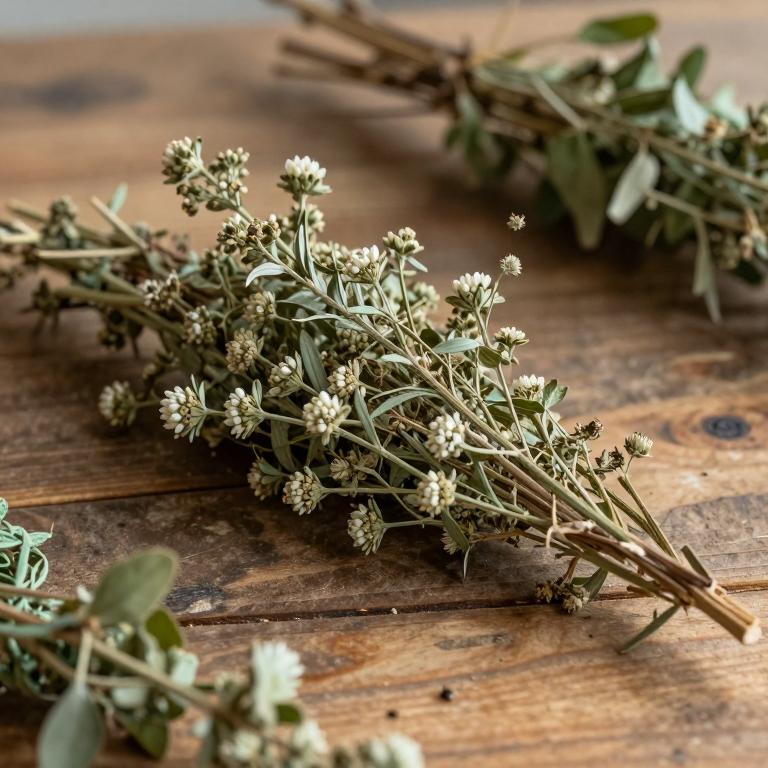
Names and Synonyms
Common Names
- dzidzilche
Scientific Names
Accepted name
Gymnopodium floribundumRegional and Traditional Names
Spanish:
- Pata de venado
Sources: Wikidata, Catalogue of Life
Taxonomical Classification
This plant belongs to the kingdom Plantae and is classified within the phylum Streptophyta and class Equisetopsida. As a member of the subclass Magnoliidae and order Caryophyllales, it falls under the family Polygonaceae. It is specifically identified by the genus Gymnopodium.
| Rank | Classification |
|---|---|
| Kingdom | Plantae |
| Phylum | Streptophyta |
| Class | Equisetopsida |
| Subclass | Magnoliidae |
| Order | Caryophyllales |
| Family | Polygonaceae |
| Genus | Gymnopodium |
Sources: The World Checklist of Vascular Plants (WCVP)
Distribution
This plant exhibits a widespread distribution across several key regions in North and Central America. Within Mexico, its range extends from the southwestern territories to the southeastern regions of the country. Moving southward into Central America, the species is also found within the borders of Guatemala. Furthermore, its presence is documented in the nation of Belize. Together, these locations define the specific geographical footprint of Gymnopodium floribundum.
| Region | Area |
|---|---|
| Mexico | Mexico Southwest |
| Mexico | Mexico Southeast |
| Central America | Belize |
| Central America | Guatemala |
Sources: The World Checklist of Vascular Plants (WCVP)
Botanical Identification
Morphology
The morphology of Gymnopodium floribundum is characterized by a woody structure that facilitates its development as a self-supporting tree. In terms of its ecological habit, the plant functions as an independent organism, neither acting as an obligatory nor a facultative parasite. It is a terrestrial species, lacking aquatic or semiaquatic tendencies, and it does not exhibit epiphytic behavior, remaining firmly rooted in the ground. Unlike climbing vines, lianas, or obligate climbers, this plant possesses a growth form that is inherently self-supporting, utilizing its woody composition to maintain its upright stature without the need for external structural assistance.
- Aquatic :
- terrestrial
- Climber :
- self-supporting
- Epiphyte :
- terrestrial
- Growth form :
- tree
- Parasite :
- independent
- Woodiness :
- woody
Physiology
The physiology of Gymnopodium floribundum is characterized by a C3 photosynthetic pathway, indicating a reliance on standard carbon fixation processes typical of many temperate and tropical species. The structural integrity and biomass allocation of the plant are reflected in its stem specific density (SSD), which maintains a consistent mean value of 600 mg/cm³, with both its minimum and maximum recorded values also reaching 600 mg/cm³. Leaf morphology and resource investment are further defined by its leaf dry matter content (LDMC) and specific leaf area (SLA). The LDMC is highly uniform across its measured range, with a mean, minimum, and maximum value all stabilized at 406.7 mg/g, suggesting a highly consistent density of organic matter within the leaf tissue. Similarly, the specific leaf area (SLA) displays a fixed value of 130.02 cm²/g for its minimum, mean, and maximum measurements, indicating a specialized leaf architecture optimized for its specific environmental niche.
- Leaf dry matter content (LDMC) mean:
- 406.7 mg/g
- Photosynthetic pathway :
- C3
- Specific Leaf Area (SLA) min:
- 130.02 cm²/g
- Stem specific density (SSD) min:
- 600 mg/cm³
Reproduction
The reproduction of Gymnopodium floribundum is characterized by specific dispersal mechanisms and precise seed morphology. The plant exhibits a dispersal syndrome that is categorized as anemochorous, indicating that its seeds are primarily distributed via wind currents to facilitate colonization of new areas. The seeds produced by this species are highly uniform in size, with a mean, minimum, and maximum seed length all recorded at exactly 2.263 mm. This lack of variance in seed dimensions suggests a highly stabilized reproductive output in terms of seed physical characteristics.
- Dispersal syndrome :
- anemochorous
- Seed length mean:
- 2.263 mm
Sources: Global Inventory of Floras and Traits (GIFT)
Chemicals
Gymnopodium floribundum has 1 reported phytochemicals identified across 0 scientific publications and several other databases. The most consistently reported chemicals include MeOH.
| Chemical | Supporting sources | Consensus |
|---|---|---|
| MeOH | 1 supporting sources | ★☆☆☆☆ |
MeOH
- Journal of ethnopharmacology
Preparations
Gymnopodium floribundum has 1 reported preparations identified across 0 scientific publications and several other databases. The most consistently reported preparations include MeOH bark extracts.
| Preparation | Supporting sources | Consensus |
|---|---|---|
| Meoh bark extracts | 1 supporting sources | ★☆☆☆☆ |
Meoh bark extracts
- Journal of ethnopharmacology