Gymnophyton polycephalum
Gymnophyton polycephalum · Accepted scientific name
Scientific literature: Very Sparse (5 studies) · ★☆☆☆☆
Gymnophyton polycephalum, scientifically known as Gymnophyton polycephalum, is a remarkable medicinal plant valued for its diverse therapeutic properties. Often utilized in traditional healing practices, it contains bioactive compounds believed to offer antioxidant and anti-inflammatory benefits. Exploring its pharmacological potential provides vital insights into natural treatments for various ailments.
- Family
- Apiaceae
- Native range
- Southern America
- Parts used
- Not available
- Common names
- Not available
- Scientific synonyms
- Dipterygia Anethoides · Dipterygia Polycephala · 5 more
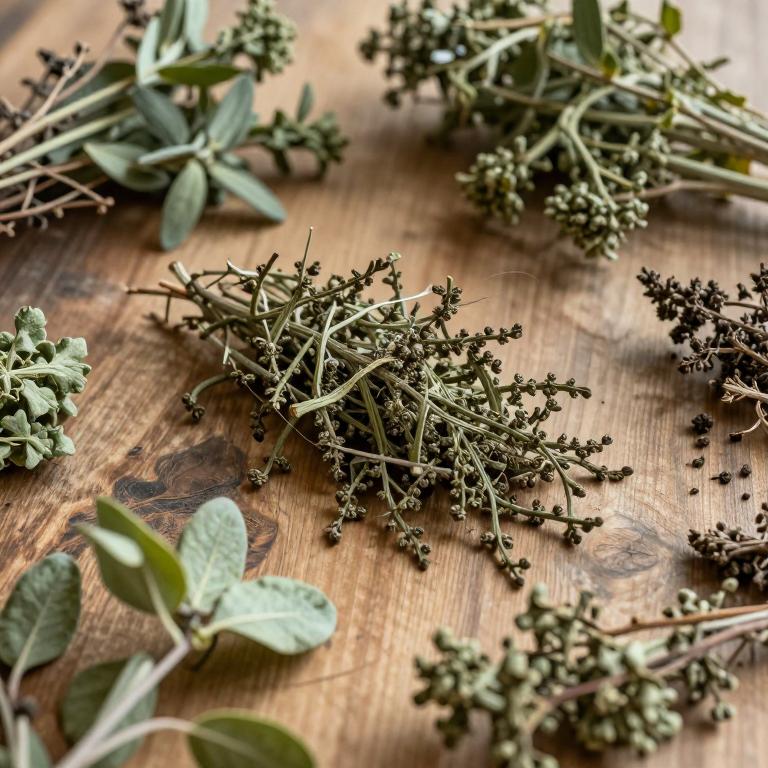
Names and Synonyms
Scientific Names
Accepted name
Gymnophyton polycephalumSynonyms
- Dipterygia anethoides
- Dipterygia polycephala
- Asteriscium dipterygia
- Asteriscium anethoides
- Asteriscium polycephalum
- Dipterygia capitata
- Mulinum dipterygia
Sources: Wikidata
Taxonomical Classification
This plant belongs to the kingdom Plantae and the phylum Streptophyta within the class Equisetopsida. It is further classified under the subclass Magnoliidae and the order Apiales. Ultimately, it is a member of the family Apiaceae within the genus Gymnophyton.
| Rank | Classification |
|---|---|
| Kingdom | Plantae |
| Phylum | Streptophyta |
| Class | Equisetopsida |
| Subclass | Magnoliidae |
| Order | Apiales |
| Family | Apiaceae |
| Genus | Gymnophyton |
Sources: The World Checklist of Vascular Plants (WCVP)
Distribution
This plant exhibits a specific range within the South American continent. Its distribution is notably concentrated in the western regions of the continent, specifically within Bolivia. Additionally, the species can be found in the southern parts of South America. More precisely, its presence extends into the northwest territories of Argentina. Together, these areas define the known geographical footprint of Gymnophyton polycephalum.
| Region | Area |
|---|---|
| Western South America | Bolivia |
| Southern South America | Argentina Northwest |
Sources: The World Checklist of Vascular Plants (WCVP)
Botanical Identification
Ecology
The ecology of Gymnophyton polycephalum is characterized by its ability to inhabit diverse montane environments across a significant vertical gradient. This species thrives within a specific altitudinal niche, distributed across an elevational range that spans from a minimum of 1200 m AMSL to a maximum of 3200 m AMSL. Such a broad range suggests an adaptability to varying climatic conditions, ranging from temperate montane zones to the harsher, more extreme environments found at higher subalpine or alpine elevations. Within these boundaries, the plant's distribution is influenced by the specific temperature fluctuations, soil compositions, and moisture availability inherent to these varying heights above mean sea level.
- Elevational range max:
- 3200 m AMSL
- Elevational range min:
- 1200 m AMSL
Life history
The life history of Gymnophyton polycephalum is characterized by its status as a perennial species, allowing it to persist in its environment over multiple growing seasons rather than completing its cycle within a single year. As a perennial, the plant focuses on long-term survival through established root or vegetative structures, which enables it to navigate seasonal fluctuations and accumulate resources necessary for sustained growth and eventual reproductive phases. This multi-year lifecycle pattern supports a continuous presence in its ecological niche, providing stability in its development compared to annual or biennial counterparts.
- Lifecycle :
- perennial
Morphology
The morphology of Gymnophyton polycephalum is characterized by a versatile growth habit, primarily manifesting as a non-woody herb or a small shrub. It functions as an independent organism, lacking parasitic tendencies, and exhibits a growth strategy that ranges from terrestrial to semiaquatic environments. While it possesses the structural capability to act as a self-supporting plant rather than an obligatory or facultative climber, its physical form is distinctly non-woody. Furthermore, it is categorized as a terrestrial species, lacking the specialized adaptations of an epiphyte, and maintains its structural integrity without the need for liana or vine-like attachment to other hosts.
- Aquatic :
- terrestrial
- Climber :
- self-supporting
- Epiphyte :
- terrestrial
- Growth form :
- herb
- Growth form :
- shrub
- Parasite :
- independent
- Woodiness :
- non-woody
Sources: Global Inventory of Floras and Traits (GIFT)
Activities
Gymnophyton polycephalum has 3 reported activities identified across 0 scientific publications and several other databases. The most consistently reported activities include Antibacterial, Antifungal, Insect-Repellent.
| Activity | Supporting sources | Consensus |
|---|---|---|
| Antibacterial | 1 supporting sources | ★☆☆☆☆ |
| Antifungal | 1 supporting sources | ★☆☆☆☆ |
| Insect-Repellent | 1 supporting sources | ★☆☆☆☆ |
Antibacterial
- Chemistry & biodiversity
Antifungal
- Chemistry & biodiversity
Insect-Repellent
- Chemistry & biodiversity
Conditions
Gymnophyton polycephalum has 1 reported investigations on conditions identified across 0 scientific publications and several other databases. The most consistently reported conditions include Chagas disease.
| Condition | Supporting sources | Consensus |
|---|---|---|
| Chagas disease | 1 supporting sources | ★☆☆☆☆ |
Chagas disease
- Chemistry & biodiversity
Preparations
Gymnophyton polycephalum has 1 reported preparations identified across 0 scientific publications and several other databases. The most consistently reported preparations include essential oils.
| Preparation | Supporting sources | Consensus |
|---|---|---|
| Essential oils | 1 supporting sources | ★☆☆☆☆ |
Essential oils
- Chemistry & biodiversity