Gymnema montanum
Gymnema montanum · Accepted scientific name
Scientific literature: Very Sparse (8 studies) · ★☆☆☆☆
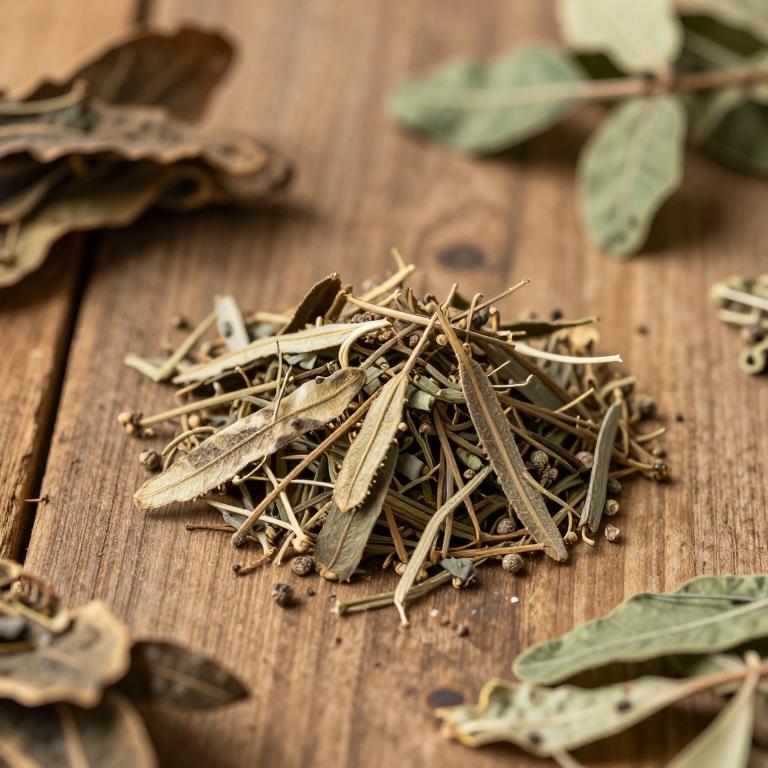
Gymnema montanum, scientifically known as Gymnema montanum, is a medicinal climbing shrub native to the tropical forests of India. Renowned in Ayurvedic medicine as "Gurmar," or "sugar destroyer," it is highly valued for its unique ability to suppress sweet tastes and help regulate blood glucose levels naturally.
- Family
- Apocynaceae
- Native range
- Asia-Tropical
- Parts used
- Leaf · Stem
- Common names
- Not available
- Scientific synonyms
- Bidaria Montana · Marsdenia Ovalifolia · 3 more
Names and Synonyms
Scientific Names
Accepted name
Gymnema montanumSynonyms
- Bidaria montana
- Marsdenia ovalifolia
- Periploca montana
- Gymnema tingens var. ovalifolium
- Asclepias montana
Sources: Wikidata
Taxonomical Classification
This plant belongs to the kingdom Plantae and is classified under the phylum Streptophyta and the class Equisetopsida. Within the subclass Magnoliidae, it is situated in the order Gentianaales and the family Apocynaceae. Finally, its taxonomic identity is completed by its classification in the genus Gymnema.
| Rank | Classification |
|---|---|
| Kingdom | Plantae |
| Phylum | Streptophyta |
| Class | Equisetopsida |
| Subclass | Magnoliidae |
| Order | Gentianales |
| Family | Apocynaceae |
| Genus | Gymnema |
Sources: The World Checklist of Vascular Plants (WCVP)
Distribution
This plant is primarily found within the vast expanse of the Indian Subcontinent. Its natural habitat is most notably concentrated in the country of India. Within this specific region, it thrives in local ecosystems that support its growth. The geographical range is currently centered around these particular South Asian territories. Consequently, India serves as the main hub for the wild distribution of this medicinal species.
| Region | Area |
|---|---|
| Indian Subcontinent | India |
Sources: The World Checklist of Vascular Plants (WCVP)
Plant Parts
Gymnema montanum has 2 reported plant parts identified across 3 scientific publications and several other databases that are studied for medicinal purposes. The most consistently reported plant part include leaf, stem.
| Plant part | Supporting sources | Consensus |
|---|---|---|
| Leaf | 2 supporting sources | ★☆☆☆☆ |
| Stem | 1 supporting sources | ★☆☆☆☆ |
Leaf
- Food and chemical toxicology : an international journal published for the British Industrial Biological Research Association
- Journal of medicinal food
Stem
- Food and chemical toxicology : an international journal published for the British Industrial Biological Research Association
Activities
Gymnema montanum has 3 reported activities identified across 3 scientific publications and several other databases. The most consistently reported activities include Antioxidant, Antidiabetic, Antiperoxidative.
| Activity | Supporting sources | Consensus |
|---|---|---|
| Antioxidant | 2 supporting sources | ★☆☆☆☆ |
| Antidiabetic | 1 supporting sources | ★☆☆☆☆ |
| Antiperoxidative | 1 supporting sources | ★☆☆☆☆ |
Antioxidant
- Food and chemical toxicology : an international journal published for the British Industrial Biological Research Association
- Journal of medicinal food
Antidiabetic
- Journal of medicinal food
Antiperoxidative
- Journal of medicinal food
Conditions
Gymnema montanum has 1 reported investigations on conditions identified across 3 scientific publications and several other databases. The most consistently reported conditions include Diabetes mellitus.
| Condition | Supporting sources | Consensus |
|---|---|---|
| Diabetes mellitus | 1 supporting sources | ★☆☆☆☆ |
Diabetes mellitus
- Food and chemical toxicology : an international journal published for the British Industrial Biological Research Association
Preparations
Gymnema montanum has 5 reported preparations identified across 3 scientific publications and several other databases. The most consistently reported preparations include alcoholic stem extract, ethanol extract, ethanol extract of G. montanum (GLEt), ethanolic extract of G. montanum, leaf extract.
| Preparation | Supporting sources | Consensus |
|---|---|---|
| Alcoholic stem extract | 1 supporting sources | ★☆☆☆☆ |
| Ethanol extract | 1 supporting sources | ★☆☆☆☆ |
| Ethanol extract of g. montanum (glet) | 1 supporting sources | ★☆☆☆☆ |
| Ethanolic extract of g. montanum | 1 supporting sources | ★☆☆☆☆ |
| Leaf extract | 1 supporting sources | ★☆☆☆☆ |
Alcoholic stem extract
- Food and chemical toxicology : an international journal published for the British Industrial Biological Research Association
Ethanol extract
- Food and chemical toxicology : an international journal published for the British Industrial Biological Research Association
Ethanol extract of g. montanum (glet)
- Food and chemical toxicology : an international journal published for the British Industrial Biological Research Association
Ethanolic extract of g. montanum
- Cell proliferation
Leaf extract
- Journal of medicinal food