Sticky Niger
Guizotia scabra · Accepted scientific name
Scientific literature: Very Sparse (12 studies) · ★☆☆☆☆
Sticky Niger, scientifically known as Guizotia scabra, is a versatile medicinal herb widely utilized in traditional African medicine. Renowned for its potent therapeutic properties, this plant is commonly employed to treat various ailments, including respiratory issues, digestive discomfort, and inflammatory conditions, offering a natural approach to holistic wellness.
- Family
- Asteraceae
- Native range
- Africa
- Parts used
- Leaf
- Common names
- Sticky Niger
- Scientific synonyms
- Coreopsis Galericulata · Guizotia Collina · 8 more
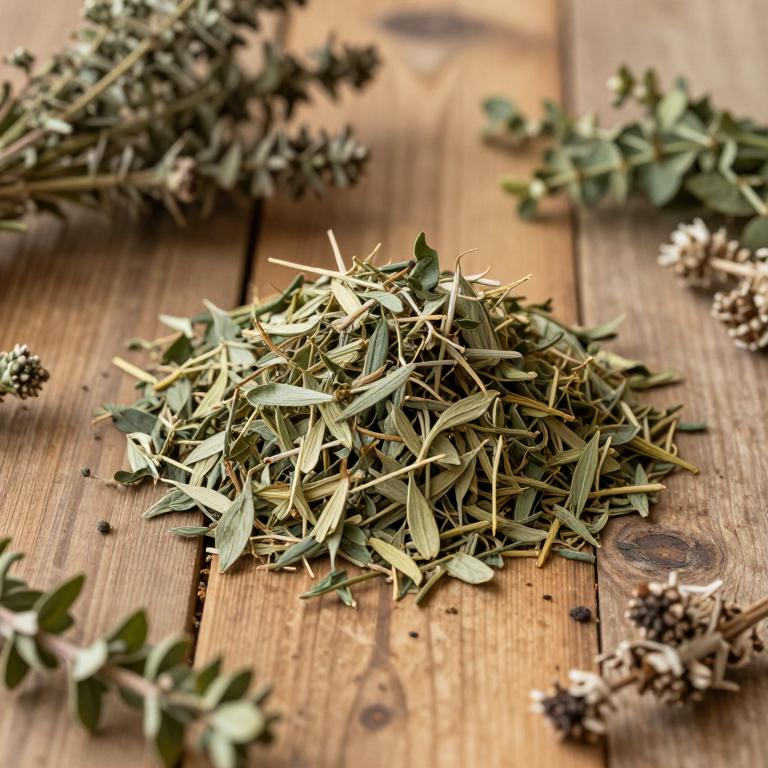
Names and Synonyms
Common Names
- Sticky Niger
Scientific Names
Accepted name
Guizotia scabraSynonyms
- Coreopsis galericulata
- Guizotia collina
- Guizotia eylesii
- Guizotia kassneri
- Guizotia oblonga
- Guizotia nyikensis
- Guizotia ringoetii
- Guizotia schultzii
- Veslingia scabra
- Wedelia oblonga
Regional and Traditional Names
German:
- Raues Ramtillkraut
Sources: Wikidata, Catalogue of Life
Taxonomical Classification
This plant, Guizotia scabra, belongs to the kingdom Plantae and the phylum Streptophyta. It is classified under the class Equisetopsida and the subclass Magnoliidae, falling within the order Asterales. Finally, it is a member of the family Asteraceae and the genus Guizotia.
| Rank | Classification |
|---|---|
| Kingdom | Plantae |
| Phylum | Streptophyta |
| Class | Equisetopsida |
| Subclass | Magnoliidae |
| Order | Asterales |
| Family | Asteraceae |
| Genus | Guizotia |
Sources: The World Checklist of Vascular Plants (WCVP)
Distribution
This plant exhibits a broad geographical presence across several regions of the African continent. In West Tropical Africa, its distribution includes the nations of Benin and Nigeria. Moving into the West-Central Tropical Africa region, the species can also be found in Burundi. Additionally, it is documented to grow within the Central African Republic. Finally, its range extends to include the country of Cameroon.
| Region | Area |
|---|---|
| West Tropical Africa | Benin |
| West Tropical Africa | Nigeria |
| West-Central Tropical Africa | Burundi |
| West-Central Tropical Africa | Central African Republic |
| West-Central Tropical Africa | Cameroon |
| West-Central Tropical Africa | Rwanda |
| West-Central Tropical Africa | DR Congo |
| Northeast Tropical Africa | Eritrea |
| Northeast Tropical Africa | Ethiopia |
| Northeast Tropical Africa | Sudan-South Sudan |
Sources: The World Checklist of Vascular Plants (WCVP)
Botanical Identification
Life history
The life history of Guizotia scabra is characterized by its status as a perennial plant, allowing it to persist in its environment through multiple growing seasons. In terms of its structural growth strategy, the species is classified as a hemicryptophyte, a life form where the perennating buds are located at or just below the soil surface, protected by residual plant debris or the substrate itself. This hemicryptophytic nature enables the plant to endure seasonal changes by maintaining its regenerative capacity at the ground level, ensuring its continued survival and ability to re-emerge during favorable conditions.
- Life form :
- hemicryptophyte
- Lifecycle :
- perennial
Morphology
The morphology of Guizotia scabra is characterized by a non-woody, herbaceous growth form, functioning as a self-supporting herb. As a terrestrial plant, it grows independently and does not exhibit parasitic behavior. In terms of stature, the plant varies in height, with individual specimens ranging from a minimum of approximately 0.30 meters to a maximum of about 1.83 meters, maintaining an average plant height of 1.5 meters.
- Climber :
- self-supporting
- Epiphyte :
- terrestrial
- Growth form :
- herb
- Parasite :
- independent
- Plant height max:
- 1.828822238 m
- Plant height mean:
- 1.5 m
- Plant height min:
- 0.304803706 m
- Woodiness :
- non-woody
Physiology
The physiology of Guizotia scabra is characterized by complex metabolic pathways that support its growth in various ecological niches, though it lacks the specialized symbiotic relationships required for atmospheric nitrogen assimilation. Specifically, the plant is not a nitrogen fixer, meaning it does not possess the biological machinery or specialized root nodules necessary to convert atmospheric nitrogen into plant-available forms; instead, it relies on the uptake of nitrates and ammonium from the surrounding soil substrate. Its metabolic processes are driven by efficient photosynthetic mechanisms that convert solar energy into chemical energy, facilitating the synthesis of essential secondary metabolites often utilized for medicinal purposes. These physiological processes, including respiration and nutrient transport, are finely tuned to its environmental conditions, ensuring the maintenance of cellular homeostasis and the continuous production of bioactive compounds through regulated enzymatic activities.
- Nitrogen fixer :
- no
Reproduction
The reproduction of Guizotia scabra is characterized by a biotic pollination syndrome, primarily mediated by insects, which facilitates the fertilization process. The plant produces relatively small seeds, with a recorded minimum mass of 0.00061 g, a maximum mass of 0.0007 g, and an average seed mass of approximately 0.00067 g. Following successful fertilization, the dispersal of the seeds follows an unspecialized syndrome, meaning the plant does not rely on a single highly specific mechanism for movement but rather employs generalist strategies for spreading its progeny within the environment.
- Dispersal syndrome :
- unspecialized
- Pollination syndrome :
- insect
- Pollination syndrome :
- biotic
- Seed mass max:
- 7e-04 g
- Seed mass mean:
- 0.00067 g
- Seed mass min:
- 0.00061 g
Sources: Global Inventory of Floras and Traits (GIFT)
Plant Parts
Guizotia scabra has 1 reported plant parts identified across 2 scientific publications and several other databases that are studied for medicinal purposes. The most consistently reported plant part include leaf.
| Plant part | Supporting sources | Consensus |
|---|---|---|
| Leaf | 2 supporting sources | ★☆☆☆☆ |
Leaf
- Food chemistry
- Experimental and toxicologic pathology : official journal of the Gesellschaft fur Toxikologische Pathologie
Chemicals
Guizotia scabra has 8 reported phytochemicals identified across 2 scientific publications and several other databases. The most consistently reported chemicals include Ash, FAT, FE, Germacrene D, LIMONENE.
| Chemical | Supporting sources | Consensus |
|---|---|---|
| Ash | 1 supporting sources | ★☆☆☆☆ |
| FAT | 1 supporting sources | ★☆☆☆☆ |
| FE | 1 supporting sources | ★☆☆☆☆ |
| Germacrene D | 1 supporting sources | ★☆☆☆☆ |
| LIMONENE | 1 supporting sources | ★☆☆☆☆ |
| MN | 1 supporting sources | ★☆☆☆☆ |
| na | 1 supporting sources | ★☆☆☆☆ |
| p- | 1 supporting sources | ★☆☆☆☆ |
Ash
- BMC plant biology
FAT
- BMC plant biology
FE
- BMC plant biology
Germacrene D
- Food chemistry
LIMONENE
- Food chemistry
MN
- BMC plant biology
na
- BMC plant biology
p-
- BMC plant biology
Activities
Guizotia scabra has 2 reported activities identified across 2 scientific publications and several other databases. The most consistently reported activities include Hepatoprotective, Hepatotoxic.
| Activity | Supporting sources | Consensus |
|---|---|---|
| Hepatoprotective | 1 supporting sources | ★☆☆☆☆ |
| Hepatotoxic | 1 supporting sources | ★☆☆☆☆ |
Hepatoprotective
- Food chemistry
Hepatotoxic
- Experimental and toxicologic pathology : official journal of the Gesellschaft fur Toxikologische Pathologie
Preparations
Guizotia scabra has 3 reported preparations identified across 2 scientific publications and several other databases. The most consistently reported preparations include Aqueous extracts, essential oils obtained from leaves, methanolic extracts.
| Preparation | Supporting sources | Consensus |
|---|---|---|
| Aqueous extracts | 1 supporting sources | ★☆☆☆☆ |
| Essential oils obtained from leaves | 1 supporting sources | ★☆☆☆☆ |
| Methanolic extracts | 1 supporting sources | ★☆☆☆☆ |
Aqueous extracts
- Experimental and toxicologic pathology : official journal of the Gesellschaft fur Toxikologische Pathologie
Essential oils obtained from leaves
- Food chemistry
Methanolic extracts
- Food chemistry