Guilandina bonduc
Guilandina major · Accepted scientific name
Scientific literature: Very Sparse (2 studies) · ★☆☆☆☆
Guilandina bonduc, scientifically known as Guilandinia major, is a remarkable medicinal plant valued for its diverse therapeutic properties. Found primarily in tropical regions, this species is celebrated in traditional medicine for its potent bioactive compounds, offering significant potential in treating inflammatory conditions and supporting overall holistic wellness through natural healing.
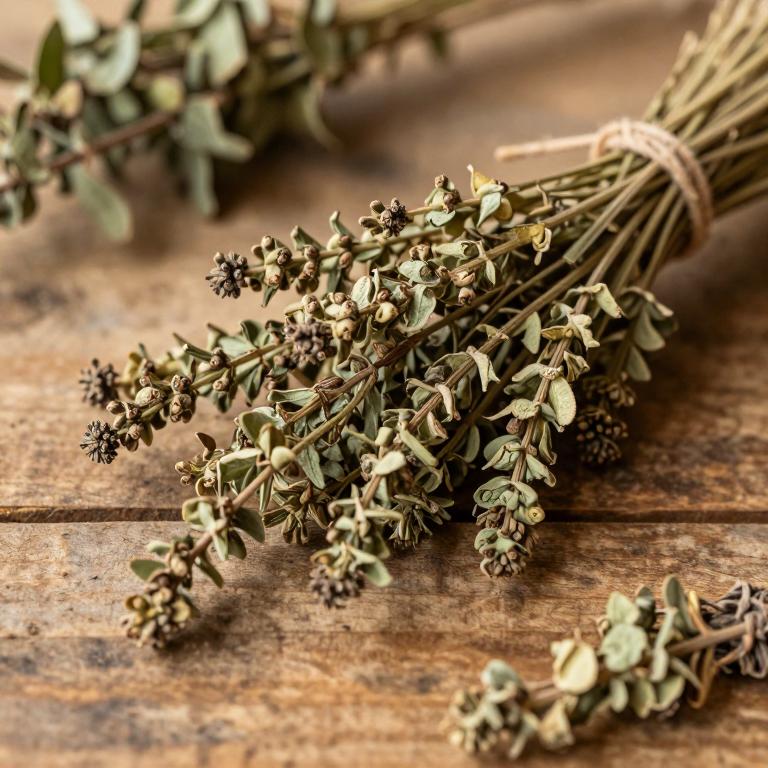
Names and Synonyms
Common Names
- Guilandina bonduc
- bonduc
- divi-divi
- gray nicker
- grey nicker
- grey nicker-bean
- nickernut
- wait-a-while
- Ash-Coloured Nicker
- Bonduc Plumeflower
- Bonduc nut
- Brazilian Redwood
- Coastal Plumeflower
- Pernambuco Red Wood
- Pernambuco Wood
- fever nut
- gray nickerbean
- yellow nicker
- yellow nickerbean
Scientific Names
Accepted name
Guilandina majorSynonyms
- Bonduc majus
- Caesalpinia jayabo var. microphylla
- Caesalpinia nitida
- Caesalpinia broomensis
- Caesalpinia jayabo
- Guilandina microphylla
- Guilandina viridiflora
- Caesalpinia globulorum
- Guilandina bonduc var. major
Regional and Traditional Names
Spanish:
- Guilandina bonduc
- quita maldición
- Garrapata de playa
- Haba de mar
- Mate de costa
German:
- Guilandina bonduc
French:
- Guilandina bonduc
- Césalpinie bonduc
- caniques
Sources: Wikidata, Catalogue of Life
Taxonomical Classification
This plant belongs to the kingdom Plantae within the phylum Streptophyta and the class Equisetopsida. It is classified under the subclass Magnoliidae and the order Fabales, falling specifically into the family Fabaceae. Finally, its taxonomic identity is defined by the genus Guilandinia.
| Rank | Classification |
|---|---|
| Kingdom | Plantae |
| Phylum | Streptophyta |
| Class | Equisetopsida |
| Subclass | Magnoliidae |
| Order | Fabales |
| Family | Fabaceae |
| Genus | Guilandina |
Sources: The World Checklist of Vascular Plants (WCVP)
Distribution
This plant exhibits a diverse geographical range spanning across several key oceanic and continental regions. In the Western Indian Ocean, it can be found growing within the unique ecosystems of Madagascar. Its distribution extends into Eastern Asia, specifically covering the Kazan-retto, Nansei-shoto, and Ogasawara-shoto islands. Additionally, the species is located within the Indian Subcontinent, specifically in India. Together, these locations highlight the widespread natural habitat of Guilandina major.
| Region | Area |
|---|---|
| Western Indian Ocean | Madagascar |
| Eastern Asia | Kazan-retto |
| Eastern Asia | Nansei-shoto |
| Eastern Asia | Ogasawara-shoto |
| Indian Subcontinent | India |
| Indian Subcontinent | Maldives |
| Indian Subcontinent | Sri Lanka |
| Indo-China | Cambodia |
| Indo-China | Myanmar |
| Indo-China | Thailand |
Sources: The World Checklist of Vascular Plants (WCVP)
Botanical Identification
Ecology
The ecology of Guilandinia major is characterized by its preference for specialized low-altitude environments, specifically thriving within coastal vegetation and habitats such as Floresta Ciliar or Galeria. Its distribution is strictly tied to low-lying terrains, with an elevational range that begins as low as 0 m AMSL and extends up to a maximum of 1000 m AMSL. However, much of its ecological niche is concentrated in a narrower band, with specific recorded ranges observed between 10 m and 60 m AMSL, highlighting its strong association with riparian and coastal ecosystems.
- Elevational range max:
- 1000 m AMSL
- Elevational range max:
- 60 m AMSL
- Elevational range min:
- 0 m AMSL
- Elevational range min:
- 10 m AMSL
- Habitat :
- coastal vegetation
- Habitat :
- Floresta Ciliar ou Galeria
Genetics
The genetics of Guilandinia major are characterized by a specific karyotypic structure, most notably defined by a diploid chromosome number of 24. This chromosomal configuration serves as a fundamental genetic marker for the species, influencing its reproductive mechanisms and evolutionary stability within its taxonomic group. The stability of this 2n=24 arrangement plays a critical role in the plant's ability to maintain genetic continuity and regulate the inheritance of complex biochemical traits responsible for its medicinal properties. Understanding this chromosomal count is essential for studying the genomic architecture and potential polyploidy events that may occur within the genus.
- Chromosome number :
- 24
Life history
The life history of Guilandina major is characterized by a perennial lifecycle, allowing the plant to persist through multiple growing seasons. As a phanerophyte, its regenerative buds are located high above the ground on woody stems or branches, a structural adaptation that defines its primary life form. This phanerophyte growth habit, combined with its perennial nature, enables the species to establish long-term stability within its ecosystem, maintaining its vegetative structure over extended periods.
- Life form :
- phanerophyte
- Lifecycle :
- perennial
Morphology
The morphology of Guilandinia major is characterized by its woody structure and its classification as a shrub-like liana. As an obligatory climber, this plant functions as a liana rather than being self-supporting, navigating its environment to reach significant heights. Its vertical growth is substantial, with height measurements ranging from a minimum of 1 meter to a maximum of 15 meters, though some observations indicate a mean height of approximately 12 to 15 meters, while other specific instances record a maximum of 5 meters. The plant is strictly terrestrial in its habitat, neither aquatic nor semiaquatic, and it functions as an independent organism without being a parasite. Furthermore, it is characterized as a terrestrial species rather than an epiphyte, maintaining a robust, woody growth form throughout its development.
- Aquatic :
- terrestrial
- Climber :
- liana
- Climber :
- obligatory
- Epiphyte :
- terrestrial
- Growth form :
- shrub
- Parasite :
- independent
- Plant height max:
- 5 m
- Plant height mean:
- 15 m
- Plant height mean:
- 12 m
- Plant height min:
- 1 m
- Woodiness :
- woody
Physiology
The physiology of Guilandinia major is characterized by a C3 photosynthetic pathway, indicating a carbon fixation process typical of plants in moderate environments. The plant exhibits significant morphological variability in its foliage, with leaf lengths ranging from a minimum of 0.8 cm to a maximum of 60 cm, while leaf widths vary from as little as 0.5 cm to as broad as 30 cm; specifically, certain leaf dimensions are noted between 0.5-3 cm in width and 0.8-40 cm in length, or 1.5-3 cm in width and 3-60 cm in length. It lacks succulence, meaning it does not possess thickened, fleshy tissues for water storage. Regarding its nutrient cycling capabilities, the physiological data presents a dual nature or variable species context, as nitrogen fixation is noted both as a present and absent trait within its documented physiological profiles.
- Leaf length max:
- 40 cm
- Leaf length max:
- 60 cm
- Leaf length min:
- 0.8 cm
- Leaf length min:
- 3 cm
- Leaf width max:
- 3 cm
- Leaf width max:
- 30 cm
- Leaf width min:
- 0.5 cm
- Leaf width min:
- 1.5 cm
- Nitrogen fixer :
- yes
- Nitrogen fixer :
- no
- Photosynthetic pathway :
- C3
- Succulence :
- no
Reproduction
The reproduction of Guilandinia major is characterized by biotic pollination, primarily driven by insects, which facilitates the fertilization process. Following successful pollination, the plant develops fruit in the form of a pod. These pods exhibit significant morphological variation, with fruit lengths ranging from a minimum of 5 cm to a maximum of 13 cm, and fruit widths spanning from 3.5 cm to 6 cm. The fruits are dehiscent, meaning they split open to release their contents. The seeds produced are relatively substantial, with lengths ranging between 15 mm and 25 mm, and widths between 15 mm and 25 mm. Seed mass varies considerably across different observations, with minimum weights recorded at approximately 1.04753 g and maximum weights reaching up to 2.54072 g, resulting in mean masses that fluctuate between 1.04753 g and 2.1088 g. For the subsequent stage of the life cycle, the plant utilizes a hydrochorous dispersal syndrome, relying on water to transport its seeds to new locations.
- Dehiscence :
- dehiscent
- Dispersal syndrome :
- hydrochorous
- Fruit length max:
- 9 cm
- Fruit length max:
- 13 cm
- Fruit length min:
- 6.5 cm
- Fruit length min:
- 5 cm
- Fruit type :
- pod
- Fruit width max:
- 5 cm
- Fruit width max:
- 6 cm
- Fruit width min:
- 3.5 cm
- Pollination syndrome :
- insect
- Pollination syndrome :
- biotic
- Seed length max:
- 20 mm
- Seed length max:
- 25 mm
- Seed length min:
- 15 mm
- Seed mass max:
- 2.54072 g
- Seed mass mean:
- 2.1088 g
- Seed mass mean:
- 1.04753 g
- Seed mass min:
- 1.83772 g
- Seed width max:
- 20 mm
- Seed width max:
- 25 mm
- Seed width min:
- 15 mm
Sources: Global Inventory of Floras and Traits (GIFT)
Plant Parts
Guilandina major has 1 reported plant parts identified across 1 scientific publications and several other databases that are studied for medicinal purposes. The most consistently reported plant part include seed.
| Plant part | Supporting sources | Consensus |
|---|---|---|
| Seed | 1 supporting sources | ★☆☆☆☆ |
Seed
- Phytochemistry
Chemicals
Guilandina major has 1 reported phytochemicals identified across 1 scientific publications and several other databases. The most consistently reported chemicals include 14-Deoxy-epsilon-caesalpin.
| Chemical | Supporting sources | Consensus |
|---|---|---|
| 14-Deoxy-epsilon-caesalpin | 1 supporting sources | ★☆☆☆☆ |
14-Deoxy-epsilon-caesalpin
- Phytochemistry