Guiera senegalensis
Guiera senegalensis · Accepted scientific name
Scientific literature: Sparse (60 studies) · ★★☆☆☆
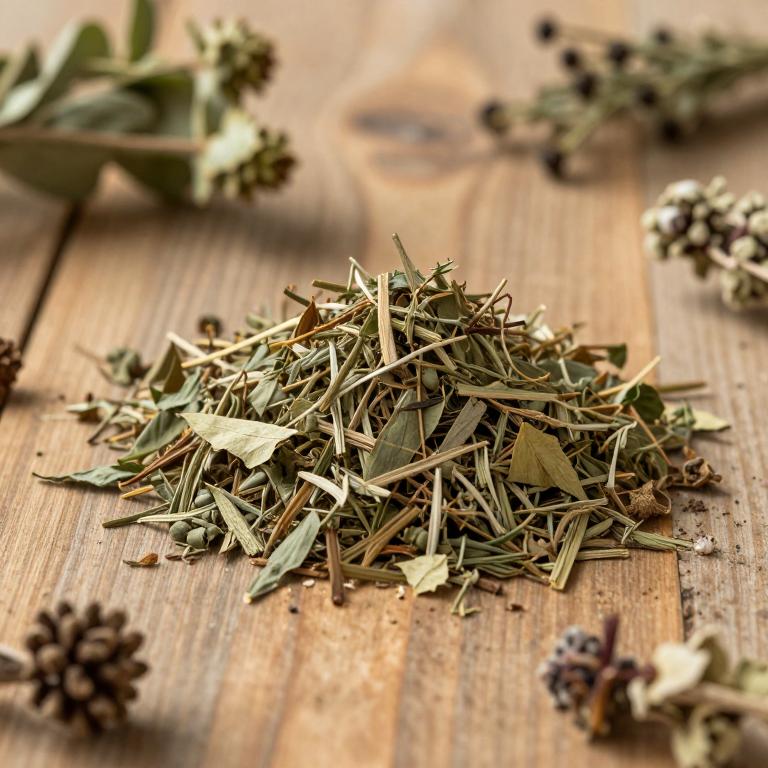
Guiera senegalensis, scientifically known as Guiera senegalensis, is a versatile medicinal shrub native to the Sahelian regions of Africa. Renowned for its therapeutic properties, various parts of the plant are traditionally used to treat ailments ranging from digestive issues to inflammatory conditions, offering significant potential in ethnopharmacological research.
- Family
- Combretaceae
- Native range
- Africa
- Parts used
- Leaf · Root
- Common names
- Not available
- Scientific synonyms
- Guiera Glandulosa
Names and Synonyms
Scientific Names
Accepted name
Guiera senegalensisSynonyms
- Guiera glandulosa
Regional and Traditional Names
French:
- nguere
Sources: Wikidata, Catalogue of Life
Taxonomical Classification
This plant belongs to the kingdom Plantae and is classified under the phylum Streptophyta and class Equisetopsida. Within the subclass Magnoliidae, it is situated in the order Myrtales and the family Combretaceae. Finally, it is identified by the genus Guiera, specifically as the species Guiera senegalensis.
| Rank | Classification |
|---|---|
| Kingdom | Plantae |
| Phylum | Streptophyta |
| Class | Equisetopsida |
| Subclass | Magnoliidae |
| Order | Myrtales |
| Family | Combretaceae |
| Genus | Guiera |
Sources: The World Checklist of Vascular Plants (WCVP)
Distribution
This plant is primarily distributed across several regions within West Tropical Africa. It can be found growing in the country of Benin. Additionally, its presence extends to the nation of Burkina. The species is also documented in Gambia and Guinea-Bissau. Finally, the geographical range of this medicinal plant includes Guinea.
| Region | Area |
|---|---|
| West Tropical Africa | Benin |
| West Tropical Africa | Burkina |
| West Tropical Africa | Gambia |
| West Tropical Africa | Guinea-Bissau |
| West Tropical Africa | Guinea |
| West Tropical Africa | Ivory Coast |
| West Tropical Africa | Mali |
| West Tropical Africa | Mauritania |
| West Tropical Africa | Nigeria |
| West Tropical Africa | Niger |
Sources: The World Checklist of Vascular Plants (WCVP)
Botanical Identification
Life history
The life history of Guiera senegalensis is characterized by its status as a perennial species, allowing it to persist in its environment over multiple growing seasons. As a phanerophyte, the plant maintains its photosynthetic organs on elevated structures, specifically classified within the phanerophyte life forms to indicate its woody growth habit. Furthermore, it exhibits an evergreen deciduousness pattern, maintaining its foliage throughout much of its life cycle to optimize resource acquisition in its native habitat.
- Deciduousness :
- evergreen
- Life form :
- phanerophyte
- Lifecycle :
- perennial
Morphology
The morphology of Guiera senegalensis is characterized by a woody growth form, primarily functioning as a shrub or small shrubby plant. It is a self-supporting, terrestrial species that does not exhibit climbing, epiphytic, or parasitic behaviors, growing instead as an independent organism. The plant typically reaches an average height of approximately 2.5 m, maintaining a robust, woody structure suitable for its terrestrial habitat.
- Aquatic :
- terrestrial
- Climber :
- self-supporting
- Epiphyte :
- terrestrial
- Growth form :
- shrub
- Parasite :
- independent
- Plant height mean:
- 2.5 m
- Woodiness :
- woody
Physiology
The physiology of Guiera senegalensis is characterized by a metabolic framework consistent with the C3 photosynthetic pathway, where carbon fixation occurs primarily through the Calvin cycle within the mesophyll cells. Unlike specialized desert plants that utilize C4 or CAM pathways to minimize photorespiration, this species relies on the standard C3 mechanism, which influences its water-use efficiency and growth patterns in its native Sahelian habitats. Furthermore, regarding its nutrient acquisition capabilities, the plant is not a nitrogen fixer, meaning it lacks the symbiotic relationship with nitrogen-fixing bacteria required to convert atmospheric nitrogen into bioavailable forms, thus relying instead on the available nitrogenous compounds present within the soil substrate for its physiological development.
- Nitrogen fixer :
- no
- Photosynthetic pathway :
- C3
Reproduction
The reproduction of Guiera senegalensis is characterized by the production of seeds that exhibit specific quantitative morphological variations. The seed mass within the species shows a relatively narrow distribution, with a recorded mean seed mass of 0.02841 g. Individual seed measurements fluctuate within a defined range, reaching a maximum seed mass of 0.0317 g and a minimum seed mass of 0.02443 g. These metrics indicate a consistent investment in seed size, which plays a critical role in the establishment and dispersal success of the plant within its natural habitat.
- Seed mass max:
- 0.0317 g
- Seed mass mean:
- 0.02841 g
- Seed mass min:
- 0.02443 g
Sources: Global Inventory of Floras and Traits (GIFT)
Plant Parts
Guiera senegalensis has 3 reported plant parts identified across 8 scientific publications and several other databases that are studied for medicinal purposes. The most consistently reported plant part include leaf, root, stem.
| Plant part | Supporting sources | Consensus |
|---|---|---|
| Leaf | 6 supporting sources | ★★★☆☆ |
| Root | 1 supporting sources | ★☆☆☆☆ |
| Stem | 1 supporting sources | ★☆☆☆☆ |
Leaf
- Journal of ethnopharmacology
- Saudi pharmaceutical journal : SPJ : the official publication of the Saudi Pharmaceutical Society
- Pharmaceutical biology
- Journal of natural products
- Microscopy and microanalysis : the official journal of Microscopy Society of America, Microbeam Analysis Society, Microscopical Society of Canada
View 1 additional sources
- Die Pharmazie
Root
- Phytotherapy research : PTR
Stem
- Evidence-based complementary and alternative medicine : eCAM
Chemicals
Guiera senegalensis has 23 reported phytochemicals identified across 8 scientific publications and several other databases. The most consistently reported chemicals include 5-methylflavasperone, Gallic acid, Guieranone A, Harman, RUTIN.
| Chemical | Supporting sources | Consensus |
|---|---|---|
| 5-methylflavasperone | 2 supporting sources | ★☆☆☆☆ |
| Gallic acid | 2 supporting sources | ★☆☆☆☆ |
| Guieranone A | 2 supporting sources | ★☆☆☆☆ |
| Harman | 2 supporting sources | ★☆☆☆☆ |
| RUTIN | 2 supporting sources | ★☆☆☆☆ |
| Tetrahydroharman | 2 supporting sources | ★☆☆☆☆ |
| quercetin | 2 supporting sources | ★☆☆☆☆ |
| 5-methyldihydroflavasperone | 1 supporting sources | ★☆☆☆☆ |
| Alpinumisoflavone | 1 supporting sources | ★☆☆☆☆ |
| CATECHIN | 1 supporting sources | ★☆☆☆☆ |
5-methylflavasperone
- Journal of natural products
- Die Pharmazie
Gallic acid
- Pharmaceutical biology
- Evidence-based complementary and alternative medicine : eCAM
Guieranone A
- Frontiers in pharmacology
- Journal of natural products
Harman
- Phytotherapy research : PTR
- Parasitology research
RUTIN
- Pharmaceutical biology
- Bollettino chimico farmaceutico
Tetrahydroharman
- Phytotherapy research : PTR
- Parasitology research
quercetin
- Pharmaceutical biology
- Bollettino chimico farmaceutico
5-methyldihydroflavasperone
- Journal of natural products
Alpinumisoflavone
- Evidence-based complementary and alternative medicine : eCAM
CATECHIN
- Bollettino chimico farmaceutico
Activities
Guiera senegalensis has 4 reported activities identified across 8 scientific publications and several other databases. The most consistently reported activities include Antibacterial, Antimicrobial, Antiprotozoal, Tonic.
| Activity | Supporting sources | Consensus |
|---|---|---|
| Antibacterial | 1 supporting sources | ★☆☆☆☆ |
| Antimicrobial | 1 supporting sources | ★☆☆☆☆ |
| Antiprotozoal | 1 supporting sources | ★☆☆☆☆ |
| Tonic | 1 supporting sources | ★☆☆☆☆ |
Antibacterial
- Journal of ethnopharmacology
Antimicrobial
- Journal of ethnopharmacology
Antiprotozoal
- Journal of ethnopharmacology
Tonic
- Journal of ethnopharmacology
Conditions
Guiera senegalensis has 16 reported investigations on conditions identified across 8 scientific publications and several other databases. The most consistently reported conditions include fowlpox, malaria, Plasmodium falciparum, bronchiolitis, bronchitis.
| Condition | Supporting sources | Consensus |
|---|---|---|
| Fowlpox | 2 supporting sources | ★☆☆☆☆ |
| Malaria | 2 supporting sources | ★☆☆☆☆ |
| Plasmodium falciparum | 1 supporting sources | ★☆☆☆☆ |
| Bronchiolitis | 1 supporting sources | ★☆☆☆☆ |
| Bronchitis | 1 supporting sources | ★☆☆☆☆ |
| Cancer | 1 supporting sources | ★☆☆☆☆ |
| Fever | 1 supporting sources | ★☆☆☆☆ |
| Hepatitis b virus | 1 supporting sources | ★☆☆☆☆ |
| Infectious diseases | 1 supporting sources | ★☆☆☆☆ |
| Otitis | 1 supporting sources | ★☆☆☆☆ |
Fowlpox
- Saudi pharmaceutical journal : SPJ : the official publication of the Saudi Pharmaceutical Society
- Pharmaceutical biology
Malaria
- Journal of ethnopharmacology
- Parasitology research
Plasmodium falciparum
- Frontiers in pharmacology
Bronchiolitis
- Journal of ethnopharmacology
Bronchitis
- Journal of ethnopharmacology
Cancer
- Heliyon
Fever
- Journal of ethnopharmacology
Hepatitis b virus
- Experimental and therapeutic medicine
Infectious diseases
- Journal of ethnopharmacology
Otitis
- Journal of ethnopharmacology
Preparations
Guiera senegalensis has 11 reported preparations identified across 8 scientific publications and several other databases. The most consistently reported preparations include chloroform extract of roots, crude methanolic extracts, dichlorocthane extract, extract of the leaves, extracts.
| Preparation | Supporting sources | Consensus |
|---|---|---|
| Chloroform extract of roots | 1 supporting sources | ★☆☆☆☆ |
| Crude methanolic extracts | 1 supporting sources | ★☆☆☆☆ |
| Dichlorocthane extract | 1 supporting sources | ★☆☆☆☆ |
| Extract of the leaves | 1 supporting sources | ★☆☆☆☆ |
| Extracts | 1 supporting sources | ★☆☆☆☆ |
| Extracts of stem bark | 1 supporting sources | ★☆☆☆☆ |
| Leaves extract | 1 supporting sources | ★☆☆☆☆ |
| Methanol and aqueous extracts | 1 supporting sources | ★☆☆☆☆ |
| Methylene chloride extract of the leaves | 1 supporting sources | ★☆☆☆☆ |
| Powdered leaves | 1 supporting sources | ★☆☆☆☆ |
Chloroform extract of roots
- Phytotherapy research : PTR
Crude methanolic extracts
- Journal of ethnopharmacology
Dichlorocthane extract
- Experimental and therapeutic medicine
Extract of the leaves
- Journal of ethnopharmacology
Extracts
- Planta medica
Extracts of stem bark
- Evidence-based complementary and alternative medicine : eCAM
Leaves extract
- Saudi pharmaceutical journal : SPJ : the official publication of the Saudi Pharmaceutical Society
Methanol and aqueous extracts
- Evidence-based complementary and alternative medicine : eCAM
Methylene chloride extract of the leaves
- Die Pharmazie
Powdered leaves
- Microscopy and microanalysis : the official journal of Microscopy Society of America, Microbeam Analysis Society, Microscopical Society of Canada