Guatteria foliosa
Guatteria foliosa · Accepted scientific name
Scientific literature: Very Sparse (7 studies) · ★☆☆☆☆
Guatteria folioosa, scientifically known as Guatteria folioosa, is a medicinal shrub native to tropical regions. Renowned for its diverse pharmacological properties, it is frequently utilized in traditional medicine to treat inflammation and infections. This plant serves as a vital resource for researchers exploring its bioactive compounds and therapeutic potential.
- Family
- Annonaceae
- Native range
- Southern America
- Parts used
- Not available
- Common names
- Not available
- Scientific synonyms
- Not available
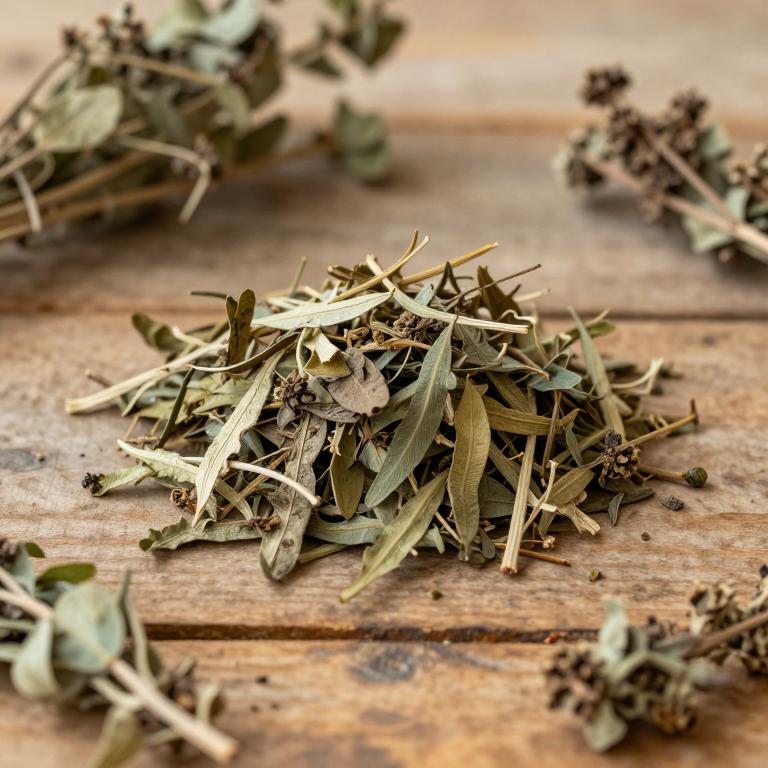
Names and Synonyms
Scientific Names
Accepted name
Guatteria foliosaRegional and Traditional Names
Spanish:
- Aceituno negro
- Anonilla
- Carahuasca negra
- Carguero negro
- Karaurinyek
- Majagua
- Majagua verde
Sources: Wikidata, Catalogue of Life
Taxonomical Classification
This plant belongs to the kingdom Plantae and is classified under the phylum Streptophyta within the class Equisetopsida. It is further categorized under the subclass Magnoliidae and the order Magnoliales, falling into the family Annonaceae. Finally, it is identified by the genus Guaetteria and the specific species Guaetteria folioosa.
| Rank | Classification |
|---|---|
| Kingdom | Plantae |
| Phylum | Streptophyta |
| Class | Equisetopsida |
| Subclass | Magnoliidae |
| Order | Magnoliales |
| Family | Annonaceae |
| Genus | Guatteria |
Sources: The World Checklist of Vascular Plants (WCVP)
Distribution
This plant exhibits a broad distribution across several regions of South America. In the northern part of the continent, it can be found in French Guiana and Venezuela. Its presence extends into western South America as well. Within this western region, the species is documented in Colombia and Peru. Additionally, its range reaches further south into Bolivia.
| Region | Area |
|---|---|
| Northern South America | French Guiana |
| Northern South America | Venezuela |
| Western South America | Bolivia |
| Western South America | Colombia |
| Western South America | Peru |
| Brazil | Brazil West-Central |
| Brazil | Brazil North |
Sources: The World Checklist of Vascular Plants (WCVP)
Botanical Identification
Ecology
The ecology of Guatteria foliosa is defined by its presence across diverse Amazonian ecosystems, where it thrives in habitats ranging from riparian forests and gallery forests (Floresta Ciliar ou Galeria) to seasonally flooded forests such as Igapó and Várzea, as well as more stable Terra Firme forests and the Amazonian Savanna (Savaana Amazônica). This species occupies a specific altitudinal niche within these landscapes, typically found at elevations ranging from a minimum of 100 m AMSL to a maximum of 400 m AMSL.
- Elevational range max:
- 400 m AMSL
- Elevational range min:
- 100 m AMSL
- Habitat :
- Floresta Ciliar ou Galeria, Floresta de Igapó, Floresta de Terra Firme, Floresta de Várzea, Savana Amazônica
Morphology
The morphology of Guatteria folioza is characterized by a woody growth form, primarily manifesting as a tree that can reach a maximum height of 12 meters. This species is a terrestrial plant, functioning as an independent organism rather than a parasite or an epiphyte. In terms of its structural habit, it is categorized as a self-supporting plant, lacking the climbing or vining tendencies associated with lianas or obligate climbers. Its development is strictly land-based, as it does not exhibit aquatic or semiaquatic characteristics.
- Aquatic :
- terrestrial
- Climber :
- self-supporting
- Epiphyte :
- terrestrial
- Growth form :
- tree
- Parasite :
- independent
- Plant height max:
- 12 m
- Woodiness :
- woody
Sources: Global Inventory of Floras and Traits (GIFT)
Chemicals
Guatteria foliosa has 5 reported phytochemicals identified across 0 scientific publications and several other databases. The most consistently reported chemicals include (+)-norguattevaline, (-)-3-Hydroxynornuciferine, 3-methoxyoxoputerine, argentinine, isoguattouregidine.
| Chemical | Supporting sources | Consensus |
|---|---|---|
| (+)-norguattevaline | 1 supporting sources | ★☆☆☆☆ |
| (-)-3-Hydroxynornuciferine | 1 supporting sources | ★☆☆☆☆ |
| 3-methoxyoxoputerine | 1 supporting sources | ★☆☆☆☆ |
| argentinine | 1 supporting sources | ★☆☆☆☆ |
| isoguattouregidine | 1 supporting sources | ★☆☆☆☆ |
(+)-norguattevaline
- Journal of natural products
(-)-3-Hydroxynornuciferine
- Journal of natural products
3-methoxyoxoputerine
- Journal of natural products
argentinine
- Journal of natural products
isoguattouregidine
- Parasite (Paris, France)
Conditions
Guatteria foliosa has 2 reported investigations on conditions identified across 0 scientific publications and several other databases. The most consistently reported conditions include Trypanosoma cruzi, leishmaniasis.
| Condition | Supporting sources | Consensus |
|---|---|---|
| Trypanosoma cruzi | 1 supporting sources | ★☆☆☆☆ |
| Leishmaniasis | 1 supporting sources | ★☆☆☆☆ |
Trypanosoma cruzi
- Journal of natural products
Leishmaniasis
- Parasite (Paris, France)