leaved guadua
Guadua angustifolia · Accepted scientific name
Scientific literature: Very Sparse (2 studies) · ★☆☆☆☆
Leaved guadua, scientifically known as Guadua angustifolia, is a versatile giant bamboo native to tropical America. Renowned for its rapid growth and remarkable structural strength, it serves as a sustainable construction material. Beyond architecture, its diverse properties offer significant potential in ecological restoration and traditional medicinal applications worldwide.
- Family
- Poaceae
- Native range
- Southern America
- Parts used
- Not available
- Common names
- Colombian Giant Thorny · Colombian Timber Bamboo
- Scientific synonyms
- Arundarbor Guadua · Nastus Guadua · 5 more
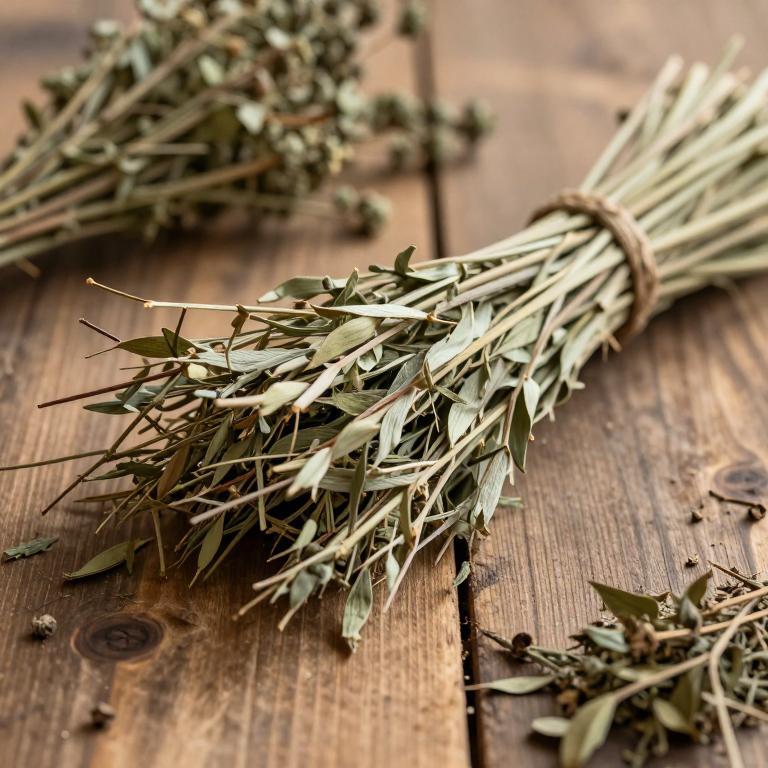
Names and Synonyms
Common Names
- Colombian giant thorny
- Colombian timber bamboo
Scientific Names
Accepted name
Guadua angustifoliaSynonyms
- Arundarbor guadua
- Nastus guadua
- Guadua angustifolia var. nigra
- Guadua intermedia
- Bambusa guadua
- Bambusa inermis
- Guadua angustifolia var. bicolor
Regional and Traditional Names
Spanish:
- guadua
- bambú guadua
German:
- Guadua-Bambus
- Guadua-Bambus
Sources: Wikidata, Catalogue of Life
Taxonomical Classification
This plant belongs to the kingdom Plantae and is classified under the phylum Streptophyta and class Equisetopsida. Within the subclass Magnoliidae and order Poales, it is situated in the family Poaceae. Finally, it is identified by the genus Guadua.
| Rank | Classification |
|---|---|
| Kingdom | Plantae |
| Phylum | Streptophyta |
| Class | Equisetopsida |
| Subclass | Magnoliidae |
| Order | Poales |
| Family | Poaceae |
| Genus | Guadua |
Sources: The World Checklist of Vascular Plants (WCVP)
Distribution
This plant exhibits a wide distribution across several distinct regions of the Americas. In the Caribbean, its presence can be found within the islands of Trinidad and Tobago. Moving to Northern South America, the species is established in both Guyana and Venezuela. Its range extends further into Western South America, where it is commonly located in Colombia. Finally, the geographical footprint of this medicinal plant includes the territory of Ecuador.
| Region | Area |
|---|---|
| Caribbean | Trinidad-Tobago |
| Northern South America | Guyana |
| Northern South America | Venezuela |
| Western South America | Colombia |
| Western South America | Ecuador |
| Western South America | Galápagos |
| Western South America | Peru |
| Brazil | Brazil Southeast |
| Brazil | Brazil South |
| Southern South America | Argentina Northeast |
Sources: The World Checklist of Vascular Plants (WCVP)
Botanical Identification
Ecology
The ecology of Guadua angustifolia is characterized by its wide adaptability across a broad vertical gradient, with an elevational range extending from sea level (0 m AMSL) up to a maximum altitude of 2250 m AMSL. While naturally occurring in specific forest ecosystems, the species demonstrates significant resilience and presence within anthropogenic areas (Área Antrópicica), indicating its ability to persist and integrate into landscapes modified by human activity.
- Elevational range max:
- 2250 m AMSL
- Elevational range min:
- 0 m AMSL
- Habitat :
- Área Antrópica
Morphology
The morphology of Guadua angustifolia is characterized by a robust, woody growth form that functions as a self-supporting tree-like structure, reaching a maximum plant height of approximately 12 m. As a terrestrial species, it does not exhibit aquatic, semiaquatic, or epiphytic tendencies, maintaining an independent existence without acting as a parasite or requiring a host for support. Unlike climbers or lianas, it is strictly self-supporting, utilizing its strong, woody culms to maintain an upright stature within its habitat.
- Aquatic :
- terrestrial
- Climber :
- self-supporting
- Epiphyte :
- terrestrial
- Growth form :
- tree
- Parasite :
- independent
- Plant height max:
- 12 m
- Woodiness :
- woody
Reproduction
The reproduction of Guadua angustifolia is a complex biological process characterized by a diverse range of dispersal syndromes that facilitate its colonization and survival in various environments. While the species can exhibit multiple mechanisms for seed and propagule movement, its primary dispersal syndromes include anemochory, where wind plays a role in transporting lightweight components, and zoochory, which involves the movement of seeds via animals. Additionally, the plant utilizes autochory, involving self-dispersal mechanisms, and hydrochory, leveraging water currents for distribution. In many ecological contexts, its dispersal can also be classified as unspecialized, allowing it to adapt to different environmental vectors to ensure the successful propagation of new individuals within its habitat.
- Dispersal syndrome :
- zoochorous
Sources: Global Inventory of Floras and Traits (GIFT)
Chemicals
Guadua angustifolia has 1 reported phytochemicals identified across 0 scientific publications and several other databases. The most consistently reported chemicals include Fatty acids.
| Chemical | Supporting sources | Consensus |
|---|---|---|
| Fatty acids | 1 supporting sources | ★☆☆☆☆ |
Fatty acids
- Chemistry & biodiversity
Activities
Guadua angustifolia has 1 reported activities identified across 0 scientific publications and several other databases. The most consistently reported activities include Antioxidant.
| Activity | Supporting sources | Consensus |
|---|---|---|
| Antioxidant | 1 supporting sources | ★☆☆☆☆ |
Antioxidant
- Chemistry & biodiversity