Puget Sound gumweed
Grindelia integrifolia · Accepted scientific name
Scientific literature: Very Sparse (7 studies) · ★☆☆☆☆
Puget Sound gumweed, scientifically known as Grindelia integrifolia, is a resilient perennial herb native to Western North America. Renowned for its sticky, resinous leaves, this plant has long been utilized in traditional medicine. It is primarily valued for its potent antimicrobial, anti-inflammatory, and expectorant properties in treating respiratory ailments.
- Family
- Asteraceae
- Native range
- Northern America
- Parts used
- Not available
- Common names
- Puget Sound Gumweed · Gumweed
- Scientific synonyms
- Grindelia Integrifolia Var. Aestivalis · Grindelia Integrifolia Var. Autumnalis · 3 more
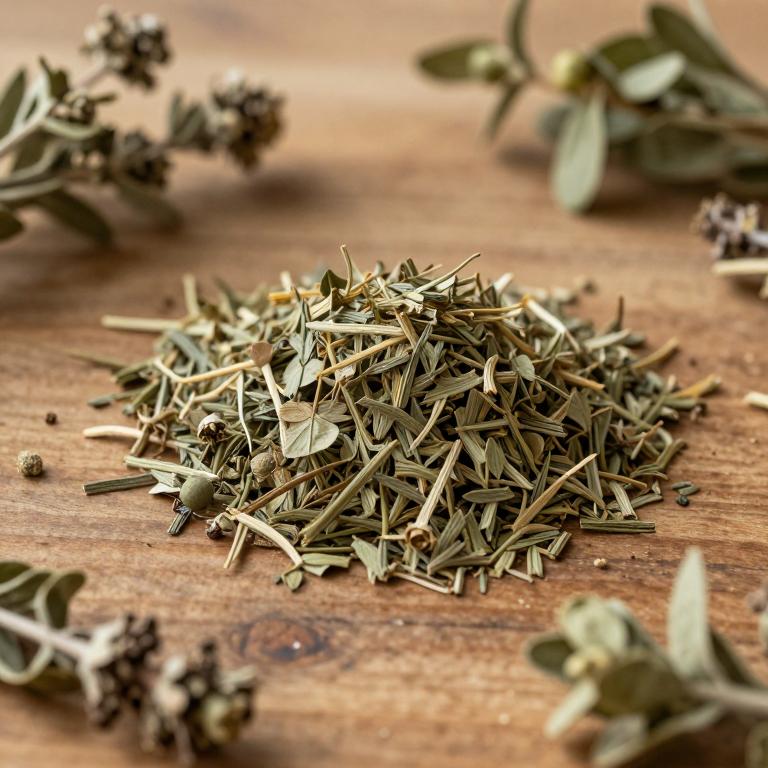
Names and Synonyms
Common Names
- Puget Sound gumweed
- gumweed
Scientific Names
Accepted name
Grindelia integrifoliaSynonyms
- Grindelia integrifolia var. aestivalis
- Grindelia integrifolia var. autumnalis
- Grindelia integrifolia f. villosa
- Grindelia villosa
- Grindelia integrifolia f. dentata
Sources: Wikidata, Catalogue of Life
Taxonomical Classification
This plant belongs to the kingdom Plantae within the phylum Streptophyta and the class Equisetopsida. Classified under the subclass Magnoliidae and the order Asterales, it is a member of the Asteraceae family. It is specifically identified by the genus Grindelia.
| Rank | Classification |
|---|---|
| Kingdom | Plantae |
| Phylum | Streptophyta |
| Class | Equisetopsida |
| Subclass | Magnoliidae |
| Order | Asterales |
| Family | Asteraceae |
| Genus | Grindelia |
Sources: The World Checklist of Vascular Plants (WCVP)
Distribution
This plant is widely distributed across several specific regions in North America. In Western Canada, its presence is noted within the province of British Columbia. Moving south into the Northwestern United States, it can be found growing in Oregon. Additionally, the species inhabits the state of Washington. Together, these areas define the primary geographical range of Grindelia integrifolia.
| Region | Area |
|---|---|
| Western Canada | British Columbia |
| Northwestern U.S.A. | Oregon |
| Northwestern U.S.A. | Washington |
Sources: The World Checklist of Vascular Plants (WCVP)
Botanical Identification
Life history
The life history of Grindelia integrifolia is characterized by its status as a perennial species, allowing the plant to persist through multiple growing seasons. As a perennial, it establishes a robust root system that enables it to survive dormant periods and emerge to flower repeatedly over several years. Its development cycle typically involves seasonal growth phases driven by environmental cues, where it invests energy into both vegetative spread and reproductive efforts. Through its perennial lifecycle, the plant can maintain a stable presence within its ecological niche, often utilizing its longevity to navigate variable environmental conditions and ensure long-term survival and seed production.
- Lifecycle :
- perennial
Morphology
The morphology of Grindelia integrifolia is characterized by its growth form as a forb, presenting a structure typical of herbaceous plants. Regarding its physical support and habit, it is categorized as self-supporting, meaning it does not utilize climbing mechanisms such as tendrils or twining stems to ascend. Additionally, the plant exhibits variable woodiness, where the degree of lignification in its stems can fluctuate depending on environmental conditions and the age of the individual plant.
- Climber :
- self-supporting
- Growth form :
- forb
- Woodiness :
- variable
Reproduction
The reproduction of Grindelia integrifolia is characterized by the production of specialized seeds that exhibit specific morphological and mass-related traits essential for its dispersal and establishment. Quantitative analysis of the seed characteristics reveals a highly consistent size distribution within the population. The seed mass follows a narrow range, with a measured mean mass of 0.0039415 g. This central value is bounded by a minimum seed mass of 0.003573 g and a maximum seed mass of 0.00431 g, indicating a precise evolutionary adaptation in seed development. These subtle variations in mass contribute to the plant's reproductive strategy, ensuring that the progeny are equipped with the necessary nutrient reserves to successfully germinate within its natural habitat.
- Seed mass max:
- 0.00431 g
- Seed mass mean:
- 0.0039415 g
- Seed mass min:
- 0.003573 g
Sources: Global Inventory of Floras and Traits (GIFT)
Chemicals
Grindelia integrifolia has 6 reported phytochemicals identified across 0 scientific publications and several other databases. The most consistently reported chemicals include 19-Hydroxygrindelic acid, 3beta-Hydroxygrindelic acid, Grindelic acid, Methyl grindeloate, Tarapacanol A.
| Chemical | Supporting sources | Consensus |
|---|---|---|
| 19-Hydroxygrindelic acid | 1 supporting sources | ★☆☆☆☆ |
| 3beta-Hydroxygrindelic acid | 1 supporting sources | ★☆☆☆☆ |
| Grindelic acid | 1 supporting sources | ★☆☆☆☆ |
| Methyl grindeloate | 1 supporting sources | ★☆☆☆☆ |
| Tarapacanol A | 1 supporting sources | ★☆☆☆☆ |
| Tarapacol | 1 supporting sources | ★☆☆☆☆ |
19-Hydroxygrindelic acid
- Journal of natural products
3beta-Hydroxygrindelic acid
- Journal of natural products
Grindelic acid
- Journal of natural products
Methyl grindeloate
- Journal of natural products
Tarapacanol A
- Journal of natural products
Tarapacol
- Journal of natural products