hairy gumplant
Grindelia hirsutula · Accepted scientific name
Scientific literature: Very Sparse (7 studies) · ★☆☆☆☆
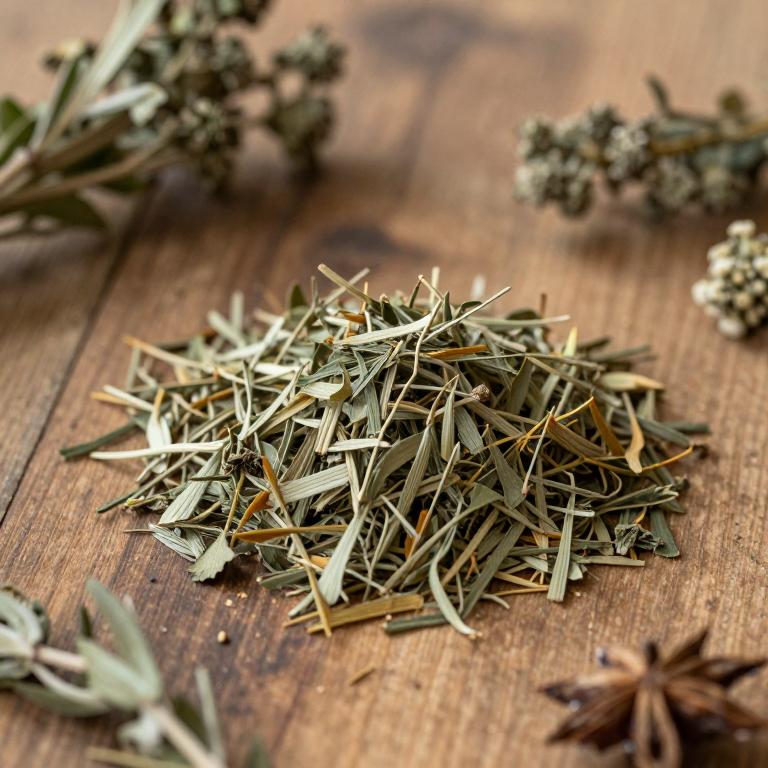
Hairy gumplant, scientifically known as Grindelia hirsutula, is a resilient perennial herb native to North America. Characterized by its sticky, resinous foliage and bright yellow composite flowers, this plant has long been utilized in traditional medicine for its antimicrobial and anti-inflammatory properties, particularly in treating respiratory and skin ailments.
Names and Synonyms
Common Names
- hairy gumweed
- grindelia
- marsh gumweed
- Great Valley Gumplant
- San Francisco Gumplant
Scientific Names
Accepted name
Grindelia hirsutulaSynonyms
- Grindelia hirsutula subsp. rubricaulis
- Grindelia hirsutula f. patens
- Grindelia robusta var. patens
- Grindelia oregana f. wilkesiana
- Grindelia nana f. longisquama
- Grindelia hirsutula var. acutifolia
- Grindelia camporum var. interioris
- Grindelia robusta
- Grindelia cuneifolia var. paludosa
- Grindelia hirsutula var. revoluta
- Grindelia perennis
- Grindelia squarrosa var. quasiperennis
- Grindelia revoluta
- Grindelia fastigiata var. revoluta
- Grindelia humilis f. reflexa
- Grindelia arenicola var. pachyphylla
- Grindelia arenicola f. trichophora
- Grindelia rubricaulis var. interioris
- Grindelia rubricaulis var. maritima
- Grindelia hirsutula var. maritima
- Grindelia robusta var. maritima
- Grindelia maritima
- Grindelia humilis
- Grindelia rubricaulis
- Grindelia fastigiata
- Grindelia inornata var. angusta
- Grindelia hirsutula var. calva
- Grindelia hirsutula f. glabrata
- Grindelia patens
- Grindelia hirsutula f. pedunculoides
- Grindelia oregana subsp. wilkesiana
- Grindelia pacifica
- Grindelia oregana
- Grindelia hirsutula var. subintegra
- Grindelia rubricaulis var. robusta
- Grindelia hirsutula f. tomentulosa
- Grindelia humilis f. pubescens
- Grindelia hirsutula var. brevisquama
- Grindelia hirsutula f. cacumena
- Grindelia acutifolia
- Grindelia maritima f. anomala
- Grindelia rubricaulis var. permixta
- Grindelia rubricaulis f. minor
- Grindelia rubricaulis f. pubescens
- Grindelia rubricaulis f. villosa
- Grindelia camporum f. foliacea
Regional and Traditional Names
German:
- haariges Gummikraut
French:
- herbe à gomme hirsute
Sources: Wikidata, Catalogue of Life
Taxonomical Classification
This plant, known scientifically as Grindelia hirsutula, belongs to the kingdom Plantae and the phylum Streptophyta. Within the class Equisetopsida and subclass Magnoliidae, it is classified under the order Asterales. It is a member of the Asteraceae family and is specifically categorized within the genus Grindelia.
| Rank | Classification |
|---|---|
| Kingdom | Plantae |
| Phylum | Streptophyta |
| Class | Equisetopsida |
| Subclass | Magnoliidae |
| Order | Asterales |
| Family | Asteraceae |
| Genus | Grindelia |
Sources: The World Checklist of Vascular Plants (WCVP)
Distribution
This plant exhibits a broad geographical distribution spanning several different continents and climate zones. In Northern Europe, its presence can be documented within Great Britain. Moving toward Middle Europe, the species is also found growing in Germany. The distribution extends to North America, where it inhabits the Northwest Territories of Subarctic America and the province of Alberta in Western Canada. Additionally, the plant reaches the Southern Hemisphere, specifically appearing in New South Wales, Australia.
| Region | Area |
|---|---|
| Northern Europe | Great Britain |
| Middle Europe | Germany |
| Australia | New South Wales |
| Subarctic America | Northwest Territories |
| Western Canada | Alberta |
| Western Canada | British Columbia |
| Western Canada | Manitoba |
| Western Canada | Saskatchewan |
| Eastern Canada | Ontario |
| Eastern Canada | Québec |
Sources: The World Checklist of Vascular Plants (WCVP)
Botanical Identification
Life history
The life history of Grindelia hirsutula is characterized by its status as a perennial species, a trait that allows it to persist in its environment over multiple growing seasons. As a perennial, the plant establishes a robust root system that provides the necessary energy reserves to survive dormant periods and re-emerge annually. This long-term survival strategy enables the plant to navigate varying environmental conditions and fluctuations in resource availability. Throughout its lifecycle, the plant undergoes seasonal cycles of vegetative growth and reproductive development, utilizing its perennial nature to ensure consistent presence within its ecological niche.
- Lifecycle :
- perennial
Morphology
The morphology of Grindelia hirsutula is characterized by its growth form as a non-woody herb, specifically classified as a forb. This plant is a self-supporting species rather than a climber, liana, or vine, and it functions as an independent organism with no parasitic or epiphytic tendencies, maintaining a terrestrial existence. In terms of stature, it is a relatively low-growing plant, with a height ranging from a minimum of 0.5 m to a maximum of 1.2 m. Its habitat preference is primarily terrestrial, distinguishing it from aquatic or semiaquatic environments.
- Aquatic :
- terrestrial
- Climber :
- self-supporting
- Epiphyte :
- terrestrial
- Growth form :
- herb
- Growth form :
- forb
- Parasite :
- independent
- Plant height max:
- 1.2 m
- Plant height min:
- 0.5 m
- Woodiness :
- non-woody
Physiology
The physiology of Grindelia hirsutula is characterized by a robust vegetative structure designed to support its metabolic functions, specifically through its specialized foliage. The plant utilizes its leaves to manage gas exchange and photosynthesis, with leaf dimensions varying significantly depending on environmental conditions and developmental stages. The leaves exhibit a morphological range in length, typically measuring between a minimum of 4 cm and a maximum of 18 cm. Complementing this longitudinal variation is a corresponding breadth in leaf width, which spans from a minimum of 1 cm to a maximum of 3 cm. This structural plasticity in leaf surface area allows the plant to optimize light interception and regulate transpiration rates within its habitat.
- Leaf length max:
- 18 cm
- Leaf length min:
- 4 cm
- Leaf width max:
- 3 cm
- Leaf width min:
- 1 cm
Reproduction
The reproduction of Grindelia hirsutula is characterized by the production of dry, indehiscent fruits classified as achenes. The seeds contained within these fruits exhibit consistent volumetric dimensions, with a recorded seed volume of 4.2 mm³ across minimum, maximum, and mean measurements. Regarding seed mass, the plant displays a degree of variability, with individual seeds weighing as little as 0.001072 g and reaching a maximum of 0.004709 g, resulting in an average seed mass of approximately 0.002879 g.
- Dehiscence :
- indehiscent
- Fruit dryness :
- dry
- Fruit type :
- achene
- Seed mass max:
- 0.004709 g
- Seed mass mean:
- 0.00287866666666667 g
- Seed mass min:
- 0.001072 g
- Seed volume max:
- 4.2 mm³
Sources: Global Inventory of Floras and Traits (GIFT)
Plant Parts
Grindelia hirsutula has 1 reported plant parts identified across 1 scientific publications and several other databases that are studied for medicinal purposes. The most consistently reported plant part include flower.
| Plant part | Supporting sources | Consensus |
|---|---|---|
| Flower | 1 supporting sources | ★☆☆☆☆ |
Flower
- The Plant journal : for cell and molecular biology
Chemicals
Grindelia hirsutula has 5 reported phytochemicals identified across 1 scientific publications and several other databases. The most consistently reported chemicals include Grindelic acid, Manoyl oxide, Quercetin-3-methylether, Tumor necrosis factor-alpha, nitric oxide.
| Chemical | Supporting sources | Consensus |
|---|---|---|
| Grindelic acid | 1 supporting sources | ★☆☆☆☆ |
| Manoyl oxide | 1 supporting sources | ★☆☆☆☆ |
| Quercetin-3-methylether | 1 supporting sources | ★☆☆☆☆ |
| Tumor necrosis factor-alpha | 1 supporting sources | ★☆☆☆☆ |
| nitric oxide | 1 supporting sources | ★☆☆☆☆ |
Grindelic acid
- The Plant journal : for cell and molecular biology
Manoyl oxide
- The Plant journal : for cell and molecular biology
Quercetin-3-methylether
- Fitoterapia
Tumor necrosis factor-alpha
- Molecular and cellular biochemistry
nitric oxide
- Molecular and cellular biochemistry
Preparations
Grindelia hirsutula has 2 reported preparations identified across 1 scientific publications and several other databases. The most consistently reported preparations include Whole plant methanolic extracts, resinous exudate.
| Preparation | Supporting sources | Consensus |
|---|---|---|
| Whole plant methanolic extracts | 1 supporting sources | ★☆☆☆☆ |
| Resinous exudate | 1 supporting sources | ★☆☆☆☆ |
Whole plant methanolic extracts
- Molecular and cellular biochemistry
Resinous exudate
- The Plant journal : for cell and molecular biology