caricature-plant
Graptophyllum pictum · Accepted scientific name
Scientific literature: Very Sparse (21 studies) · ★☆☆☆☆
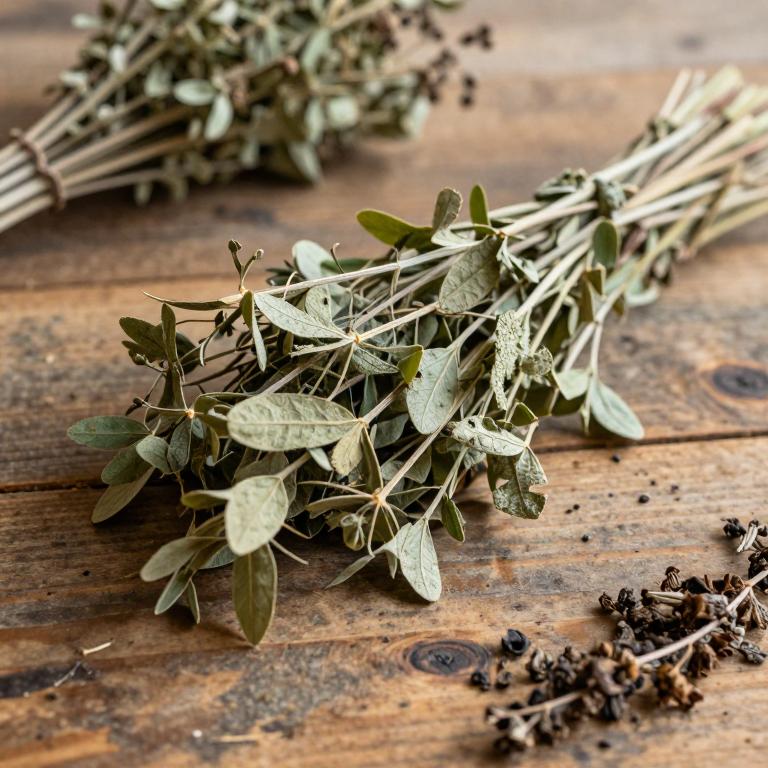
Caricature-plant, scientifically known as Graptophyllum pictum, is a striking ornamental succulent prized for its bold, variegated foliage. Beyond its aesthetic appeal, this plant holds significant traditional value in herbal medicine, where its leaves are utilized for their purported healing properties, particularly in treating various skin ailments and inflammations.
- Family
- Acanthaceae
- Native range
- Africa
- Parts used
- Leaf
- Common names
- Caricature-Plant
- Scientific synonyms
- Marama Picta · Graptophyllum Pictum Var. Album · 14 more
Names and Synonyms
Common Names
- caricature-plant
Scientific Names
Accepted name
Graptophyllum pictumSynonyms
- Marama picta
- Graptophyllum pictum var. album
- Graptophyllum versicolor
- Justicia picta var. luridosanguinea
- Graptophyllum hortense var. rubrum
- Graptophyllum hortense var. viride
- Graptophyllum picturatum
- Justicia carayana
- Justicia klotzschiana
- Justicia nitida
- Justicia picta
- Graptophyllum pictum var. luridosanguineum
- Graptophyllum pictum var. viride
- Graptophyllum nortonii
- Graptophyllum hortense var. luridosanguineum
- Graptophyllum rubricaule
Regional and Traditional Names
Spanish:
- Café con leche
Sources: Wikidata, Catalogue of Life
Taxonomical Classification
This plant belongs to the kingdom Plantae and is classified within the phylum Streptophyta and the class Equisetopsida. Following its placement in the subclass Magnoliidae and the order Lamiales, it is further categorized under the family Acanthaceae. Ultimately, it is identified by the genus Graptophyllum, specifically as the species Graptophyllum pictum.
| Rank | Classification |
|---|---|
| Kingdom | Plantae |
| Phylum | Streptophyta |
| Class | Equisetopsida |
| Subclass | Magnoliidae |
| Order | Lamiales |
| Family | Acanthaceae |
| Genus | Graptophyllum |
Sources: The World Checklist of Vascular Plants (WCVP)
Distribution
This plant exhibits a broad geographical distribution spanning across several tropical regions. In West Tropical Africa, it can be found growing in the nations of Ghana, Guinea, and Sierra Leone. Its presence extends further into West-Central Tropical Africa, specifically within the borders of Cameroon. Additionally, the species reaches the Western Indian Ocean, where it is documented in Mauritius. This wide range demonstrates the plant's ability to thrive in diverse tropical environments.
| Region | Area |
|---|---|
| West Tropical Africa | Ghana |
| West Tropical Africa | Guinea |
| West Tropical Africa | Sierra Leone |
| West-Central Tropical Africa | Cameroon |
| Western Indian Ocean | Mauritius |
| Western Indian Ocean | Réunion |
| Indian Subcontinent | Bangladesh |
| Indian Subcontinent | Sri Lanka |
| Indo-China | Vietnam |
| Malesia | Jawa |
Sources: The World Checklist of Vascular Plants (WCVP)
Botanical Identification
Ecology
The ecology of Graptophyllum pictum is characterized by its ability to thrive across a broad altitudinal gradient, ranging from sea level up to an elevation of 1000 m AMSL. It typically occupies moist, shaded environments such as forest understories, edges, or tropical garden settings where humidity is consistently maintained. This species prefers well-draining, organic-rich soils and exhibits a preference for partial shade, which protects its foliage from intense direct sunlight while allowing for efficient photosynthetic activity. Its distribution within this elevational range allows it to adapt to various microclimates, provided there is adequate moisture and protection from extreme temperature fluctuations.
- Elevational range max:
- 1000 m AMSL
- Elevational range min:
- 0 m AMSL
Life history
The life history of Graptophyllum pictum is characterized by its nature as a perennial plant, allowing it to persist through multiple growing seasons and maintain a stable presence in its habitat. Throughout its development, the plant maintains an evergreen status, retaining its lush, patterned foliage year-round without undergoing a seasonal shedding phase. This combination of a long-lived lifecycle and continuous leaf retention enables the species to establish robust vegetative structures that support its ongoing growth and reproductive cycles.
- Deciduousness :
- evergreen
- Lifecycle :
- perennial
Morphology
The morphology of Graptophyllum pictum is characterized by a woody growth form, specifically classified as a shrub. The plant typically reaches an average height of approximately 2.5 m, maintaining a self-supporting structure rather than acting as a liana, vine, or climber. As a terrestrial organism, it exists independently of other plants, functioning as an independent species rather than a parasite or an epiphyte. Its physical development is defined by its woody nature, which supports its upright, shrubby habit in its natural terrestrial habitat.
- Aquatic :
- terrestrial
- Climber :
- self-supporting
- Epiphyte :
- terrestrial
- Growth form :
- shrub
- Parasite :
- independent
- Plant height mean:
- 2.5 m
- Woodiness :
- woody
Physiology
The physiology of Graptophyllum pictum is characterized by its metabolic processes and structural adaptations suited for tropical environments. Regarding its water management strategies, the plant does not exhibit succulence; unlike true succulents that possess thickened, fleshy tissues for significant water storage, its leaves are relatively thin and rely on consistent moisture availability. Furthermore, it does not function as a nitrogen fixer, meaning it lacks the symbiotic relationship with nitrogen-fixing bacteria (such as Rhizobium or Frankia) required to convert atmospheric nitrogen into a usable form for its growth. Instead, the plant relies on the uptake of nitrates and ammonium from the soil through its root system to support its physiological development and the production of its characteristic pigmented foliage.
- Nitrogen fixer :
- no
- Succulence :
- no
Reproduction
Reproduction in Graptophyllum pictum involves complex mechanisms for both sexual and asexual propagation, though its primary modes of seed and propagule movement are governed by specific dispersal syndromes. The plant exhibits a diverse range of dispersal strategies, including anemochorous, anthropochorous, autochorous, endozoochorous, epizoochorous, hydrochorous, myrmecocorous, and unspecialized zoochorous traits. This multi-faceted approach to dispersal allows the species to spread via wind, water, animal ingestion, attachment to animal fur, or movement by ants, while also being subject to anthropogenic influence through human-mediated transport. Such a wide variety of dispersal syndromes ensures that the plant can colonize new habitats through various environmental vectors, ranging from natural ecological processes to human intervention.
- Dispersal syndrome :
- anthropochorous
Sources: Global Inventory of Floras and Traits (GIFT)
Plant Parts
Graptophyllum pictum has 1 reported plant parts identified across 1 scientific publications and several other databases that are studied for medicinal purposes. The most consistently reported plant part include leaf.
| Plant part | Supporting sources | Consensus |
|---|---|---|
| Leaf | 1 supporting sources | ★☆☆☆☆ |
Leaf
- Molecules (Basel, Switzerland)
Chemicals
Graptophyllum pictum has 8 reported phytochemicals identified across 1 scientific publications and several other databases. The most consistently reported chemicals include Flavonoids, CALCIUM OXALATE, Lupeol, STIGMASTEROL, Saponins.
| Chemical | Supporting sources | Consensus |
|---|---|---|
| Flavonoids | 2 supporting sources | ★☆☆☆☆ |
| CALCIUM OXALATE | 1 supporting sources | ★☆☆☆☆ |
| Lupeol | 1 supporting sources | ★☆☆☆☆ |
| STIGMASTEROL | 1 supporting sources | ★☆☆☆☆ |
| Saponins | 1 supporting sources | ★☆☆☆☆ |
| Tannins | 1 supporting sources | ★☆☆☆☆ |
| hypopurin A | 1 supporting sources | ★☆☆☆☆ |
| hypopurin B | 1 supporting sources | ★☆☆☆☆ |
Flavonoids
- Ancient science of life
- Chemical & pharmaceutical bulletin
CALCIUM OXALATE
- Ancient science of life
Lupeol
- Molecules (Basel, Switzerland)
STIGMASTEROL
- Molecules (Basel, Switzerland)
Saponins
- Ancient science of life
Tannins
- Ancient science of life
hypopurin A
- Molecules (Basel, Switzerland)
hypopurin B
- Molecules (Basel, Switzerland)
Activities
Graptophyllum pictum has 4 reported activities identified across 1 scientific publications and several other databases. The most consistently reported activities include Analgesic, Anticholinesterase, Antidiabetic, Antiinflammatory.
| Activity | Supporting sources | Consensus |
|---|---|---|
| Analgesic | 1 supporting sources | ★☆☆☆☆ |
| Anticholinesterase | 1 supporting sources | ★☆☆☆☆ |
| Antidiabetic | 1 supporting sources | ★☆☆☆☆ |
| Antiinflammatory | 1 supporting sources | ★☆☆☆☆ |
Analgesic
- Chemical & pharmaceutical bulletin
Anticholinesterase
- Molecules (Basel, Switzerland)
Antidiabetic
- Molecules (Basel, Switzerland)
Antiinflammatory
- Chemical & pharmaceutical bulletin
Conditions
Graptophyllum pictum has 3 reported investigations on conditions identified across 1 scientific publications and several other databases. The most consistently reported conditions include Alzheimer's disease, edema, vascular permeability.
| Condition | Supporting sources | Consensus |
|---|---|---|
| Alzheimer's disease | 1 supporting sources | ★☆☆☆☆ |
| Edema | 1 supporting sources | ★☆☆☆☆ |
| Vascular permeability | 1 supporting sources | ★☆☆☆☆ |
Alzheimer's disease
- Molecules (Basel, Switzerland)
Edema
- Chemical & pharmaceutical bulletin
Vascular permeability
- Chemical & pharmaceutical bulletin
Preparations
Graptophyllum pictum has 5 reported preparations identified across 1 scientific publications and several other databases. The most consistently reported preparations include continuous shaking extraction (CSE), leaves extract, microwave-assisted extraction (MAE), stem extract, ultrasonic-assisted extraction (UAE).
| Preparation | Supporting sources | Consensus |
|---|---|---|
| Continuous shaking extraction (cse) | 1 supporting sources | ★☆☆☆☆ |
| Leaves extract | 1 supporting sources | ★☆☆☆☆ |
| Microwave-assisted extraction (mae) | 1 supporting sources | ★☆☆☆☆ |
| Stem extract | 1 supporting sources | ★☆☆☆☆ |
| Ultrasonic-assisted extraction (uae) | 1 supporting sources | ★☆☆☆☆ |
Continuous shaking extraction (cse)
- Brazilian journal of biology = Revista brasleira de biologia
Leaves extract
- Molecules (Basel, Switzerland)
Microwave-assisted extraction (mae)
- Brazilian journal of biology = Revista brasleira de biologia
Stem extract
- Molecules (Basel, Switzerland)
Ultrasonic-assisted extraction (uae)
- Brazilian journal of biology = Revista brasleira de biologia