Gouania mauritiana
Gouania mauritiana · Accepted scientific name
Scientific literature: Very Sparse (9 studies) · ★☆☆☆☆
Gouania mauritiana, scientifically known as Gouania mauritiana, is a resilient medicinal shrub native to the arid regions of North Africa. Renowned in traditional Berber medicine, its leaves and bark are frequently utilized for their potent bioactive compounds, offering therapeutic potential in treating various inflammatory conditions and digestive ailments.
- Family
- Rhamnaceae
- Native range
- Africa
- Parts used
- Not available
- Common names
- Not available
- Scientific synonyms
- Not available
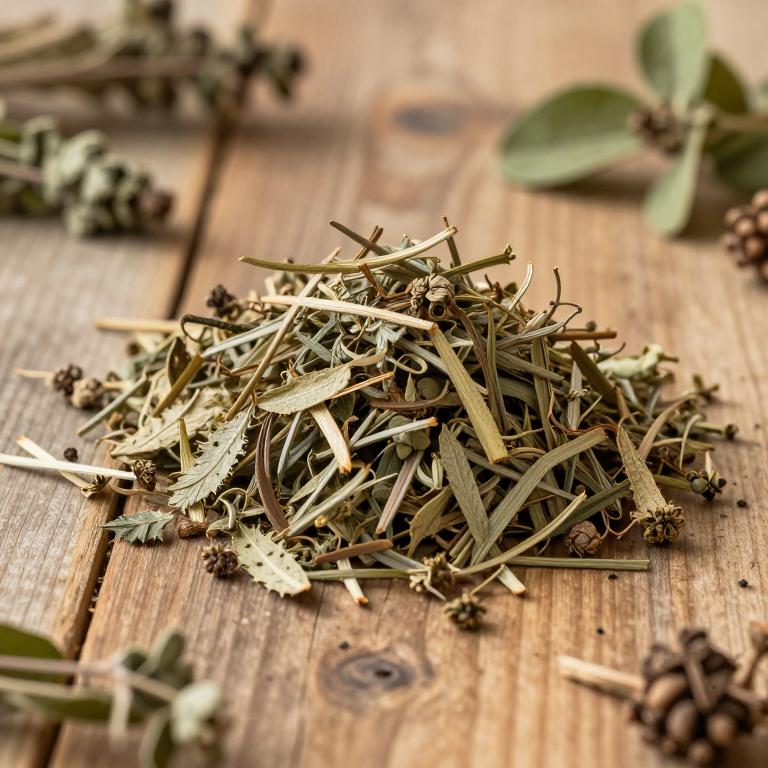
Names and Synonyms
Scientific Names
Accepted name
Gouania mauritianaRegional and Traditional Names
French:
- Gouane de Bourbon
- Gouane de Maurice
- Liane Montbrun
- Liane savon
- Liane savon velue
- Petite liane noire
Sources: Wikidata, Catalogue of Life
Taxonomical Classification
This plant belongs to the kingdom Plantae within the phylum Streptophyta and the class Equisetopsida. Following the subclass Magnoliidae, it is classified under the order Rosales and the family Rhamnaceae. Ultimately, it is identified by the genus Gouania, specifically as the species Gouania mauritiana.
| Rank | Classification |
|---|---|
| Kingdom | Plantae |
| Phylum | Streptophyta |
| Class | Equisetopsida |
| Subclass | Magnoliidae |
| Order | Rosales |
| Family | Rhamnaceae |
| Genus | Gouania |
Sources: The World Checklist of Vascular Plants (WCVP)
Distribution
This plant, known scientifically as Gouania mauritiana, exhibits a specific range within the Western Indian Ocean. Its natural occurrence is documented across several key island territories in this tropical region. Specifically, it can be found growing on the island of Mauritius. Additionally, the species is distributed within the territory of Réunion. These locations define its current geographical footprint in the ocean.
| Region | Area |
|---|---|
| Western Indian Ocean | Mauritius |
| Western Indian Ocean | Réunion |
Sources: The World Checklist of Vascular Plants (WCVP)
Botanical Identification
Morphology
The morphology of Gouania mauritiana is characterized by its robust, woody growth habit, which distinguishes it as a perennial shrub or small tree adapted to arid environments. The plant features a lignified stem structure, exhibiting a woody texture that provides significant structural integrity. Its branches are typically spreading or erect, often possessing a rugged bark surface that protects the vascular tissues. The foliage consists of compound leaves, which are often adapted with reduced surface areas to minimize transpiration. The reproductive structures involve flowers that are arranged in specific inflorescences, leading to the development of characteristic pods or fruits that are consistent with its woody botanical framework.
- Woodiness :
- woody
Sources: Global Inventory of Floras and Traits (GIFT)
Chemicals
Gouania mauritiana has 8 reported phytochemicals identified across 0 scientific publications and several other databases. The most consistently reported chemicals include CHLOROGENIC ACID, Epicatechin, Flavonoids, Procyanidins, caffeic acid.
| Chemical | Supporting sources | Consensus |
|---|---|---|
| CHLOROGENIC ACID | 1 supporting sources | ★☆☆☆☆ |
| Epicatechin | 1 supporting sources | ★☆☆☆☆ |
| Flavonoids | 1 supporting sources | ★☆☆☆☆ |
| Procyanidins | 1 supporting sources | ★☆☆☆☆ |
| caffeic acid | 1 supporting sources | ★☆☆☆☆ |
| kaempferol | 1 supporting sources | ★☆☆☆☆ |
| polyphenols | 1 supporting sources | ★☆☆☆☆ |
| quercetin | 1 supporting sources | ★☆☆☆☆ |
CHLOROGENIC ACID
- Journal of inflammation (London, England)
Epicatechin
- Journal of inflammation (London, England)
Flavonoids
- Journal of inflammation (London, England)
Procyanidins
- Journal of inflammation (London, England)
caffeic acid
- Journal of inflammation (London, England)
kaempferol
- Journal of inflammation (London, England)
polyphenols
- Journal of inflammation (London, England)
quercetin
- Journal of inflammation (London, England)
Conditions
Gouania mauritiana has 1 reported investigations on conditions identified across 0 scientific publications and several other databases. The most consistently reported conditions include inflammation.
| Condition | Supporting sources | Consensus |
|---|---|---|
| Inflammation | 1 supporting sources | ★☆☆☆☆ |
Inflammation
- Journal of inflammation (London, England)
Preparations
Gouania mauritiana has 1 reported preparations identified across 0 scientific publications and several other databases. The most consistently reported preparations include polyphenol-rich extracts.
| Preparation | Supporting sources | Consensus |
|---|---|---|
| Polyphenol-rich extracts | 1 supporting sources | ★☆☆☆☆ |
Polyphenol-rich extracts
- Journal of inflammation (London, England)