Chewstick
Gouania lupuloides · Accepted scientific name
Scientific literature: Very Sparse (7 studies) · ★☆☆☆☆
Chewstick, scientifically known as Gouania lupuloides, is a versatile medicinal plant native to the Caribbean. Renowned for its woody stems, it is traditionally used as a natural toothbrush to promote oral hygiene. Beyond dental care, it offers significant therapeutic potential in treating digestive issues and reducing inflammation.
- Family
- Rhamnaceae
- Native range
- Northern America
- Parts used
- Stem
- Common names
- Chewstick
- Scientific synonyms
- Lupulus Lupuloides Var. Domingensis · Lupulus Lupuloides · 8 more
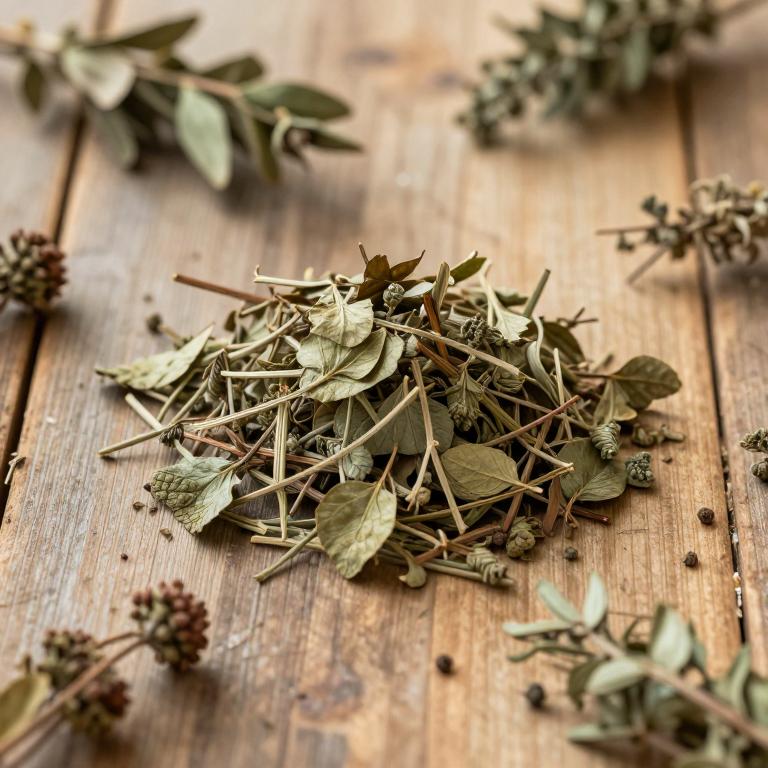
Names and Synonyms
Common Names
- Chewstick
Scientific Names
Accepted name
Gouania lupuloidesSynonyms
- Lupulus lupuloides var. domingensis
- Lupulus lupuloides
- Rhamnus domingensis
- Gouania glabra
- Gouania glabriuscula
- Lupulus lupuloides heterocarpus
- Banisteria lupuloides
- Gouania paniculata
- Gouania lupuloides var. aptera
- Gouania lupuloides var. parvifolia
Regional and Traditional Names
Spanish:
- bejuco leñatero
- jaboncillo
Sources: Wikidata, Catalogue of Life
Taxonomical Classification
This plant belongs to the kingdom Plantae and is classified under the phylum Streptophyta within the class Equisetopsida. It is further categorized under the subclass Magnoliidae and the order Rosales, falling into the family Rhamnaceae. Specifically, it is a member of the genus Gouania, identified as the species Gouania lupuloides.
| Rank | Classification |
|---|---|
| Kingdom | Plantae |
| Phylum | Streptophyta |
| Class | Equisetopsida |
| Subclass | Magnoliidae |
| Order | Rosales |
| Family | Rhamnaceae |
| Genus | Gouania |
Sources: The World Checklist of Vascular Plants (WCVP)
Distribution
This plant exhibits a specific distribution pattern concentrated within North America. In the United States, its presence is noted in the southeastern region, specifically within Florida. Moving south, the species is widely found across various parts of Mexico. It occupies several distinct Mexican zones, including the central, northeast, and northwest regions. Additionally, the plant can be found extending along the Mexican Gulf coast.
| Region | Area |
|---|---|
| Southeastern U.S.A. | Florida |
| Mexico | Mexico Central |
| Mexico | Mexico Northeast |
| Mexico | Mexico Gulf |
| Mexico | Mexico Northwest |
| Mexico | Mexico Southwest |
| Mexico | Mexico Southeast |
| Central America | Belize |
| Central America | Costa Rica |
| Central America | El Salvador |
Sources: The World Checklist of Vascular Plants (WCVP)
Botanical Identification
Ecology
The ecology of Gouania lupuloides is characterized by its presence within forest habitats, where it thrives across a broad altitudinal gradient. This species demonstrates significant adaptability to varying topographic positions, occupying an elevational range that extends from sea level (0 m AMSL) up to a maximum altitude of 1650 m AMSL.
- Elevational range max:
- 1650 m AMSL
- Elevational range min:
- 0 m AMSL
- Habitat :
- forest
Life history
The life history of Gouania lupuloides is characterized by a perennial lifecycle, allowing the plant to persist in its natural habitat through multiple growing seasons. As a long-lived species, it establishes a stable presence within its ecosystem, undergoing various developmental stages that enable it to survive seasonal shifts and environmental fluctuations. This perennial nature ensures that the plant can invest energy into robust structural growth and reproductive success over an extended period, rather than completing its cycle within a single year or two.
- Lifecycle :
- perennial
Morphology
The morphology of Gouania lupuloides is characterized by a woody structure with a growth form categorized as a shrub. It functions as an obligatory climber, specifically manifesting as a liana, which allows it to ascend through surrounding vegetation. The plant is strictly terrestrial in its habitat, acting as an independent organism rather than an epiphyte or a parasite. In terms of scale, it can reach a significant height, with a mean height documented at approximately 10 meters.
- Aquatic :
- terrestrial
- Climber :
- liana
- Climber :
- obligatory
- Epiphyte :
- terrestrial
- Growth form :
- shrub
- Parasite :
- independent
- Plant height mean:
- 10 m
- Woodiness :
- woody
Physiology
The physiology of Gouania lupuloides is characterized by a C3 photosynthetic pathway, utilizing the standard Calvin cycle to fix atmospheric carbon dioxide through the enzyme RuBisCO. This metabolic strategy dictates its gas exchange patterns and water-use efficiency, typical of many woody species in its ecological niche. Furthermore, the plant is not a nitrogen fixer, meaning it lacks the specialized symbiotic relationships with diazotrophic bacteria, such as Rhizobium, required to convert atmospheric nitrogen into bioavailable forms, and instead relies on the uptake of mineral nitrogen from the soil.
- Nitrogen fixer :
- no
- Photosynthetic pathway :
- C3
Reproduction
The reproduction of Gouania lupuloides is characterized by a biotic pollination syndrome, relying primarily on animal vectors to facilitate the transfer of pollen. Specifically, the plant exhibits an insect-mediated pollination process, where various insect species play a crucial role in its reproductive cycle. Following successful fertilization, the dispersal of its progeny is governed by an anemochorous syndrome, meaning the seeds or reproductive structures are dispersed via wind currents to new locations.
- Dispersal syndrome :
- anemochorous
- Pollination syndrome :
- insect
- Pollination syndrome :
- biotic
Sources: Global Inventory of Floras and Traits (GIFT)
Plant Parts
Gouania lupuloides has 1 reported plant parts identified across 1 scientific publications and several other databases that are studied for medicinal purposes. The most consistently reported plant part include stem.
| Plant part | Supporting sources | Consensus |
|---|---|---|
| Stem | 1 supporting sources | ★☆☆☆☆ |
Stem
- Journal of natural products
Chemicals
Gouania lupuloides has 2 reported phytochemicals identified across 1 scientific publications and several other databases. The most consistently reported chemicals include Ceanothic acid, Triterpenes.
| Chemical | Supporting sources | Consensus |
|---|---|---|
| Ceanothic acid | 1 supporting sources | ★☆☆☆☆ |
| Triterpenes | 1 supporting sources | ★☆☆☆☆ |
Ceanothic acid
- Fitoterapia
Triterpenes
- Fitoterapia
Activities
Gouania lupuloides has 1 reported activities identified across 1 scientific publications and several other databases. The most consistently reported activities include Antibacterial.
| Activity | Supporting sources | Consensus |
|---|---|---|
| Antibacterial | 1 supporting sources | ★☆☆☆☆ |
Antibacterial
- Fitoterapia
Conditions
Gouania lupuloides has 3 reported investigations on conditions identified across 1 scientific publications and several other databases. The most consistently reported conditions include leishmaniasis, oral health, oral hygiene.
| Condition | Supporting sources | Consensus |
|---|---|---|
| Leishmaniasis | 1 supporting sources | ★☆☆☆☆ |
| Oral health | 1 supporting sources | ★☆☆☆☆ |
| Oral hygiene | 1 supporting sources | ★☆☆☆☆ |
Leishmaniasis
- Journal of ethnopharmacology
Oral health
- Fitoterapia
Oral hygiene
- Fitoterapia
Preparations
Gouania lupuloides has 2 reported preparations identified across 1 scientific publications and several other databases. The most consistently reported preparations include natural toothbrush, stems.
| Preparation | Supporting sources | Consensus |
|---|---|---|
| Natural toothbrush | 1 supporting sources | ★☆☆☆☆ |
| Stems | 1 supporting sources | ★☆☆☆☆ |
Natural toothbrush
- Fitoterapia
Stems
- Journal of natural products