Xeraea virgata
Gomphrena virgata · Accepted scientific name
Scientific literature: Very Sparse (4 studies) · ★☆☆☆☆
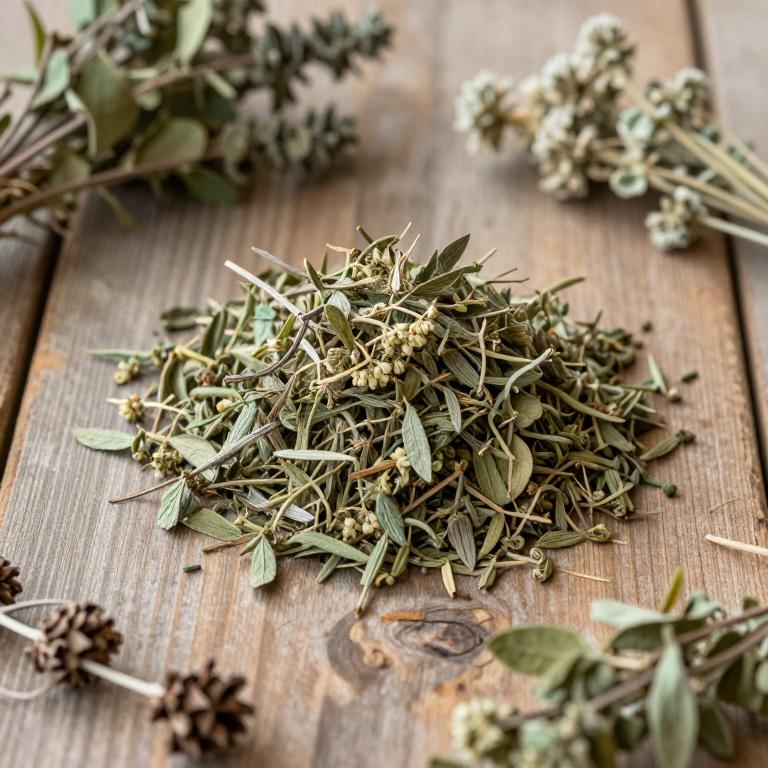
Xeraea virgata, scientifically known as Gomphrena virgata, is a resilient herbaceous plant valued in traditional medicine. Often found in tropical regions, it is celebrated for its therapeutic properties, particularly in treating inflammation and digestive ailments. This hardy species serves as a vital resource for holistic healing and botanical research.
- Family
- Amaranthaceae
- Native range
- Southern America
- Parts used
- Root
- Common names
- Not available
- Scientific synonyms
- Xeraea Virgata
Names and Synonyms
Scientific Names
Accepted name
Gomphrena virgataSynonyms
- Xeraea virgata
Sources: Wikidata, Catalogue of Life
Taxonomical Classification
This plant belongs to the kingdom Plantae and the phylum Streptophyta, falling under the class Equisetopsida and subclass Magnoliidae. Within the order Caryophyllales, it is classified under the family Amaranthaceae and is specifically identified by the genus Gomphrena.
| Rank | Classification |
|---|---|
| Kingdom | Plantae |
| Phylum | Streptophyta |
| Class | Equisetopsida |
| Subclass | Magnoliidae |
| Order | Caryophyllales |
| Family | Amaranthaceae |
| Genus | Gomphrena |
Sources: The World Checklist of Vascular Plants (WCVP)
Distribution
This plant exhibits a widespread presence throughout the diverse landscapes of Brazil. It can be found extensively across the Brazil West-Central region, demonstrating its adaptability to varied environments. The species is also well-distributed throughout the Brazil Northeast and Brazil Southeast areas. Furthermore, its geographical reach extends into the Brazil North territory. Finally, the plant completes its broad coverage by inhabiting the Brazil South region.
| Region | Area |
|---|---|
| Brazil | Brazil West-Central |
| Brazil | Brazil Northeast |
| Brazil | Brazil Southeast |
| Brazil | Brazil North |
| Brazil | Brazil South |
| Southern South America | Paraguay |
Sources: The World Checklist of Vascular Plants (WCVP)
Botanical Identification
Ecology
The ecology of Gomphrena virgata is fundamentally characterized by its presence in high-altitude forest ecosystems, specifically within the Bosque alto. In these elevated environments, the plant adapts to the unique microclimatic conditions of the montane landscape, often thriving in areas where moisture levels and temperature fluctuations are dictated by the canopy cover and altitudinal gradients. Its distribution within these high forests suggests a specialized niche where it interacts with the specific soil compositions and light availability found in such rugged terrains. This habitat dependency influences its growth patterns and its role within the local biodiversity, as it must navigate the complex ecological pressures inherent to high-altitude forest structures.
- Habitat :
- Bosque alto
Life history
The life history of Gomphrena virgata is characterized by its classification as a perennial, although its growth pattern can be highly variable depending on environmental conditions and local climate, sometimes behaving as an annual or biennial. The life cycle begins with the germination of seeds, leading to the development of an erect, branched herbaceous structure. As a perennial, the plant possesses the ability to persist through multiple growing seasons, often establishing a robust root system that allows for regrowth. Throughout its existence, it undergoes distinct phenological stages, including vegetative growth where it accumulates biomass, followed by a reproductive phase marked by the emergence of characteristic globe-like, colorful flower heads on terminal spikes. Following pollination, the plant produces numerous small seeds, ensuring the continuation of the species through successive generations. The longevity and reproductive success of the plant are heavily influenced by soil moisture, sunlight availability, and temperature, which dictate whether it follows a strictly perennial trajectory or shifts its lifecycle duration.
- Lifecycle :
- perennial
Morphology
The morphology of Gomphrena virgata is characterized by its growth form as a non-woody herb and subshrub, primarily functioning as an independent organism without parasitic tendencies. It is a terrestrial plant, lacking aquatic or semiaquatic adaptations, and it does not exhibit epiphytic behavior, remaining strictly grounded in its habitat. As a self-supporting species, it does not possess climbing mechanisms, maintaining a stable, upright structure throughout its life cycle.
- Aquatic :
- terrestrial
- Climber :
- self-supporting
- Epiphyte :
- terrestrial
- Growth form :
- herb
- Growth form :
- subshrub
- Parasite :
- independent
- Woodiness :
- non-woody
Sources: Global Inventory of Floras and Traits (GIFT)
Plant Parts
Gomphrena virgata has 1 reported plant parts identified across 1 scientific publications and several other databases that are studied for medicinal purposes. The most consistently reported plant part include root.
| Plant part | Supporting sources | Consensus |
|---|---|---|
| Root | 1 supporting sources | ★☆☆☆☆ |
Root
- Natural product research
Chemicals
Gomphrena virgata has 1 reported phytochemicals identified across 1 scientific publications and several other databases. The most consistently reported chemicals include 20-HYDROXYECDYSONE.
| Chemical | Supporting sources | Consensus |
|---|---|---|
| 20-HYDROXYECDYSONE | 1 supporting sources | ★☆☆☆☆ |
20-HYDROXYECDYSONE
- Natural product research
Conditions
Gomphrena virgata has 2 reported investigations on conditions identified across 1 scientific publications and several other databases. The most consistently reported conditions include infections, inflammations.
| Condition | Supporting sources | Consensus |
|---|---|---|
| Infections | 1 supporting sources | ★☆☆☆☆ |
| Inflammations | 1 supporting sources | ★☆☆☆☆ |
Infections
- Natural product research
Inflammations
- Natural product research