Gnidia stenophylla
Gnidia stenophylla · Accepted scientific name
Scientific literature: Very Sparse (3 studies) · ★☆☆☆☆
Gnidia stenophylla, scientifically known as Gnidia stenophylla, is a distinctive medicinal shrub native to Southern Africa. Renowned for its narrow leaves and resilience, this plant is utilized in traditional healing practices. Its bioactive compounds offer significant pharmacological potential, particularly in treating various ailments within indigenous medicinal systems.
- Family
- Thymelaeaceae
- Native range
- Africa
- Parts used
- Root
- Common names
- Not available
- Scientific synonyms
- Gnidia Urundiensis · Gnidia Stenophylloides · 3 more
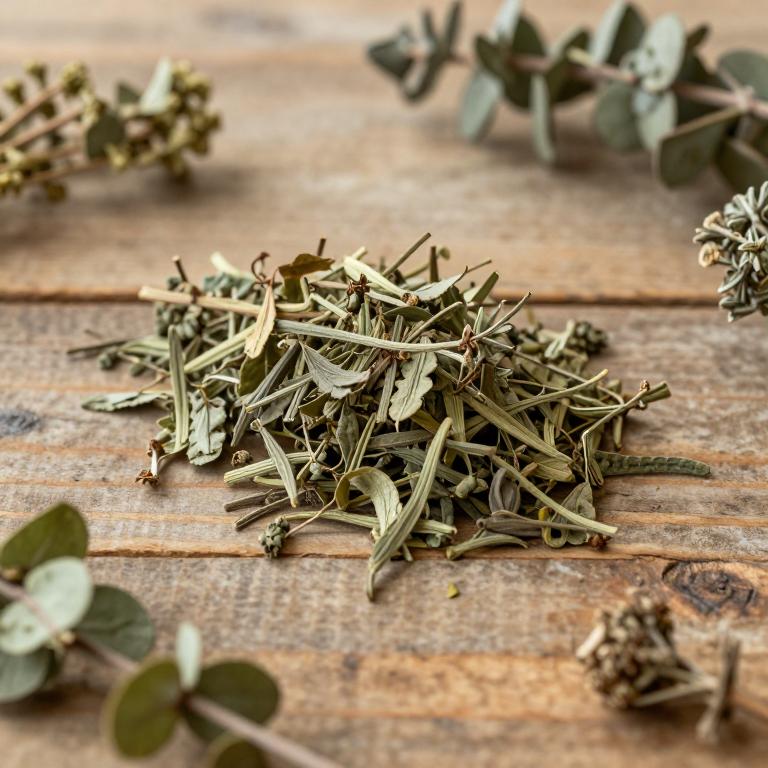
Names and Synonyms
Scientific Names
Accepted name
Gnidia stenophyllaSynonyms
- Gnidia urundiensis
- Gnidia stenophylloides
- Gnidia caduca
- Gnidia clutyioides
- Gnidia claessensii
Sources: Wikidata
Taxonomical Classification
This plant belongs to the kingdom Plantae and the phylum Streptophyta within the class Equisetopsida. As a member of the subclass Magnoliidae and the order Malvales, it is classified under the family Thymelaeaceae. Its specific taxonomic designation falls within the genus Gnidia, where it is identified as Gnidia stenophylla.
| Rank | Classification |
|---|---|
| Kingdom | Plantae |
| Phylum | Streptophyta |
| Class | Equisetopsida |
| Subclass | Magnoliidae |
| Order | Malvales |
| Family | Thymelaeaceae |
| Genus | Gnidia |
Sources: The World Checklist of Vascular Plants (WCVP)
Distribution
This plant is primarily distributed throughout the West-Central Tropical Africa region. Specifically, its presence has been documented within the borders of Burundi. It also grows across parts of the Central African Republic and Cameroon. Furthermore, the species can be found inhabiting the landscapes of Rwanda. Finally, its geographical range extends into the Democratic Republic of the Congo.
| Region | Area |
|---|---|
| West-Central Tropical Africa | Burundi |
| West-Central Tropical Africa | Central African Republic |
| West-Central Tropical Africa | Cameroon |
| West-Central Tropical Africa | Rwanda |
| West-Central Tropical Africa | DR Congo |
| Northeast Tropical Africa | Ethiopia |
| East Tropical Africa | Kenya |
| East Tropical Africa | Tanzania |
| East Tropical Africa | Uganda |
Sources: The World Checklist of Vascular Plants (WCVP)
Botanical Identification
Morphology
The morphology of Gnidia stenophylla is characterized by its specific growth form and structural composition. This plant is classified as a herb, exhibiting a growth form that lacks significant structural height or secondary thickening typical of larger plants. Consequently, its physical structure is defined by its non-woody nature, meaning it lacks the lignified tissues required to form permanent woody stems, instead possessing softer, herbaceous tissues throughout its vegetative body.
- Growth form :
- herb
- Woodiness :
- non-woody
Sources: Global Inventory of Floras and Traits (GIFT)
Plant Parts
Gnidia stenophylla has 1 reported plant parts identified across 1 scientific publications and several other databases that are studied for medicinal purposes. The most consistently reported plant part include root.
| Plant part | Supporting sources | Consensus |
|---|---|---|
| Root | 1 supporting sources | ★☆☆☆☆ |
Root
- Ethiopian journal of health sciences
Activities
Gnidia stenophylla has 1 reported activities identified across 1 scientific publications and several other databases. The most consistently reported activities include Antimalarial.
| Activity | Supporting sources | Consensus |
|---|---|---|
| Antimalarial | 1 supporting sources | ★☆☆☆☆ |
Antimalarial
- Ethiopian journal of health sciences
Conditions
Gnidia stenophylla has 1 reported investigations on conditions identified across 1 scientific publications and several other databases. The most consistently reported conditions include malaria.
| Condition | Supporting sources | Consensus |
|---|---|---|
| Malaria | 1 supporting sources | ★☆☆☆☆ |
Malaria
- Ethiopian journal of health sciences