Gnidia involucrata
Gnidia involucrata · Accepted scientific name
Scientific literature: Very Sparse (3 studies) · ★☆☆☆☆
Gnidia involucrata, scientifically known as Gnidia involucrata, is a distinctive shrub native to Southern Africa. Often recognized by its unique floral structures, this medicinal plant holds significant ethnobotanical value. Local communities traditionally utilize various parts of the plant to treat diverse ailments, highlighting its importance in traditional healing practices.
- Family
- Thymelaeaceae
- Native range
- Africa
- Parts used
- Not available
- Common names
- Not available
- Scientific synonyms
- Gnidia Leiantha · Gnidia Macrorrhiza · 7 more
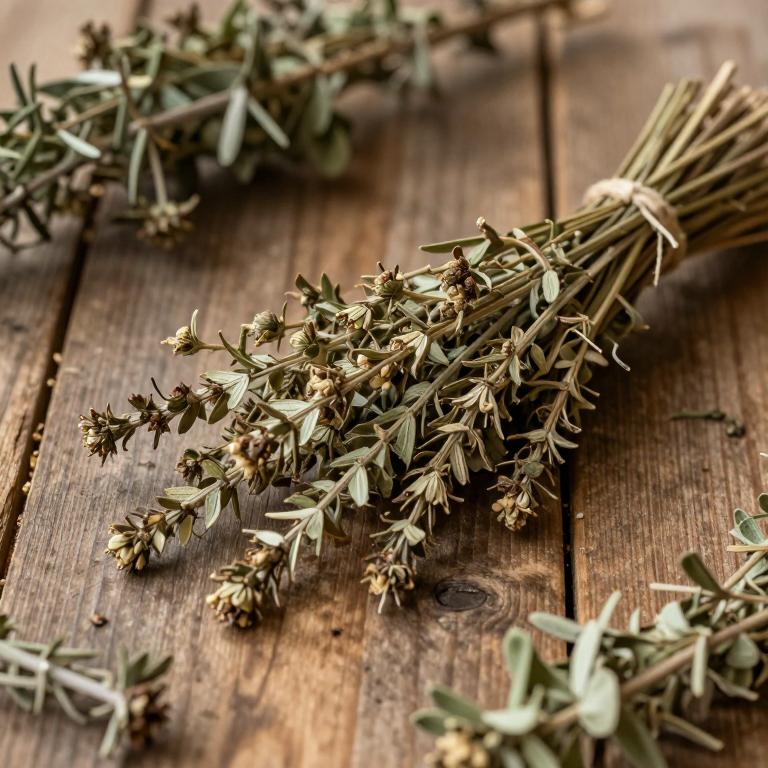
Names and Synonyms
Scientific Names
Accepted name
Gnidia involucrataSynonyms
- Gnidia leiantha
- Gnidia macrorrhiza
- Gnidia schweinfurthii
- Gnidia huillensis
- Gnidia heterophylla
- Gnidia mittuorum
- Gnidia montana
- Gnidia ringoetii
- Gnidia buchananii
Sources: Wikidata
Taxonomical Classification
This plant, Gnidia involucrata, belongs to the kingdom Plantae and is classified under the phylum Streptophyta and class Equisetopsida. Within the subclass Magnoliidae, it is positioned in the order Malvales and is a member of the family Thymelaeaceae. It is further categorized under the genus Gnidia.
| Rank | Classification |
|---|---|
| Kingdom | Plantae |
| Phylum | Streptophyta |
| Class | Equisetopsida |
| Subclass | Magnoliidae |
| Order | Malvales |
| Family | Thymelaeaceae |
| Genus | Gnidia |
Sources: The World Checklist of Vascular Plants (WCVP)
Distribution
This plant is primarily found across the West Tropical Africa region. Specifically, its range extends through the nation of Guinea. It can also be located within the borders of Ivory Coast and Mali. Furthermore, the species is distributed throughout Nigeria. Finally, its geographical presence includes the country of Togo.
| Region | Area |
|---|---|
| West Tropical Africa | Guinea |
| West Tropical Africa | Ivory Coast |
| West Tropical Africa | Mali |
| West Tropical Africa | Nigeria |
| West Tropical Africa | Togo |
| West-Central Tropical Africa | Central African Republic |
| West-Central Tropical Africa | Cameroon |
| West-Central Tropical Africa | DR Congo |
| Northeast Tropical Africa | Eritrea |
| Northeast Tropical Africa | Ethiopia |
Sources: The World Checklist of Vascular Plants (WCVP)
Botanical Identification
Life history
The life history of Gnidia involucrata is characterized by its status as a perennial species, allowing it to persist in its environment over multiple growing seasons. As a long-lived plant, it follows a reproductive strategy that emphasizes stability and long-term survival rather than the rapid, single-season completion seen in annuals. This perennial nature enables the plant to establish robust root systems and accumulate the necessary energy reserves to withstand seasonal fluctuations, ensuring its continued presence and ability to flower and produce seeds repeatedly throughout its lifespan.
- Lifecycle :
- perennial
Morphology
The morphology of Gnidia involucrata is characterized by its herbaceous growth form, presenting as a non-woody plant. It typically reaches a modest stature, with a plant height ranging from a minimum of approximately 0.15 meters to a maximum of about 0.61 meters.
- Growth form :
- herb
- Plant height max:
- 0.609607413 m
- Plant height min:
- 0.152400305 m
- Woodiness :
- non-woody
Reproduction
The reproduction of Gnidia involucrata is characterized by the production of small seeds that exhibit a high degree of consistency in their physical dimensions. Quantitative analysis of the seed mass reveals a narrow range of variation, indicating a highly standardized reproductive output. The mean seed mass is recorded at 0.001725 g, with individual seeds fluctuating slightly between a minimum value of 0.00168 g and a maximum value of 0.00177 g. This precision in seed weight suggests a specialized evolutionary strategy aimed at optimizing dispersal and resource allocation during the plant's reproductive cycle.
- Seed mass max:
- 0.00177 g
- Seed mass mean:
- 0.001725 g
- Seed mass min:
- 0.00168 g
Sources: Global Inventory of Floras and Traits (GIFT)
Activities
Gnidia involucrata has 1 reported activities identified across 0 scientific publications and several other databases. The most consistently reported activities include Antiproliferative.
| Activity | Supporting sources | Consensus |
|---|---|---|
| Antiproliferative | 1 supporting sources | ★☆☆☆☆ |
Antiproliferative
- Fitoterapia
Conditions
Gnidia involucrata has 2 reported investigations on conditions identified across 0 scientific publications and several other databases. The most consistently reported conditions include antioxidants, cancer.
| Condition | Supporting sources | Consensus |
|---|---|---|
| Antioxidants | 1 supporting sources | ★☆☆☆☆ |
| Cancer | 1 supporting sources | ★☆☆☆☆ |
Antioxidants
- BMC complementary medicine and therapies
Cancer
- Fitoterapia