Gnetum latifolium
Gnetum latifolium · Accepted scientific name
Scientific literature: Very Sparse (3 studies) · ★☆☆☆☆
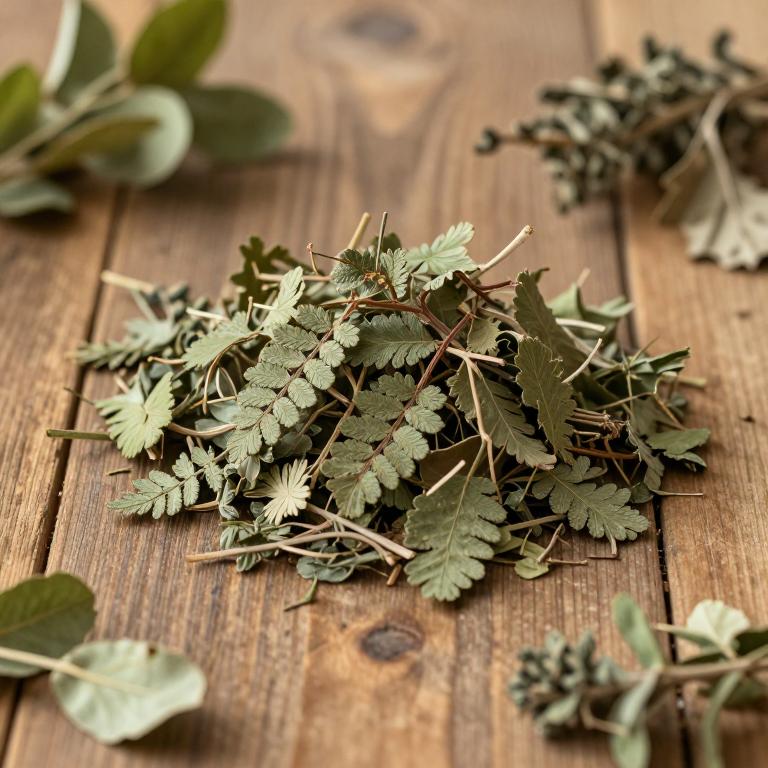
Gnetum latifolium, scientifically known as Gnetum latifolium, is a remarkable medicinal plant valued for its diverse therapeutic properties. Found primarily in tropical regions, this species is rich in bioactive compounds. It is traditionally utilized in various healing practices to treat inflammation, boost immunity, and support overall holistic wellness.
- Family
- Gnetaceae
- Native range
- Asia-Tropical
- Parts used
- Stem
- Common names
- Not available
- Scientific synonyms
- Gnemon Latifolia
Names and Synonyms
Scientific Names
Accepted name
Gnetum latifoliumSynonyms
- Gnemon latifolia
Sources: Wikidata, Catalogue of Life
Taxonomical Classification
This plant belongs to the kingdom Plantae and is classified under the phylum Streptophyta within the class Equisetopsida. It further falls into the subclass Gnetidae and the order Gnetales, specifically within the family Gnetaceae. Finally, its taxonomic identity is defined by the genus Gnetum, of which Gnetum latifolium is a member.
| Rank | Classification |
|---|---|
| Kingdom | Plantae |
| Phylum | Streptophyta |
| Class | Equisetopsida |
| Subclass | Gnetidae |
| Order | Gnetales |
| Family | Gnetaceae |
| Genus | Gnetum |
Sources: The World Checklist of Vascular Plants (WCVP)
Distribution
This plant exhibits a diverse geographical range spanning several key regions of Asia. Within the Indian Subcontinent, it can be found growing in both Assam and Bangladesh. Its distribution also extends into the Indo-China region, specifically reaching the Andaman Islands. Furthermore, the species is documented to inhabit the territories of Cambodia. Finally, its natural presence is noted within the country of Laos.
| Region | Area |
|---|---|
| Indian Subcontinent | Assam |
| Indian Subcontinent | Bangladesh |
| Indo-China | Andaman Is. |
| Indo-China | Cambodia |
| Indo-China | Laos |
| Indo-China | Myanmar |
| Indo-China | Nicobar Is. |
| Indo-China | Thailand |
| Indo-China | Vietnam |
| Malesia | Borneo |
Sources: The World Checklist of Vascular Plants (WCVP)
Botanical Identification
Life history
The life history of Gnetum latifolium is characterized by its classification as a phanerophyte, a life form in which the perennating buds are located well above the ground level. Within this category, it specifically exhibits the traits of a phanerophyte, indicating a robust perennial growth habit where its vital regenerative organs are protected on woody branches or stems. This life strategy allows the species to maintain a stable presence in its ecological niche, surviving through varying seasonal conditions by keeping its buds elevated above the substrate. As a phanerophyte, its structural development focuses on sustained upward growth and the maintenance of permanent woody tissue, ensuring long-term survival and the ability to recover from environmental stressors through its elevated meristematic regions.
- Life form :
- phanerophyte
Morphology
The morphology of Gnetum latifolium is characterized by its distinct growth habit and structural composition. It functions as an obligatory climber, manifesting as a liana or vine that relies on external support to ascend, rather than being self-supporting. While its growth form can be categorized under the broader spectrum of a shrub or herb depending on developmental stages, it primarily presents as a woody plant. This woodiness provides the necessary structural integrity for its climbing nature. In terms of its ecological positioning, the plant is strictly terrestrial, functioning as an independent organism that does not rely on a parasitic relationship with a host, nor does it exhibit epiphytic tendencies such as being a holoepiphyte or hemiepiphyte.
- Climber :
- liana
- Climber :
- obligatory
- Epiphyte :
- terrestrial
- Growth form :
- herb
- Growth form :
- shrub
- Parasite :
- independent
- Woodiness :
- woody
Reproduction
The reproduction of Gnetum latifolium is characterized by the development of specialized fruit structures and specific seed dimensions. The plant produces fruit that exhibits a distinct texture, ranging from dry to fleshy in nature. Within these fruits, the seeds are notable for their highly consistent sizing; they possess a uniform seed volume with a minimum, maximum, and mean value all measured at exactly 700 mm³. This precise volumetric consistency in seed production plays a critical role in the plant's reproductive strategy and dispersal mechanisms.
- Fruit dryness :
- fleshy
- Seed volume max:
- 700 mm³
Sources: Global Inventory of Floras and Traits (GIFT)
Plant Parts
Gnetum latifolium has 1 reported plant parts identified across 1 scientific publications and several other databases that are studied for medicinal purposes. The most consistently reported plant part include stem.
| Plant part | Supporting sources | Consensus |
|---|---|---|
| Stem | 1 supporting sources | ★☆☆☆☆ |
Stem
- Journal of natural products
Chemicals
Gnetum latifolium has 2 reported phytochemicals identified across 1 scientific publications and several other databases. The most consistently reported chemicals include Latifolian A, Latifolian B.
| Chemical | Supporting sources | Consensus |
|---|---|---|
| Latifolian A | 1 supporting sources | ★☆☆☆☆ |
| Latifolian B | 1 supporting sources | ★☆☆☆☆ |
Latifolian A
- Journal of natural products
Latifolian B
- Journal of natural products
Preparations
Gnetum latifolium has 1 reported preparations identified across 1 scientific publications and several other databases. The most consistently reported preparations include stem bark.
| Preparation | Supporting sources | Consensus |
|---|---|---|
| Stem bark | 1 supporting sources | ★☆☆☆☆ |
Stem bark
- Journal of natural products