Gnetum indicum
Gnetum indicum · Accepted scientific name
Scientific literature: Very Sparse (19 studies) · ★☆☆☆☆
Gnetum indicum, scientifically known as Gnetum indicum, is a versatile medicinal plant native to tropical regions. Renowned for its diverse therapeutic properties, it is widely utilized in traditional medicine to treat various ailments. This plant offers significant bioactive compounds, making it a subject of great interest in ethnopharmacology.
- Family
- Gnetaceae
- Native range
- Asia-Temperate
- Parts used
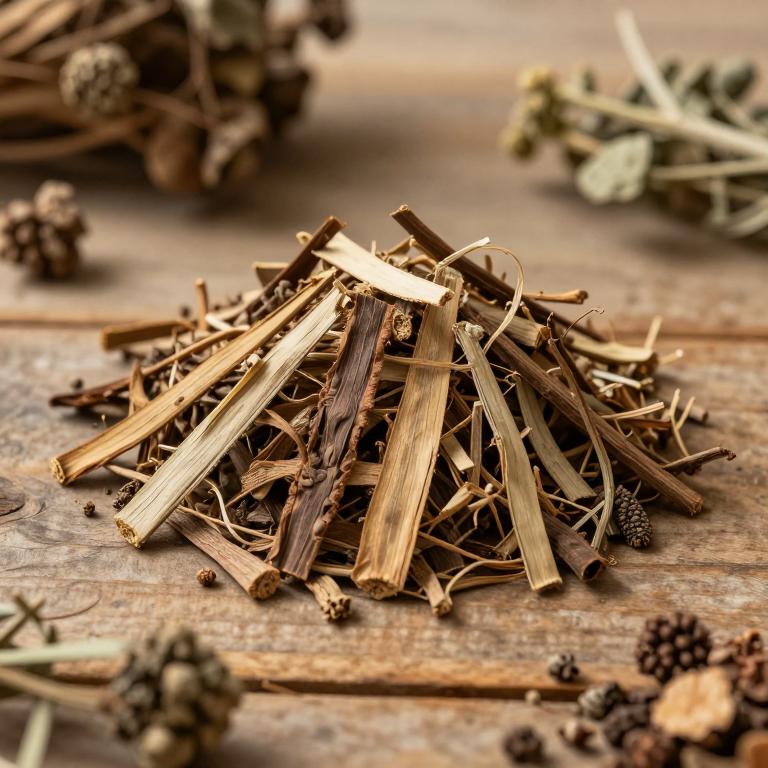
- Stem
- Common names
- Not available
- Scientific synonyms
- Thoa Indica · Thoa Parvifolia · 6 more
Names and Synonyms
Scientific Names
Accepted name
Gnetum indicumSynonyms
- Thoa indica
- Thoa parvifolia
- Abutua indica
- Gnetum montanum f. megalocarpum
- Gnetum montanum f. parvifolium
- Gnemon indica
- Gnetum parvifolium
- Gnetum scandens var. parvifolium
Sources: Wikidata
Taxonomical Classification
This plant belongs to the kingdom Plantae and the phylum Streptophyta. It is classified under the class Equisetopsida and the subclass Gnetidae, falling within the order Gnetales. Furthermore, it is a member of the family Gnetaceae and is identified by the genus Gnetum.
| Rank | Classification |
|---|---|
| Kingdom | Plantae |
| Phylum | Streptophyta |
| Class | Equisetopsida |
| Subclass | Gnetidae |
| Order | Gnetales |
| Family | Gnetaceae |
| Genus | Gnetum |
Sources: The World Checklist of Vascular Plants (WCVP)
Distribution
This plant is widely distributed across several key regions in East and Southeast Asia. In China, its presence is noted in the South-Central, Southeast, and Hainan areas. Moving into the Indo-China peninsula, the species can also be found within the borders of Laos. Furthermore, its geographical range extends into the territory of Vietnam. Collectively, these locations define the specific ecological footprint of Gnetum indicum.
| Region | Area |
|---|---|
| China | China South-Central |
| China | Hainan |
| China | China Southeast |
| Indo-China | Laos |
| Indo-China | Vietnam |
Sources: The World Checklist of Vascular Plants (WCVP)
Plant Parts
Gnetum indicum has 1 reported plant parts identified across 1 scientific publications and several other databases that are studied for medicinal purposes. The most consistently reported plant part include stem.
| Plant part | Supporting sources | Consensus |
|---|---|---|
| Stem | 1 supporting sources | ★☆☆☆☆ |
Stem
- Organic & biomolecular chemistry
Chemicals
Gnetum indicum has 6 reported phytochemicals identified across 1 scientific publications and several other databases. The most consistently reported chemicals include Isorhapontigenin, resveratrol, 1A, Flavonoids, Pinosylvin.
| Chemical | Supporting sources | Consensus |
|---|---|---|
| Isorhapontigenin | 2 supporting sources | ★☆☆☆☆ |
| resveratrol | 2 supporting sources | ★☆☆☆☆ |
| 1A | 1 supporting sources | ★☆☆☆☆ |
| Flavonoids | 1 supporting sources | ★☆☆☆☆ |
| Pinosylvin | 1 supporting sources | ★☆☆☆☆ |
| piceatannol | 1 supporting sources | ★☆☆☆☆ |
Isorhapontigenin
- Naunyn-Schmiedeberg's archives of pharmacology
- Yao xue xue bao = Acta pharmaceutica Sinica
resveratrol
- Frontiers in plant science
- Yao xue xue bao = Acta pharmaceutica Sinica
1A
- Organic & biomolecular chemistry
Flavonoids
- Frontiers in plant science
Pinosylvin
- Yao xue xue bao = Acta pharmaceutica Sinica
piceatannol
- Frontiers in plant science
Activities
Gnetum indicum has 6 reported activities identified across 1 scientific publications and several other databases. The most consistently reported activities include Antibacterial, Anticancer, Antioxidant, Antifungal, Antiviral.
| Activity | Supporting sources | Consensus |
|---|---|---|
| Antibacterial | 2 supporting sources | ★☆☆☆☆ |
| Anticancer | 2 supporting sources | ★☆☆☆☆ |
| Antioxidant | 2 supporting sources | ★☆☆☆☆ |
| Antifungal | 1 supporting sources | ★☆☆☆☆ |
| Antiviral | 1 supporting sources | ★☆☆☆☆ |
| Neuroprotective | 1 supporting sources | ★☆☆☆☆ |
Antibacterial
- Frontiers in plant science
- Naunyn-Schmiedeberg's archives of pharmacology
Anticancer
- Frontiers in plant science
- Naunyn-Schmiedeberg's archives of pharmacology
Antioxidant
- Frontiers in plant science
- Naunyn-Schmiedeberg's archives of pharmacology
Antifungal
- Naunyn-Schmiedeberg's archives of pharmacology
Antiviral
- Naunyn-Schmiedeberg's archives of pharmacology
Neuroprotective
- Naunyn-Schmiedeberg's archives of pharmacology
Preparations
Gnetum indicum has 2 reported preparations identified across 1 scientific publications and several other databases. The most consistently reported preparations include lianas, stilbene polymer (Gn-3).
| Preparation | Supporting sources | Consensus |
|---|---|---|
| Lianas | 1 supporting sources | ★☆☆☆☆ |
| Stilbene polymer (gn-3) | 1 supporting sources | ★☆☆☆☆ |
Lianas
- Chemical & pharmaceutical bulletin
Stilbene polymer (gn-3)
- Yao xue xue bao = Acta pharmaceutica Sinica