gnetum
Gnetum gnemon · Accepted scientific name
Scientific literature: Very Sparse (7 studies) · ★☆☆☆☆
Gnetum, scientifically known as Gnetum gnemon, is a versatile tropical plant prized in traditional medicine and culinary arts. Renowned for its bioactive compounds, it offers significant antioxidant and anti-inflammatory properties. Often utilized in Southeast Asian healing practices, this resilient species serves as a vital natural resource for holistic wellness.
- Family
- Gnetaceae
- Native range
- Asia-Temperate
- Parts used
- Leaf
- Common names
- Spanish Joint-Fir · Belinjau · 1 more
- Scientific synonyms
- Not available
Names and Synonyms
Common Names
- Spanish joint-fir
- Belinjau
- Paddy Oats
Scientific Names
Accepted name
Gnetum gnemonSources: Wikidata, Catalogue of Life
Taxonomical Classification
This plant belongs to the kingdom Plantae and is classified under the phylum Streptophyta within the class Equisetopsida. It is further organized into the subclass Gnetidae and the order Gnetales, falling under the family Gnetaeae. Finally, it is identified by the genus Gnetum, specifically as the species Gnetum gnemon.
| Rank | Classification |
|---|---|
| Kingdom | Plantae |
| Phylum | Streptophyta |
| Class | Equisetopsida |
| Subclass | Gnetidae |
| Order | Gnetales |
| Family | Gnetaceae |
| Genus | Gnetum |
Sources: The World Checklist of Vascular Plants (WCVP)
Distribution
This plant exhibits a diverse range of habitats across several distinct Asian regions. Within China, its presence is documented in both the South-Central provinces and the high-altitude areas of Tibet. Moving toward the Indian Subcontinent, the species can be found specifically in the Assam region. Its distribution also extends into Indo-China, where it grows in the landscapes of Cambodia. Finally, the plant is also native to the forested territories of Myanmar.
| Region | Area |
|---|---|
| China | China South-Central |
| China | Tibet |
| Indian Subcontinent | Assam |
| Indo-China | Cambodia |
| Indo-China | Myanmar |
| Indo-China | Nicobar Is. |
| Indo-China | Thailand |
| Indo-China | Vietnam |
| Malesia | Borneo |
| Malesia | Lesser Sunda Is. |
Sources: The World Checklist of Vascular Plants (WCVP)
Botanical Identification
Life history
The life history of Gnetum gnemon is characterized by its status as a perennial species, ensuring its long-term presence within its tropical ecosystem. As a phanerophyte, it maintains its photosynthetic structures well above the ground, often developing into a substantial woody form. Despite its large stature, it can also exhibit characteristics consistent with a nanophanerophyte in certain developmental stages or environmental contexts. Throughout its life cycle, the plant remains evergreen, retaining its foliage continuously to facilitate uninterrupted metabolic processes and growth.
- Deciduousness :
- evergreen
- Life form :
- nanophanerophyte
- Life form :
- phanerophyte
- Lifecycle :
- perennial
Morphology
The morphology of Gnetum gnemon is characterized by its robust growth form as a woody tree, which can reach a maximum height of 20 m, with an average height of approximately 18 m. It is a terrestrial species, functioning as an independent organism without parasitic behavior. While its structural nature allows it to exhibit characteristics of a liana, it primarily maintains a self-supporting growth habit rather than being an obligatory climber. As a terrestrial plant, it does not exhibit epiphytic tendencies, such as being a hemi-epiphyte, nor is it aquatic or semiaquatic in its natural habitat.
- Aquatic :
- terrestrial
- Climber :
- liana
- Climber :
- self-supporting
- Epiphyte :
- terrestrial
- Growth form :
- tree
- Parasite :
- independent
- Plant height max:
- 20 m
- Plant height mean:
- 18 m
- Woodiness :
- woody
Physiology
The physiology of Gnetum gnemon is characterized by a unique evolutionary position as a gymnosperm that exhibits several advanced physiological traits typically associated with angiosperms, such as vessel elements in its xylem for more efficient water transport. A significant aspect of its metabolic profile involves its interaction with the soil environment; specifically, it functions as a nitrogen fixer, possessing the ability to facilitate the conversion of atmospheric nitrogen into bioavailable forms. This nitrogen fixation capability is a critical physiological mechanism that supports its growth and nutrient cycling within its native tropical habitats. Furthermore, its photosynthetic pathways and metabolic processes are adapted to optimize energy production under high-humidity conditions, allowing for efficient carbon assimilation and robust structural development.
- Nitrogen fixer :
- yes
Reproduction
The reproduction of Gnetum gnemon is characterized by a complex biotic pollination syndrome that relies on living organisms rather than abiotic factors. The process is driven by biotic agents, with specific evidence indicating that insects play a primary role in the transfer of pollen. Within this ecological interaction, moths have been identified as a key pollination syndrome component, facilitating the reproductive cycle. Furthermore, the plant exhibits a reproductive strategy where self-fertilization is absent, necessitating the involvement of these animal vectors to ensure genetic diversity and successful fertilization.
- Pollination syndrome :
- insect
- Pollination syndrome :
- moth
- Pollination syndrome :
- biotic
- Self fertilization :
- absent
Sources: Global Inventory of Floras and Traits (GIFT)
Plant Parts
Gnetum gnemon has 1 reported plant parts identified across 1 scientific publications and several other databases that are studied for medicinal purposes. The most consistently reported plant part include leaf.
| Plant part | Supporting sources | Consensus |
|---|---|---|
| Leaf | 1 supporting sources | ★☆☆☆☆ |
Leaf
- Applied radiation and isotopes : including data, instrumentation and methods for use in agriculture, industry and medicine
Chemicals
Gnetum gnemon has 2 reported phytochemicals identified across 1 scientific publications and several other databases. The most consistently reported chemicals include polyphenols, trans-resveratrol.
| Chemical | Supporting sources | Consensus |
|---|---|---|
| polyphenols | 1 supporting sources | ★☆☆☆☆ |
| trans-resveratrol | 1 supporting sources | ★☆☆☆☆ |
polyphenols
- Current diabetes reviews
trans-resveratrol
- Current diabetes reviews
Activities
Gnetum gnemon has 1 reported activities identified across 1 scientific publications and several other databases. The most consistently reported activities include Antibacterial.
| Activity | Supporting sources | Consensus |
|---|---|---|
| Antibacterial | 1 supporting sources | ★☆☆☆☆ |
Antibacterial
- Heliyon
Conditions
Gnetum gnemon has 2 reported investigations on conditions identified across 1 scientific publications and several other databases. The most consistently reported conditions include Type 2 Diabetes Mellitus, type 2 diabetes.
| Condition | Supporting sources | Consensus |
|---|---|---|
| Type 2 diabetes mellitus | 1 supporting sources | ★☆☆☆☆ |
| Type 2 diabetes | 1 supporting sources | ★☆☆☆☆ |
Type 2 diabetes mellitus
- Current diabetes reviews
Type 2 diabetes
- Current diabetes reviews
Preparations
Gnetum gnemon has 2 reported preparations identified across 1 scientific publications and several other databases. The most consistently reported preparations include dried leaves, methanol leaf extracts.
| Preparation | Supporting sources | Consensus |
|---|---|---|
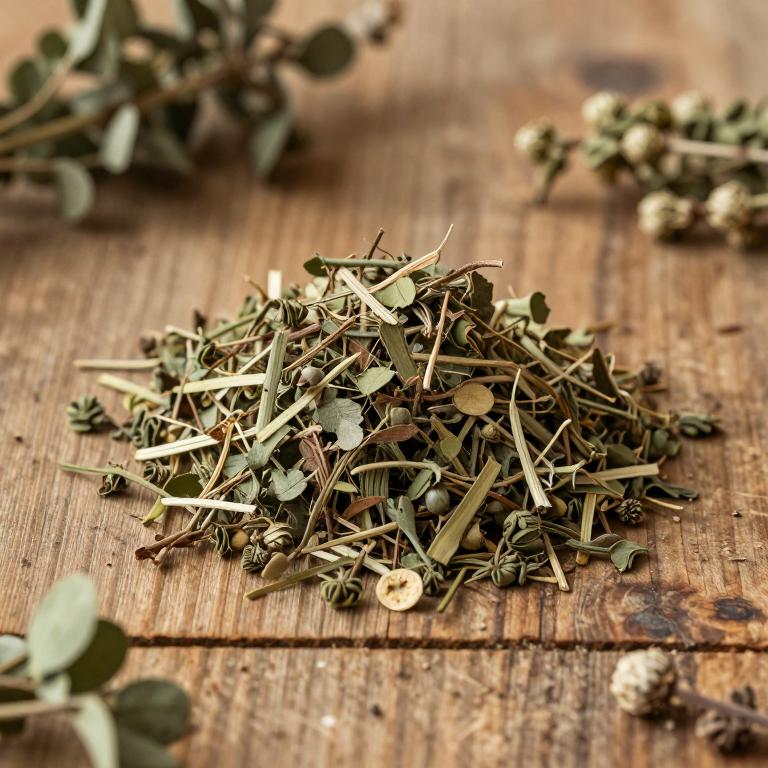
| Dried leaves | 1 supporting sources | ★☆☆☆☆ |
| Methanol leaf extracts | 1 supporting sources | ★☆☆☆☆ |
Dried leaves
- Applied radiation and isotopes : including data, instrumentation and methods for use in agriculture, industry and medicine
Methanol leaf extracts
- Applied radiation and isotopes : including data, instrumentation and methods for use in agriculture, industry and medicine