Gnetum edule
Gnetum edule · Accepted scientific name
Scientific literature: Very Sparse (4 studies) · ★☆☆☆☆
, scientifically known as Gnetum eduled, is a versatile medicinal plant native to parts of Africa and Asia. Renowned for its nutritional and therapeutic properties, its leaves and seeds are used in traditional medicine to treat ailments ranging from digestive issues to inflammation, offering significant potential for modern pharmacology.
- Family
- Gnetaceae
- Native range
- Asia-Tropical
- Parts used
- Stem
- Common names
- Not available
- Scientific synonyms
- Thoa Scandens · Gnetum Funiculare · 3 more
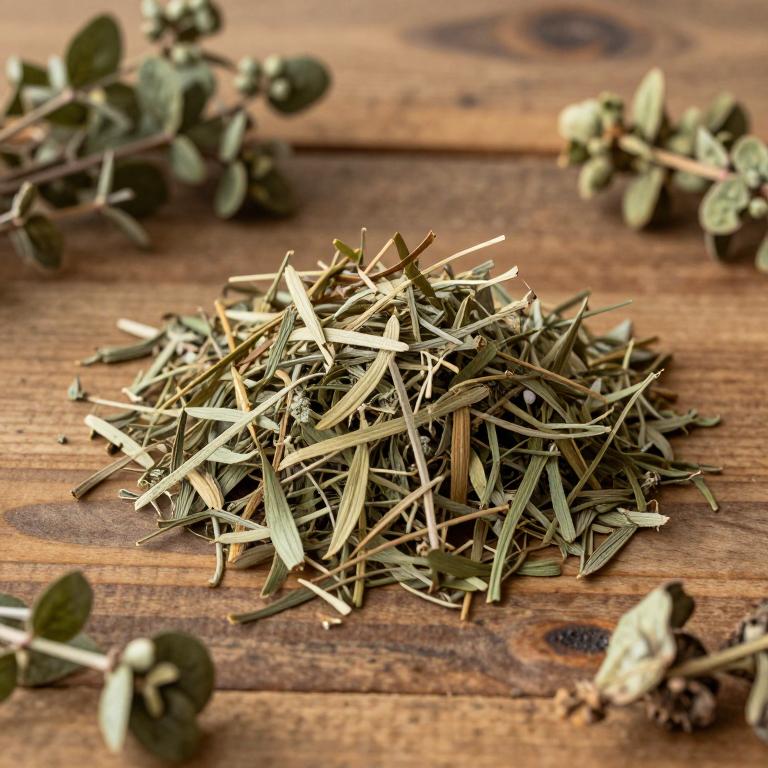
Names and Synonyms
Scientific Names
Accepted name
Gnetum eduleSynonyms
- Thoa scandens
- Gnetum funiculare
- Thoa edulis
- Gnemon edulis
- Gnetum scandens
Sources: Wikidata
Taxonomical Classification
This plant belongs to the kingdom Plantae and is classified under the phylum Streptophyta and class Equisetopsida. Within the subclass Gnetidae and order Gnetales, it is a member of the family Gnetaceae. Finally, its taxonomic identity is defined by the genus Gnetum, specifically the species Gnetum edule.
| Rank | Classification |
|---|---|
| Kingdom | Plantae |
| Phylum | Streptophyta |
| Class | Equisetopsida |
| Subclass | Gnetidae |
| Order | Gnetales |
| Family | Gnetaceae |
| Genus | Gnetum |
Sources: The World Checklist of Vascular Plants (WCVP)
Distribution
This plant, Gnetum edule, exhibits a specific distribution pattern across parts of Southeast and South Asia. It is primarily found within the Indian Subcontinent, specifically throughout the country of India. Additionally, its range extends into the Indo-China region, covering the Andaman Islands. The species can also be located within the Nicobar Islands, which are part of the Indo-China geographical area. Consequently, its habitat is concentrated within these particular tropical island and mainland locations.
| Region | Area |
|---|---|
| Indian Subcontinent | India |
| Indo-China | Andaman Is. |
| Indo-China | Nicobar Is. |
Sources: The World Checklist of Vascular Plants (WCVP)
Botanical Identification
Morphology
The morphology of Gnetum edule is characterized by its distinct growth form and structural habits, primarily functioning as a woody shrub. While it can exhibit characteristics of a liana or vine, it is categorized as an obligatory climber, relying on external structures for support rather than being self-supporting. Despite its climbing nature, it is an independent plant that does not function as a parasite, maintaining its own nutritional processes. Furthermore, it is a terrestrial species, establishing its root system in the ground rather than growing as an epiphyte. The plant's physical structure is notably woody, providing the necessary rigidity for its climbing and shrub-like development.
- Climber :
- liana
- Climber :
- obligatory
- Epiphyte :
- terrestrial
- Growth form :
- shrub
- Parasite :
- independent
- Woodiness :
- woody
Sources: Global Inventory of Floras and Traits (GIFT)
Plant Parts
Gnetum edule has 1 reported plant parts identified across 1 scientific publications and several other databases that are studied for medicinal purposes. The most consistently reported plant part include stem.
| Plant part | Supporting sources | Consensus |
|---|---|---|
| Stem | 1 supporting sources | ★☆☆☆☆ |
Stem
- BioImpacts : BI
Chemicals
Gnetum edule has 1 reported phytochemicals identified across 1 scientific publications and several other databases. The most consistently reported chemicals include Gnetol.
| Chemical | Supporting sources | Consensus |
|---|---|---|
| Gnetol | 1 supporting sources | ★☆☆☆☆ |
Gnetol
- BioImpacts : BI
Activities
Gnetum edule has 2 reported activities identified across 1 scientific publications and several other databases. The most consistently reported activities include Antioxidant, Hepatoprotective.
| Activity | Supporting sources | Consensus |
|---|---|---|
| Antioxidant | 1 supporting sources | ★☆☆☆☆ |
| Hepatoprotective | 1 supporting sources | ★☆☆☆☆ |
Antioxidant
- BioImpacts : BI
Hepatoprotective
- BioImpacts : BI
Preparations
Gnetum edule has 1 reported preparations identified across 1 scientific publications and several other databases. The most consistently reported preparations include ethanol extract of stem.
| Preparation | Supporting sources | Consensus |
|---|---|---|
| Ethanol extract of stem | 1 supporting sources | ★☆☆☆☆ |
Ethanol extract of stem
- BioImpacts : BI