licorice
Glycyrrhiza · Accepted scientific name
Scientific literature: Moderate (146 studies) · ★★★☆☆
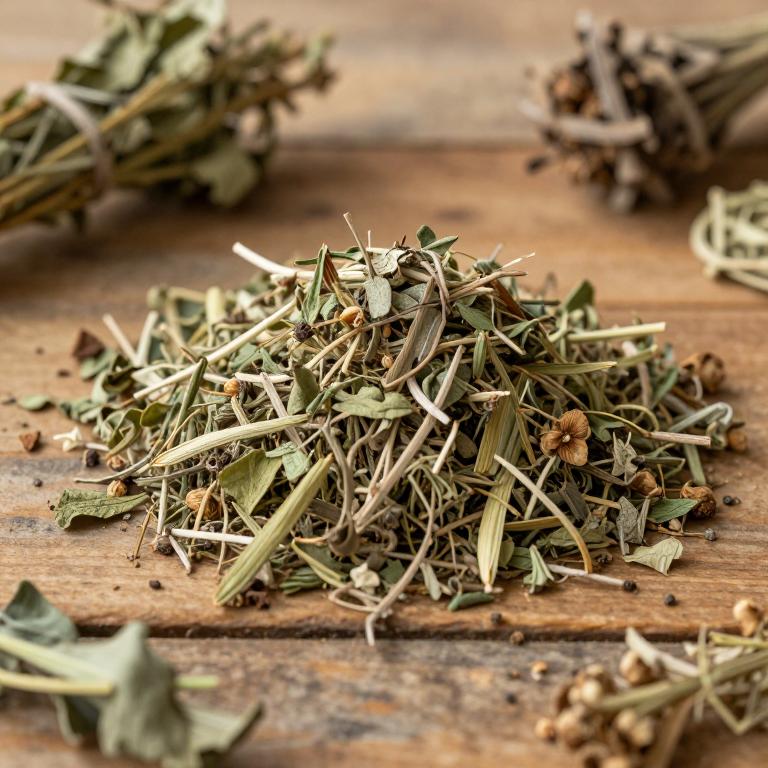
Licorice, scientifically known as Glycyrrhiza, is a versatile medicinal plant prized for its sweet, woody roots. Long used in traditional medicine, it possesses potent anti-inflammatory, antimicrobial, and soothing properties. Frequently employed to alleviate digestive issues and respiratory congestion, this botanical powerhouse remains a staple in both herbalism and pharmacology.
- Family
- Fabaceae
- Native range
- Europe
- Parts used
- Root · Rhizome
- Common names
- Licorice · Licorices
- Scientific synonyms
- Meristotropis · Clidanthera · 1 more
Names and Synonyms
Common Names
- licorice
- Licorices
Scientific Names
Accepted name
GlycyrrhizaSynonyms
- Meristotropis
- Clidanthera
- Liquiritia
Regional and Traditional Names
German:
- Süßhölzer
- Glycyrrhizinae
- Süssholz
- Süßholz
- Licoricidin
- Süßholz
French:
- Réglisses
Sources: Wikidata, Catalogue of Life
Taxonomical Classification
This plant belongs to the kingdom Plantae within the phylum Streptophyta and the class Equisetopsida. It is further classified under the subclass Magnoliidae and the order Fabales. Finally, it is a member of the family Fabaceae, specifically categorized under the genus Glycyrrhiza.
| Rank | Classification |
|---|---|
| Kingdom | Plantae |
| Phylum | Streptophyta |
| Class | Equisetopsida |
| Subclass | Magnoliidae |
| Order | Fabales |
| Family | Fabaceae |
| Genus | Glycyrrhiza |
Sources: The World Checklist of Vascular Plants (WCVP)
Distribution
This plant exhibits a specific distribution pattern across several countries located in Middle Europe. Within this region, it can be found growing in the landscapes of Austria. Its presence also extends through the territories of Czechia-Slovakia. Furthermore, the species is documented within the borders of Germany. Finally, its geographical reach includes the mountainous regions of Switzerland and the plains of Hungary.
| Region | Area |
|---|---|
| Middle Europe | Austria |
| Middle Europe | Czechia-Slovakia |
| Middle Europe | Germany |
| Middle Europe | Hungary |
| Middle Europe | Switzerland |
| Southwestern Europe | France |
| Southwestern Europe | Portugal |
| Southwestern Europe | Sardegna |
| Southwestern Europe | Spain |
| Southeastern Europe | Albania |
Sources: The World Checklist of Vascular Plants (WCVP)
Plant Parts
Glycyrrhiza has 2 reported plant parts identified across 14 scientific publications and several other databases that are studied for medicinal purposes. The most consistently reported plant part include root, rhizome.
| Plant part | Supporting sources | Consensus |
|---|---|---|
| Root | 10 supporting sources | ★★★★★ |
| Rhizome | 4 supporting sources | ★★☆☆☆ |
Root
- Biology
- Plant signaling & behavior
- PeerJ
- Fish & shellfish immunology
- The American journal of Chinese medicine
View 5 additional sources
- Phytotherapy research : PTR
- Iranian journal of allergy, asthma, and immunology
- Journal of advanced research
- Cellular and molecular neurobiology
- Acta pharmaceutica Sinica. B
Rhizome
- Plant signaling & behavior
- The American journal of Chinese medicine
- Phytotherapy research : PTR
- Journal of advanced research
Chemicals
Glycyrrhiza has 34 reported phytochemicals identified across 14 scientific publications and several other databases. The most consistently reported chemicals include glycyrrhizin, Liquiritin, Flavonoids, Glycyrrhizic acid, GLYCYRRHETINIC ACID.
| Chemical | Supporting sources | Consensus |
|---|---|---|
| glycyrrhizin | 6 supporting sources | ★★★☆☆ |
| Liquiritin | 5 supporting sources | ★★★☆☆ |
| Flavonoids | 4 supporting sources | ★★☆☆☆ |
| Glycyrrhizic acid | 4 supporting sources | ★★☆☆☆ |
| GLYCYRRHETINIC ACID | 3 supporting sources | ★★☆☆☆ |
| Liquiritigenin | 3 supporting sources | ★★☆☆☆ |
| Glycyrrhetic acid | 2 supporting sources | ★☆☆☆☆ |
| Saponins | 2 supporting sources | ★☆☆☆☆ |
| triterpenoids | 2 supporting sources | ★☆☆☆☆ |
| 20(S)-protopanaxatriol | 1 supporting sources | ★☆☆☆☆ |
glycyrrhizin
- Oxidative medicine and cellular longevity
- Phytotherapy research : PTR
- Journal of agricultural and food chemistry
- Journal of pharmacobio-dynamics
- Biological & pharmaceutical bulletin
View 1 additional sources
- Hua xi yi ke da xue xue bao = Journal of West China University of Medical Sciences = Huaxi yike daxue xuebao
Liquiritin
- Zhongguo Zhong yao za zhi = Zhongguo zhongyao zazhi = China journal of Chinese materia medica
- Oxidative medicine and cellular longevity
- Phytotherapy research : PTR
- Yao xue xue bao = Acta pharmaceutica Sinica
- Phytochemical analysis : PCA
Flavonoids
- Journal of chromatography. B, Analytical technologies in the biomedical and life sciences
- Oxidative medicine and cellular longevity
- The American journal of Chinese medicine
- Journal of advanced research
Glycyrrhizic acid
- Zhongguo Zhong yao za zhi = Zhongguo zhongyao zazhi = China journal of Chinese materia medica
- Iranian journal of allergy, asthma, and immunology
- Phytochemical analysis : PCA
- Phytomedicine plus : international journal of phytotherapy and phytopharmacology
GLYCYRRHETINIC ACID
- Phytotherapy research : PTR
- Phytochemical analysis : PCA
- Acta pharmaceutica Sinica. B
Liquiritigenin
- Oxidative medicine and cellular longevity
- Phytotherapy research : PTR
- Phytochemical analysis : PCA
Glycyrrhetic acid
- Journal of agricultural and food chemistry
- Biological & pharmaceutical bulletin
Saponins
- Journal of chromatography. B, Analytical technologies in the biomedical and life sciences
- Poultry science
triterpenoids
- The American journal of Chinese medicine
- Journal of advanced research
20(S)-protopanaxatriol
- Planta medica
Activities
Glycyrrhiza has 23 reported activities identified across 14 scientific publications and several other databases. The most consistently reported activities include Antioxidant, Antiviral, Antibacterial, Hepatoprotective, Anticancer.
| Activity | Supporting sources | Consensus |
|---|---|---|
| Antioxidant | 7 supporting sources | ★★★★☆ |
| Antiviral | 4 supporting sources | ★★☆☆☆ |
| Antibacterial | 3 supporting sources | ★★☆☆☆ |
| Hepatoprotective | 3 supporting sources | ★★☆☆☆ |
| Anticancer | 2 supporting sources | ★☆☆☆☆ |
| Neuroprotective | 2 supporting sources | ★☆☆☆☆ |
| Analgesic | 1 supporting sources | ★☆☆☆☆ |
| Anticariogenic | 1 supporting sources | ★☆☆☆☆ |
| Antidiabetic | 1 supporting sources | ★☆☆☆☆ |
| Antifungal | 1 supporting sources | ★☆☆☆☆ |
Antioxidant
- Journal of chromatography. B, Analytical technologies in the biomedical and life sciences
- Current pharmaceutical biotechnology
- Oxidative medicine and cellular longevity
- Fitoterapia
- Phytotherapy research : PTR
View 2 additional sources
- Yao xue xue bao = Acta pharmaceutica Sinica
- Journal of advanced research
Antiviral
- Fitoterapia
- The American journal of Chinese medicine
- Phytotherapy research : PTR
- Journal of advanced research
Antibacterial
- Oxidative medicine and cellular longevity
- Fitoterapia
- The American journal of Chinese medicine
Hepatoprotective
- Fitoterapia
- Phytotherapy research : PTR
- Journal of advanced research
Anticancer
- The American journal of Chinese medicine
- Journal of advanced research
Neuroprotective
- The American journal of Chinese medicine
- Phytotherapy research : PTR
Analgesic
- Journal of advanced research
Anticariogenic
- The American journal of Chinese medicine
Antidiabetic
- The American journal of Chinese medicine
Antifungal
- Oxidative medicine and cellular longevity
Conditions
Glycyrrhiza has 25 reported investigations on conditions identified across 14 scientific publications and several other databases. The most consistently reported conditions include COVID-19, Newcastle disease, Parkinson's disease, SARS-CoV-2, SARS-CoV-2 infection.
| Condition | Supporting sources | Consensus |
|---|---|---|
| Covid-19 | 1 supporting sources | ★☆☆☆☆ |
| Newcastle disease | 1 supporting sources | ★☆☆☆☆ |
| Parkinson's disease | 1 supporting sources | ★☆☆☆☆ |
| Sars-cov-2 | 1 supporting sources | ★☆☆☆☆ |
| Sars-cov-2 infection | 1 supporting sources | ★☆☆☆☆ |
| Analgesic | 1 supporting sources | ★☆☆☆☆ |
| Antioxidant | 1 supporting sources | ★☆☆☆☆ |
| Antiviral | 1 supporting sources | ★☆☆☆☆ |
| Apoptosis | 1 supporting sources | ★☆☆☆☆ |
| Asthma | 1 supporting sources | ★☆☆☆☆ |
Covid-19
- Current drug metabolism
Newcastle disease
- Poultry science
Parkinson's disease
- PloS one
Sars-cov-2
- Phytomedicine plus : international journal of phytotherapy and phytopharmacology
Sars-cov-2 infection
- Molecules (Basel, Switzerland)
Analgesic
- Journal of advanced research
Antioxidant
- Journal of advanced research
Antiviral
- Journal of advanced research
Apoptosis
- International journal of biological macromolecules
Asthma
- Iranian journal of allergy, asthma, and immunology
Preparations
Glycyrrhiza has 22 reported preparations identified across 14 scientific publications and several other databases. The most consistently reported preparations include glycyrrhiza extract, GPS, Glycyrrhiza extract, Liquorice, Sini Decoction.
| Preparation | Supporting sources | Consensus |
|---|---|---|
| Glycyrrhiza extract | 2 supporting sources | ★☆☆☆☆ |
| Gps | 1 supporting sources | ★☆☆☆☆ |
| Glycyrrhiza extract | 1 supporting sources | ★☆☆☆☆ |
| Liquorice | 1 supporting sources | ★☆☆☆☆ |
| Sini decoction | 1 supporting sources | ★☆☆☆☆ |
| Sini decoctions | 1 supporting sources | ★☆☆☆☆ |
| Sini decoctions | 1 supporting sources | ★☆☆☆☆ |
| Column chromatography | 1 supporting sources | ★☆☆☆☆ |
| Crude drugs | 1 supporting sources | ★☆☆☆☆ |
| Dichloromethane extraction | 1 supporting sources | ★☆☆☆☆ |
Glycyrrhiza extract
- Scientific reports
- Biological & pharmaceutical bulletin
Gps
- Tumour biology : the journal of the International Society for Oncodevelopmental Biology and Medicine
Glycyrrhiza extract
- Journal of pharmacobio-dynamics
Liquorice
- Iranian journal of allergy, asthma, and immunology
Sini decoction
- Yao xue xue bao = Acta pharmaceutica Sinica
Sini decoctions
- Yao xue xue bao = Acta pharmaceutica Sinica
Sini decoctions
- Yao xue xue bao = Acta pharmaceutica Sinica
Column chromatography
- Zhong yao cai = Zhongyaocai = Journal of Chinese medicinal materials
Crude drugs
- Plant biotechnology (Tokyo, Japan)
Dichloromethane extraction
- Zhong yao cai = Zhongyaocai = Journal of Chinese medicinal materials