German Liquorice
Glycyrrhiza echinata · Accepted scientific name
Scientific literature: Very Sparse (16 studies) · ★☆☆☆☆
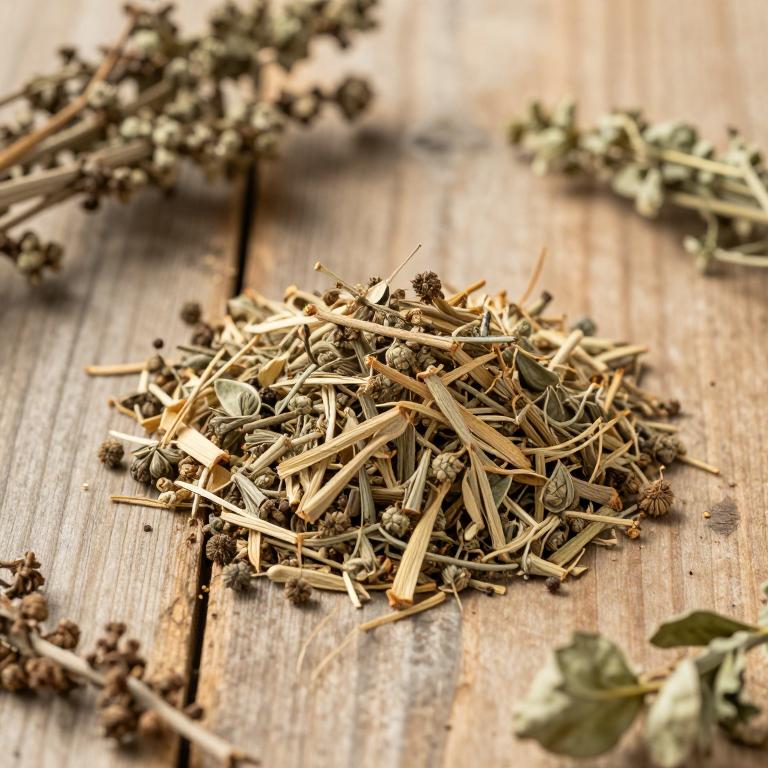
German Liquorice, scientifically known as Glycyrrhiza echiata, is a potent medicinal herb celebrated for its remarkable healing properties. Renowned for its sweet flavor and soothing effects, it is widely utilized to treat respiratory ailments, digestive issues, and inflammation. This versatile plant serves as a cornerstone in traditional herbal medicine worldwide.
Names and Synonyms
Common Names
- German Liquorice
- Chinese licorice
- hedgehog liquorice
- licorice
Scientific Names
Accepted name
Glycyrrhiza echinataSynonyms
- Glycyrrhiza subinermis
- Glycyrrhiza frearitis
- Glycyrrhiza echinata var. pedunculata
- Glycyrrhiza echinata f. cylindrica
- Glycyrrhiza echinata var. frearitis
- Glycyrrhiza echinata f. subsedens
- Glycyrrhiza dioschoridis
- Glycyrrhiza inermis
- Glycyrrhiza muricata
- Glycyrrhiza macedonica
- Glycyrrhiza foetidissima
- Glycyrrhiza subechinata
- Glycyrrhiza echinata var. subinermis
Regional and Traditional Names
Spanish:
- regaliz espinoso
German:
- russisches Süßholz
- römisches Süßholz
French:
- réglisse échinée
Sources: Wikidata, Catalogue of Life
Taxonomical Classification
This plant belongs to the kingdom Plantae and the phylum Streptophyta, falling under the class Equisetopsida and subclass Magnoliidae. It is categorized within the order Fabales and the family Fabaceae. Finally, it is classified under the genus Glycyrrhiza.
| Rank | Classification |
|---|---|
| Kingdom | Plantae |
| Phylum | Streptophyta |
| Class | Equisetopsida |
| Subclass | Magnoliidae |
| Order | Fabales |
| Family | Fabaceae |
| Genus | Glycyrrhiza |
Sources: The World Checklist of Vascular Plants (WCVP)
Distribution
This plant is distributed across several distinct regions within the European continent. In Middle Europe, its presence is noted in both Germany and Hungary. Moving towards the southeastern part of the continent, the species can be found in Bulgaria. Its range also extends into the Mediterranean landscapes of Greece. Finally, the geographical distribution includes the territory of Romania in Southeastern Europe.
| Region | Area |
|---|---|
| Middle Europe | Germany |
| Middle Europe | Hungary |
| Southeastern Europe | Bulgaria |
| Southeastern Europe | Greece |
| Southeastern Europe | Romania |
| Southeastern Europe | Türkiye-in-Europe |
| Southeastern Europe | NW. Balkan Pen. |
| Eastern Europe | Krym |
| Eastern Europe | Central European Russia |
| Eastern Europe | East European Russia |
Sources: The World Checklist of Vascular Plants (WCVP)
Botanical Identification
Ecology
The ecology of Glycyrrhiza echinata is characterized by its presence in diverse terrestrial ecosystems, where it typically establishes itself within forests, meadows, and shrubberies. In these varied environments, the plant adapts to different levels of light availability and soil compositions, often thriving in the transitional zones between dense woodland and open grassland. Its ability to occupy both the shaded understory of forest margins and the more exposed, sunlit expanses of meadows and shrubby thickets suggests a versatile ecological niche. This distribution allows the species to interact with a wide range of soil microbiomes and pollinator communities found across these distinct landscape types.
- Habitat :
- forest, meadows, shrubberies
Life history
The life history of Glycyrrhiza echinata is characterized by a perennial lifecycle, allowing the plant to persist through multiple growing seasons. As a hemicryptophyte, its perennating buds are located at the soil surface, protected by residual leaf litter or the earth itself, which enables it to endure seasonal environmental shifts. This life form ensures that the plant can effectively re-emerge and continue its reproductive and vegetative cycles annually once favorable conditions return.
- Life form :
- hemicryptophyte
- Lifecycle :
- perennial
Morphology
The morphology of Glycyrrhiza echinata is characterized by its growth form as a herb, typically exhibiting a non-woody structure. The plant functions as an independent organism, showing no parasitic tendencies. In terms of stature, it maintains a relatively low profile with a plant height ranging from a minimum of 0.5 m to a maximum of 1 m. Regarding its ecological habitat and moisture preference, the species is classified as terrestrial, though it may exist within the broader spectrum of aquatic, semiaquatic, or terrestrial environments.
- Aquatic :
- terrestrial
- Growth form :
- herb
- Parasite :
- independent
- Plant height max:
- 1 m
- Plant height min:
- 0.5 m
- Woodiness :
- non-woody
Physiology
The physiology of Glycyrrhiza echinata is characterized by a robust metabolic framework adapted to diverse environmental conditions, primarily functioning through a C3 photosynthetic pathway. As a C3 plant, its carbon fixation process occurs directly through the Calvin cycle, where atmospheric carbon dioxide is incorporated into three-carbon organic compounds by the enzyme RuBisCO within the mesophyll cells. This pathway dictates the plant's water-use efficiency and transpiration rates, as it relies on open stomata during daylight hours to facilitate gas exchange, making it sensitive to photorespiration under high-temperature or arid conditions. Beyond its photosynthetic mechanisms, the plant exhibits complex secondary metabolism, involving the synthesis of diverse bioactive compounds that are integrated into its physiological defense and growth regulation systems.
- Photosynthetic pathway :
- C3
Reproduction
The reproduction of Glycyrrhiza echinata is characterized by a specific seasonal flowering window and the production of small, lightweight seeds. The flowering period typically commences in July and extends through August, although the timing can be variable depending on environmental conditions. Following successful pollination, the plant produces seeds that exhibit a notable range in mass. The average seed mass is approximately 0.011315 g, with individual seed weights fluctuating between a minimum of 0.0052 g and a maximum of 0.01743 g.
- Flowering time :
- Jul
- Flowering time :
- Aug
- Seed mass max:
- 0.01743 g
- Seed mass mean:
- 0.011315 g
- Seed mass min:
- 0.0052 g
Sources: Global Inventory of Floras and Traits (GIFT)
Chemicals
Glycyrrhiza echinata has 11 reported phytochemicals identified across 0 scientific publications and several other databases. The most consistently reported chemicals include glycyrrhizin, 4-Hydroxyphenyl acetic acid, 7,4'-Dihydroxyflavone, Echinatin, Licodione.
| Chemical | Supporting sources | Consensus |
|---|---|---|
| glycyrrhizin | 2 supporting sources | ★☆☆☆☆ |
| 4-Hydroxyphenyl acetic acid | 1 supporting sources | ★☆☆☆☆ |
| 7,4'-Dihydroxyflavone | 1 supporting sources | ★☆☆☆☆ |
| Echinatin | 1 supporting sources | ★☆☆☆☆ |
| Licodione | 1 supporting sources | ★☆☆☆☆ |
| Liquiritigenin | 1 supporting sources | ★☆☆☆☆ |
| MYRCENE | 1 supporting sources | ★☆☆☆☆ |
| Macedonoside C | 1 supporting sources | ★☆☆☆☆ |
| Medicarpin | 1 supporting sources | ★☆☆☆☆ |
| isoliquiritigenin | 1 supporting sources | ★☆☆☆☆ |
glycyrrhizin
- PloS one
- Phytochemistry
4-Hydroxyphenyl acetic acid
- Phytochemistry
7,4'-Dihydroxyflavone
- Bioscience, biotechnology, and biochemistry
Echinatin
- Bioscience, biotechnology, and biochemistry
Licodione
- Bioscience, biotechnology, and biochemistry
Liquiritigenin
- Archives of biochemistry and biophysics
MYRCENE
- Natural product research
Macedonoside C
- Biological & pharmaceutical bulletin
Medicarpin
- Bioscience, biotechnology, and biochemistry
isoliquiritigenin
- Archives of biochemistry and biophysics
Activities
Glycyrrhiza echinata has 2 reported activities identified across 0 scientific publications and several other databases. The most consistently reported activities include Analgesic, Anticancer.
| Activity | Supporting sources | Consensus |
|---|---|---|
| Analgesic | 1 supporting sources | ★☆☆☆☆ |
| Anticancer | 1 supporting sources | ★☆☆☆☆ |
Analgesic
- Natural product research
Anticancer
- Natural product research
Conditions
Glycyrrhiza echinata has 1 reported investigations on conditions identified across 0 scientific publications and several other databases. The most consistently reported conditions include analgesic.
| Condition | Supporting sources | Consensus |
|---|---|---|
| Analgesic | 1 supporting sources | ★☆☆☆☆ |
Analgesic
- Natural product research
Preparations
Glycyrrhiza echinata has 3 reported preparations identified across 0 scientific publications and several other databases. The most consistently reported preparations include boiling water, crude extract, yeast extract-treated suspension cultures.
| Preparation | Supporting sources | Consensus |
|---|---|---|
| Boiling water | 1 supporting sources | ★☆☆☆☆ |
| Crude extract | 1 supporting sources | ★☆☆☆☆ |
| Yeast extract-treated suspension cultures | 1 supporting sources | ★☆☆☆☆ |
Boiling water
- Acta pharmaceutica Hungarica
Crude extract
- Archives of biochemistry and biophysics
Yeast extract-treated suspension cultures
- Bioscience, biotechnology, and biochemistry