Glossostemon bruguieri
Glossostemon bruguieri · Accepted scientific name
Scientific literature: Very Sparse (30 studies) · ★☆☆☆☆
, scientifically known as Glossostemon bruguieir, is a medicinal plant native to specific tropical regions. Often valued in traditional herbal practices, it possesses unique bioactive properties. Understanding its botanical characteristics and therapeutic potential is essential for exploring its role in natural medicine and its various applications in holistic healing.
- Family
- Malvaceae
- Native range
- Asia-Temperate
- Parts used
- Not available
- Common names
- Not available
- Scientific synonyms
- Dombeya Arabica
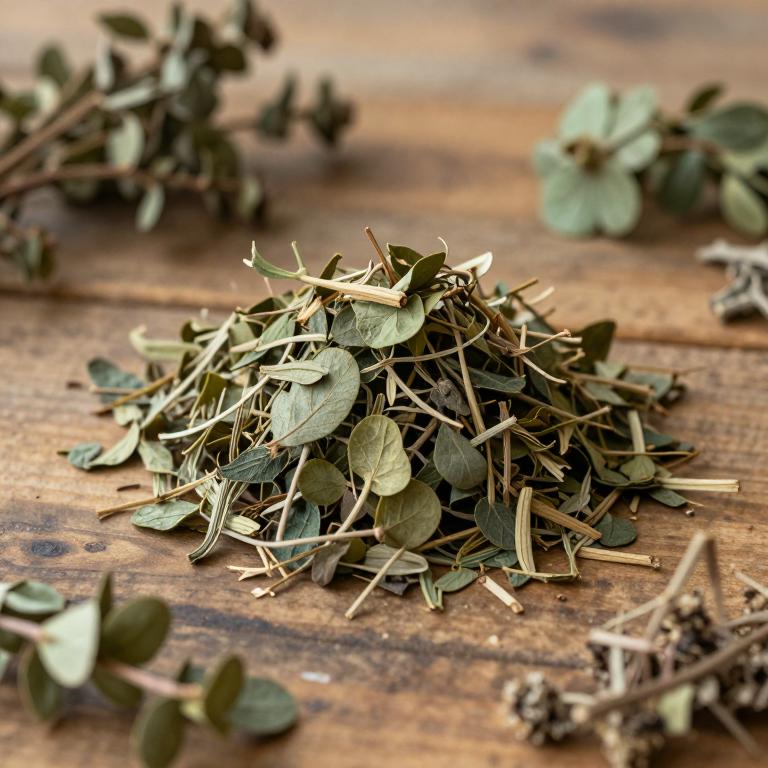
Names and Synonyms
Scientific Names
Accepted name
Glossostemon bruguieriSynonyms
- Dombeya arabica
Sources: Wikidata, Catalogue of Life
Taxonomical Classification
This plant belongs to the kingdom Plantae and the phylum Streptophyta, falling under the class Equisetopsida and subclass Magnoliidae. Within the order Malvales, it is classified under the family Malvaceae. Finally, its specific taxonomic designation is within the genus Glossostemon.
| Rank | Classification |
|---|---|
| Kingdom | Plantae |
| Phylum | Streptophyta |
| Class | Equisetopsida |
| Subclass | Magnoliidae |
| Order | Malvales |
| Family | Malvaceae |
| Genus | Glossostemon |
Sources: The World Checklist of Vascular Plants (WCVP)
Distribution
This plant exhibits a specific distribution pattern across the arid regions of Western Asia and the Arabian Peninsula. In the territory of Western Asia, it can be found growing within the borders of Iran and Iraq. Moving toward the Arabian Peninsula, the species is also documented in the country of Oman. Additionally, its range extends into the landscapes of Saudi Arabia. Together, these locations define the primary geographical footprint of Glossostemon bruguieri.
| Region | Area |
|---|---|
| Western Asia | Iran |
| Western Asia | Iraq |
| Arabian Peninsula | Oman |
| Arabian Peninsula | Saudi Arabia |
Sources: The World Checklist of Vascular Plants (WCVP)
Botanical Identification
Morphology
The morphology of Glossostemon bruguieir is characterized by its relatively low-growing habit, typically presenting as a small, herbaceous to subshrubby plant. Regarding its structural consistency, the plant exhibits a woody nature, possessing woody stems that provide a sturdy framework for its growth, distinguishing it from purely soft-stemmed annuals. The leaves are generally arranged oppositely along the stems, often appearing somewhat fleshy or thickened, which is characteristic of many members of the Linderniaceae family. The inflorescence typically consists of small, zygomorphic flowers that emerge from the leaf axils, featuring a delicate corolla that serves as a key diagnostic feature for the species. The root system is well-developed to support its woody base, allowing the plant to anchor effectively in its specific ecological niche.
- Woodiness :
- woody
Sources: Global Inventory of Floras and Traits (GIFT)
Chemicals
Glossostemon bruguieri has 20 reported phytochemicals identified across 0 scientific publications and several other databases. The most consistently reported chemicals include Esculetin, GLUTAMIC ACID, Galacturonic acid, Takakin, XANTHOTOXIN.
| Chemical | Supporting sources | Consensus |
|---|---|---|
| Esculetin | 1 supporting sources | ★☆☆☆☆ |
| GLUTAMIC ACID | 1 supporting sources | ★☆☆☆☆ |
| Galacturonic acid | 1 supporting sources | ★☆☆☆☆ |
| Takakin | 1 supporting sources | ★☆☆☆☆ |
| XANTHOTOXIN | 1 supporting sources | ★☆☆☆☆ |
| arabinose | 1 supporting sources | ★☆☆☆☆ |
| arginine | 1 supporting sources | ★☆☆☆☆ |
| cysteine | 1 supporting sources | ★☆☆☆☆ |
| galactose | 1 supporting sources | ★☆☆☆☆ |
| glucuronic acid | 1 supporting sources | ★☆☆☆☆ |
Esculetin
- Indian journal of experimental biology
GLUTAMIC ACID
- Plant foods for human nutrition (Dordrecht, Netherlands)
Galacturonic acid
- Plant foods for human nutrition (Dordrecht, Netherlands)
Takakin
- Indian journal of experimental biology
XANTHOTOXIN
- Indian journal of experimental biology
arabinose
- Plant foods for human nutrition (Dordrecht, Netherlands)
arginine
- Plant foods for human nutrition (Dordrecht, Netherlands)
cysteine
- Plant foods for human nutrition (Dordrecht, Netherlands)
galactose
- Plant foods for human nutrition (Dordrecht, Netherlands)
glucuronic acid
- Plant foods for human nutrition (Dordrecht, Netherlands)