Globularia trichosantha
Globularia trichosantha · Accepted scientific name
Scientific literature: Very Sparse (31 studies) · ★☆☆☆☆
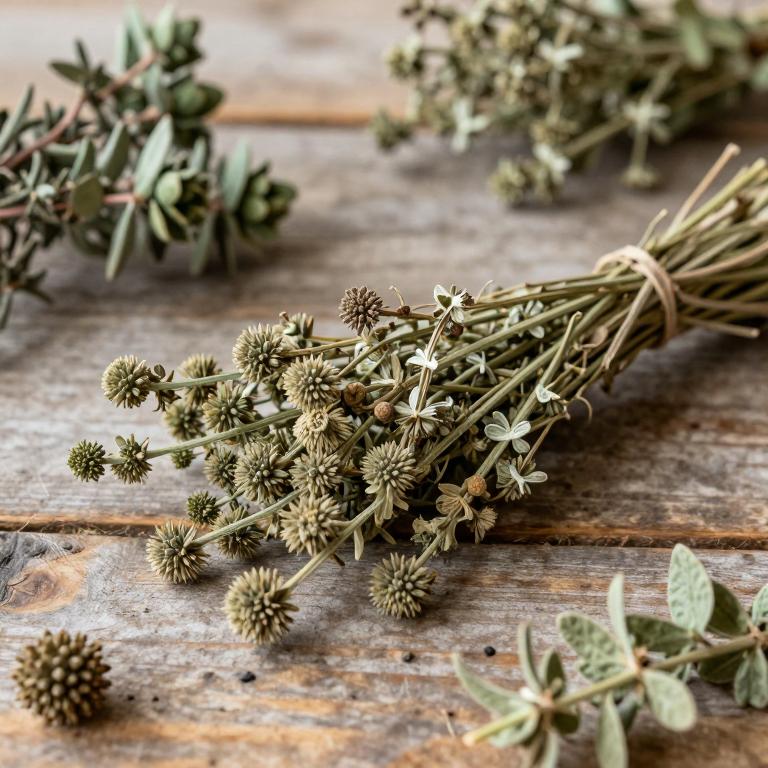
, scientifically known as Globularia trichosantha, is a rare medicinal herb distinguished by its unique floral structure and hairy foliage. Traditionally utilized in folk medicine, this plant offers significant therapeutic potential. Research continues to explore its bioactive compounds, highlighting its importance in botanical studies and natural pharmacology.
- Family
- Plantaginaceae
- Native range
- Europe
- Parts used
- Not available
- Common names
- Not available
- Scientific synonyms
- Globularia Vulgaris Subsp. Trichosantha
Names and Synonyms
Scientific Names
Accepted name
Globularia trichosanthaSynonyms
- Globularia vulgaris subsp. trichosantha
Regional and Traditional Names
Spanish:
- Globularia pallida
- Globularia cordifolia
- Globularia elongata
German:
- Behaarte Kugelblume
Sources: Wikidata, Catalogue of Life
Taxonomical Classification
This plant belongs to the kingdom Plantae and the phylum Streptophyta, falling under the class Equisetopsida and subclass Magnoliidae. Within the order Lamiales, it is classified under the family Plantaginaceae. Finally, its taxonomic placement is completed within the genus Globularia.
| Rank | Classification |
|---|---|
| Kingdom | Plantae |
| Phylum | Streptophyta |
| Class | Equisetopsida |
| Subclass | Magnoliidae |
| Order | Lamiales |
| Family | Plantaginaceae |
| Genus | Globularia |
Sources: The World Checklist of Vascular Plants (WCVP)
Distribution
This plant is widely distributed across several key regions of Southeastern and Eastern Europe. In Southeastern Europe, its range includes Bulgaria and the European portion of Türkiye. It can also be found in Eastern Europe, specifically within the Crimea region. The species extends into the Caucasus, where it inhabits the North Caucasus area. Finally, its geographical presence is confirmed in the Transcaucasus region.
| Region | Area |
|---|---|
| Southeastern Europe | Bulgaria |
| Southeastern Europe | Türkiye-in-Europe |
| Eastern Europe | Krym |
| Caucasus | North Caucasus |
| Caucasus | Transcaucasus |
| Western Asia | Iran |
| Western Asia | Iraq |
| Western Asia | Lebanon-Syria |
| Western Asia | Türkiye |
Sources: The World Checklist of Vascular Plants (WCVP)
Botanical Identification
Ecology
The ecology of Globularia trichosantha is characterized by its adaptation to rugged, high-altitude environments, typically inhabiting mountains, steppes, and stony places. This species thrives in specialized niches where rocky substrates and open landscapes provide the necessary drainage and exposure. Its distribution is vertically constrained, occupying an elevational range that reaches a maximum of 2000 m AMSL. These specific environmental conditions, ranging from arid steppe formations to steep mountainous terrain, define the ecological boundaries within which the plant successfully competes and persists.
- Elevational range max:
- 2000 m AMSL
- Habitat :
- mountains, steppe, stony places
Life history
The life history of Globularia trichosantha is characterized by its status as a perennial plant, allowing it to persist in its habitat through multiple growing seasons. As a long-lived species, it avoids the rapid turnover seen in annuals, instead focusing on establishing a stable root system that supports its continued development and reproductive efforts over several years. This perennial lifecycle enables the plant to endure seasonal fluctuations and contribute to the long-term stability of its ecological niche.
- Lifecycle :
- perennial
Morphology
The morphology of Globularia trichosantha is characterized by a low-growing, herbaceous habit. It is a non-woody plant that functions as a herb, exhibiting a compact growth form. In terms of stature, the plant is relatively diminutive, with a height that ranges from a minimum of 0.05 m to a maximum of 0.3 m.
- Growth form :
- herb
- Plant height max:
- 0.3 m
- Plant height min:
- 0.05 m
- Woodiness :
- non-woody
Physiology
The physiology of Globularia trichosantha is characterized by a metabolic framework governed by the C3 photosynthetic pathway. Under this mechanism, the plant utilizes the enzyme RuBisCO to fix atmospheric carbon dioxide directly into three-carbon compounds during the initial stages of the Calvin cycle. This physiological process occurs primarily within the mesophyll cells, where light-dependent reactions capture solar energy to produce ATP and NADPH, which subsequently drive the light-independent reactions to synthesize carbohydrates. As a C3 plant, its physiological efficiency is highly dependent on environmental conditions such as temperature, light intensity, and water availability, as the reliance on RuBisCO makes the plant susceptible to photorespiration under high-temperature or low-CO2 conditions. This metabolic profile dictates its resource allocation strategies and its adaptive responses to the specific ecological niches it inhabits.
- Photosynthetic pathway :
- C3
Reproduction
The reproduction of Globularia trichosantha is characterized by a specific flowering window and precise seed characteristics. The plant's flowering period is concentrated in the month of June, with both the onset and conclusion of the blooming phase occurring during this time. Following pollination, the plant produces seeds that exhibit a very small and specific mass range. The average seed mass is recorded at 0.00058 g, with individual seeds varying slightly between a minimum weight of 0.0005 g (5e-04 g) and a maximum weight of 0.00066 g.
- Flowering time :
- Jun
- Seed mass max:
- 0.00066 g
- Seed mass mean:
- 0.00058 g
- Seed mass min:
- 5e-04 g
Sources: Global Inventory of Floras and Traits (GIFT)
Chemicals
Globularia trichosantha has 22 reported phytochemicals identified across 0 scientific publications and several other databases. The most consistently reported chemicals include Acteoside, Asperuloside, Asperulosidic acid, Aucubin, Catalpol.
| Chemical | Supporting sources | Consensus |
|---|---|---|
| Acteoside | 1 supporting sources | ★☆☆☆☆ |
| Asperuloside | 1 supporting sources | ★☆☆☆☆ |
| Asperulosidic acid | 1 supporting sources | ★☆☆☆☆ |
| Aucubin | 1 supporting sources | ★☆☆☆☆ |
| Catalpol | 1 supporting sources | ★☆☆☆☆ |
| Crenatoside | 1 supporting sources | ★☆☆☆☆ |
| DEACETYLASPERULOSIDE | 1 supporting sources | ★☆☆☆☆ |
| Deacetylalpinoside | 1 supporting sources | ★☆☆☆☆ |
| Flavonoids | 1 supporting sources | ★☆☆☆☆ |
| Geniposidic acid | 1 supporting sources | ★☆☆☆☆ |
Acteoside
- Journal of natural products
Asperuloside
- Journal of natural products
Asperulosidic acid
- Journal of natural products
Aucubin
- Journal of natural products
Catalpol
- Journal of natural products
Crenatoside
- Journal of natural products
DEACETYLASPERULOSIDE
- Journal of natural products
Deacetylalpinoside
- Journal of natural products
Flavonoids
- Phytochemical analysis : PCA
Geniposidic acid
- Journal of natural products
Conditions
Globularia trichosantha has 3 reported investigations on conditions identified across 0 scientific publications and several other databases. The most consistently reported conditions include hyperpigmentation, neurodegenerative diseases, obesity.
| Condition | Supporting sources | Consensus |
|---|---|---|
| Hyperpigmentation | 1 supporting sources | ★☆☆☆☆ |
| Neurodegenerative diseases | 1 supporting sources | ★☆☆☆☆ |
| Obesity | 1 supporting sources | ★☆☆☆☆ |
Hyperpigmentation
- Phytochemical analysis : PCA
Neurodegenerative diseases
- Phytochemical analysis : PCA
Obesity
- Phytochemical analysis : PCA
Preparations
Globularia trichosantha has 2 reported preparations identified across 0 scientific publications and several other databases. The most consistently reported preparations include acetyl acetate and methanolic extracts, water extracts.
| Preparation | Supporting sources | Consensus |
|---|---|---|
| Acetyl acetate and methanolic extracts | 1 supporting sources | ★☆☆☆☆ |
| Water extracts | 1 supporting sources | ★☆☆☆☆ |
Acetyl acetate and methanolic extracts
- Phytochemical analysis : PCA
Water extracts
- Phytochemical analysis : PCA