Globularia orientalis
Globularia orientalis · Accepted scientific name
Scientific literature: Very Sparse (4 studies) · ★☆☆☆☆
Globularia orientalis, scientifically known as Globularia orientalis, is a resilient perennial herb native to the Mediterranean region. Characterized by its striking blue, globe-shaped flower heads, this plant is valued in traditional herbalism. It is often studied for its unique phytochemical properties and potential therapeutic benefits in folk medicine.
- Family
- Plantaginaceae
- Native range
- Asia-Temperate
- Parts used
- Not available
- Common names
- Not available
- Scientific synonyms
- Not available
Names and Synonyms
Scientific Names
Accepted name
Globularia orientalisSources: Wikidata, Catalogue of Life
Taxonomical Classification
This plant, Globularia orientalis, belongs to the kingdom Plantae and the phylum Streptophyta. Within the class Equisetopsida and subclass Magnoliidae, it is classified under the order Lamiales and the family Plantaginaceae. Finally, it is categorized under the genus Globularia.
| Rank | Classification |
|---|---|
| Kingdom | Plantae |
| Phylum | Streptophyta |
| Class | Equisetopsida |
| Subclass | Magnoliidae |
| Order | Lamiales |
| Family | Plantaginaceae |
| Genus | Globularia |
Sources: The World Checklist of Vascular Plants (WCVP)
Distribution
This plant exhibits a specific geographical range concentrated within the Western Asian region. It can be found growing across the landscapes of Türkiye. Additionally, its natural habitat extends into the neighboring territories of Lebanon and Syria. These locations represent the primary areas where the species is known to occur. Therefore, the distribution of Globularia orientalis is limited to these particular parts of Western Asia.
| Region | Area |
|---|---|
| Western Asia | Lebanon-Syria |
| Western Asia | Türkiye |
Sources: The World Checklist of Vascular Plants (WCVP)
Botanical Identification
Morphology
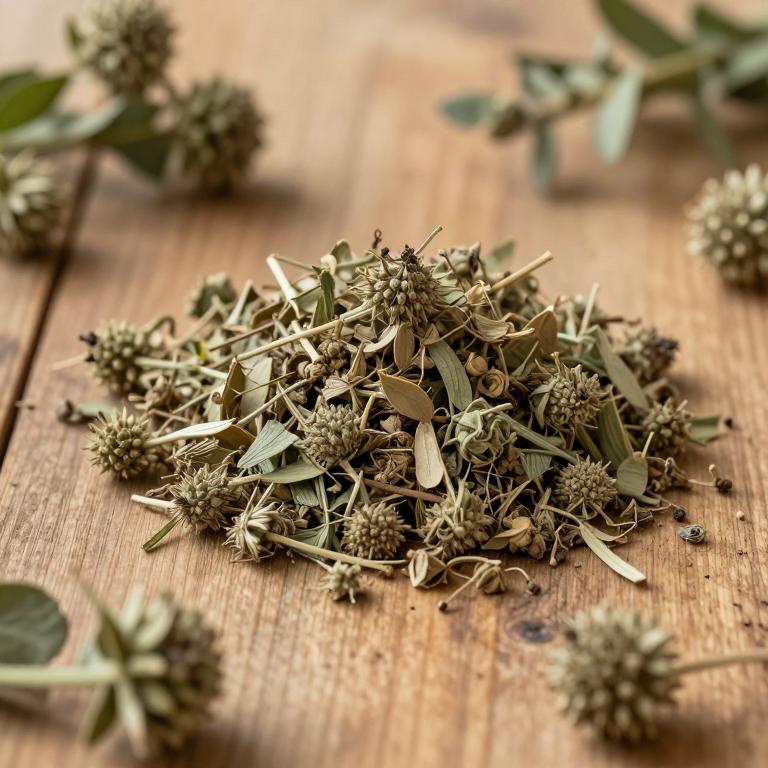
The morphology of Globularia orientalis is characterized by its growth form as a perennial herb, often exhibiting a caespitose or tufted habit. The plant typically features a basal rosette of leaves that are persistent, providing a dense ground cover. The foliage consists of simple, often lanceolate to linear leaves with entire or slightly serrated margins, possessing a texture that ranges from glabrous to slightly pubescent depending on the specific environmental conditions. From this basal arrangement, the plant produces erect, leafless or sparingly leafy flowering stems (scapes) that rise to support terminal inflorescences. The flowers are organized into compact, globular, head-like clusters, which are the defining feature of the genus. These capitula consist of numerous small, actinomorphic flowers with distinct corollas, typically displaying hues of blue, violet, or white. The root system is generally composed of a sturdy woody caudex or a fleshy rhizome, which allows the plant to persist through seasonal changes in its rocky or montane habitats.
- Growth form :
- herb
Physiology
The physiology of Globularia orientalis is characterized by its adaptation to temperate Mediterranean-style environments, primarily through its utilization of the C3 photosynthetic pathway. As a C3 plant, the carbon fixation process occurs directly via the Calvin cycle within the mesophyll cells, where the enzyme RuBisCO facilitates the initial carboxylation of atmospheric CO2 into 3-phosphoglycerate. This metabolic strategy dictates its water-use efficiency and thermal tolerance, as the plant relies on maintaining specific stomatal conductance levels to balance CO2 uptake against transpiration losses. Furthermore, its physiological framework supports structural resilience in rocky or montane substrates, managing nutrient uptake and osmotic regulation to maintain cellular turgor during varying seasonal moisture availability.
- Photosynthetic pathway :
- C3
Reproduction
Reproduction in Globularia orientalis is facilitated through the production of specialized seeds that exhibit highly consistent physical properties. The reproductive output of this species is characterized by a very fine seed mass, which remains uniform across observed samples. Specifically, the seed mass displays a mean value of 4e-04 g, a maximum value of 4e-04 g, and a minimum value of 4e-04 g. This lack of variance in seed mass suggests a highly stabilized reproductive strategy, ensuring that each seed produced by the plant maintains a consistent weight of 0.0004 grams to support its developmental processes.
- Seed mass mean:
- 4e-04 g
Sources: Global Inventory of Floras and Traits (GIFT)
Chemicals
Globularia orientalis has 1 reported phytochemicals identified across 0 scientific publications and several other databases. The most consistently reported chemicals include Flavonoids.
| Chemical | Supporting sources | Consensus |
|---|---|---|
| Flavonoids | 1 supporting sources | ★☆☆☆☆ |
Flavonoids
- Phytochemical analysis : PCA
Conditions
Globularia orientalis has 3 reported investigations on conditions identified across 0 scientific publications and several other databases. The most consistently reported conditions include hyperpigmentation, neurodegenerative diseases, obesity.
| Condition | Supporting sources | Consensus |
|---|---|---|
| Hyperpigmentation | 1 supporting sources | ★☆☆☆☆ |
| Neurodegenerative diseases | 1 supporting sources | ★☆☆☆☆ |
| Obesity | 1 supporting sources | ★☆☆☆☆ |
Hyperpigmentation
- Phytochemical analysis : PCA
Neurodegenerative diseases
- Phytochemical analysis : PCA
Obesity
- Phytochemical analysis : PCA