Common Globularia
Globularia bisnagarica · Accepted scientific name
Scientific literature: Very Sparse (3 studies) · ★☆☆☆☆
Common Globularia, scientifically known as Globularia bisnagarica, is a resilient perennial herb native to the Mediterranean region. Characterized by its striking blue flowers and lanceolate leaves, this plant holds significant ethnobotanical value. Historically utilized in traditional medicine, it is valued for its potential therapeutic properties and antioxidant capabilities.
- Family
- Plantaginaceae
- Native range
- Europe
- Parts used
- Not available
- Common names
- Common Globularia · Common Ball Flower
- Scientific synonyms
- Globularia Vulgaris Subsp. Willkommii · Globularia Linifolia Subsp. Hispanica · 17 more
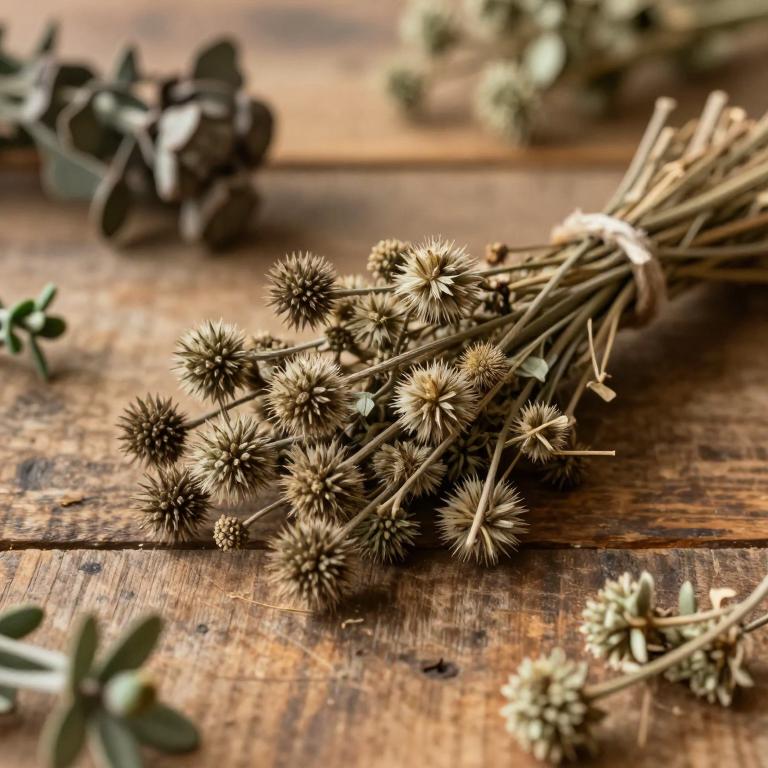
Names and Synonyms
Common Names
- Common Globularia
- Common ball flower
Scientific Names
Accepted name
Globularia bisnagaricaSynonyms
- Globularia vulgaris subsp. willkommii
- Globularia linifolia subsp. hispanica
- Globularia vulgaris subsp. tenella
- Globularia vulgaris proles tenella
- Globularia cambessedesii subsp. hispanica
- Globularia vulgaris subsp. willkommii
- Globularia vulgaris subsp. willkommii
- Globularia vulgaris subsp. montserratensis
- Globularia caespitosa
- Globularia castellana
- Globularia multicaulis
- Globularia spinosa var. minor
- Globularia tenella
- Globularia bolosii
- Globularia elongata
- Globularia adolphi
- Globularia punctata
- Globularia pungens
- Globularia willkommii
Regional and Traditional Names
German:
- Gewöhnliche Kugelblume
- Gemeine Kugelblume
- Echte Kugelblume
French:
- Globulaire allongee
- Globulaire ponctuée
- globulaire commune
Sources: Wikidata, Catalogue of Life
Taxonomical Classification
This plant, known scientifically as Globularia bisnagarica, belongs to the kingdom Plantae within the phylum Streptophyta and the class Equisetopsida. It is further classified under the subclass Magnoliidae and the order Lamiales, placing it within the family Plantaginaceae. Ultimately, its taxonomic position is defined by its membership in the genus Globularia.
| Rank | Classification |
|---|---|
| Kingdom | Plantae |
| Phylum | Streptophyta |
| Class | Equisetopsida |
| Subclass | Magnoliidae |
| Order | Lamiales |
| Family | Plantaginaceae |
| Genus | Globularia |
Sources: The World Checklist of Vascular Plants (WCVP)
Distribution
This plant exhibits a specific geographical range primarily concentrated within the regions of Middle Europe. Its presence can be documented across several distinct countries, including Austria and Germany. Furthermore, the species is found extending into the territories of Belgium and Hungary. The distribution also encompasses the combined areas of Czechia and Slovakia. Collectively, these locations define the central European habitat essential for its growth.
| Region | Area |
|---|---|
| Middle Europe | Austria |
| Middle Europe | Belgium |
| Middle Europe | Czechia-Slovakia |
| Middle Europe | Germany |
| Middle Europe | Hungary |
| Middle Europe | Switzerland |
| Southwestern Europe | Corse |
| Southwestern Europe | France |
| Southwestern Europe | Spain |
| Southeastern Europe | Albania |
Sources: The World Checklist of Vascular Plants (WCVP)
Botanical Identification
Ecology
The ecology of Globularia bisnagarica is defined by its preference for open, well-drained, and often challenging terrains. It typically inhabits hills and shrubberies, where it can thrive amidst varied vegetation structures. This species is well-adapted to steppe environments, allowing it to withstand the competitive and sometimes arid conditions characteristic of such grasslands. Furthermore, it frequently colonizes stony places, demonstrating a high tolerance for rocky substrates and shallow soils where other plants might struggle to establish.
- Habitat :
- hills, shrubberies, steppe, stony places
Life history
The life history of Globularia bisnagarica is characterized by a perennial lifecycle, allowing the plant to persist through multiple growing seasons. Functioning as a hemicryptophyte, its perennating buds are located at or just below the soil surface, protected by the leaf litter or ground level. This species maintains an evergreen deciduousness, retaining its foliage throughout various seasonal transitions, which contributes to its stable life form as a hemicryptophyte within its natural habitat.
- Deciduousness :
- evergreen
- Life form :
- hemicryptophyte
- Lifecycle :
- perennial
Morphology
The morphology of Globularia bisnagarica is characterized by its growth form as a non-woody herb, manifesting as both a herb and a forb. This terrestrial species is independent, meaning it does not function as a parasite or an epiphyte, and it maintains a self-supporting structure rather than acting as a liana or vine. The plant exhibits an ascending shoot orientation, with a relatively low stature; its height typically ranges from a minimum of 0.05 m to a maximum of 0.25 m, with an average plant height of approximately 0.102 m.
- Aquatic :
- terrestrial
- Climber :
- self-supporting
- Epiphyte :
- terrestrial
- Growth form :
- herb
- Parasite :
- independent
- Plant height max:
- 0.25 m
- Plant height mean:
- 0.102 m
- Plant height min:
- 0.05 m
- Shoot orientation :
- ascending
- Woodiness :
- non-woody
Physiology
The physiology of Globularia bisnagarica is characterized by a C3 photosynthetic pathway, which dictates its metabolic processes and carbon fixation efficiency within its typical environmental niches. The plant exhibits specific morphological adaptations related to its foliage, with a mean leaf size of approximately 4.5975 cm². Furthermore, its leaf structure is defined by a mean Specific Leaf Area (SLA) of 81.35 cm²/g, reflecting a specific balance between leaf thickness and biomass distribution that influences its resource acquisition and light interception capabilities.
- Leaf size mean:
- 4.5975 cm²
- Photosynthetic pathway :
- C3
- Specific Leaf Area (SLA) mean:
- 81.35 cm²/g
Reproduction
The reproduction of Globularia bisnagarica is characterized by a flowering period that typically begins in April and concludes in June. The plant utilizes a biotic pollination syndrome, specifically relying on insects to facilitate the transfer of pollen. Within its reproductive biology, self-fertilization is present, allowing for successful seed production. The resulting seeds are quite small, with a mean mass of approximately 0.000595 g, ranging from a minimum of 0.0002613 g to a maximum of 0.00074 g. Once mature, the seeds are distributed via an autochorous dispersal syndrome, meaning the plant employs an autochorous mechanism to disperse its seeds.
- Dispersal syndrome :
- autochorous
- Flowering time :
- Apr
- Flowering time :
- Jun
- Pollination syndrome :
- insect
- Pollination syndrome :
- biotic
- Seed mass max:
- 0.00074 g
- Seed mass mean:
- 0.000595255666666667 g
- Seed mass min:
- 0.0002613 g
- Self fertilization :
- present
Sources: Global Inventory of Floras and Traits (GIFT)
Chemicals
Globularia bisnagarica has 3 reported phytochemicals identified across 0 scientific publications and several other databases. The most consistently reported chemicals include Asperuloside, GLOBULARIFOLIN, Globularin.
| Chemical | Supporting sources | Consensus |
|---|---|---|
| Asperuloside | 1 supporting sources | ★☆☆☆☆ |
| GLOBULARIFOLIN | 1 supporting sources | ★☆☆☆☆ |
| Globularin | 1 supporting sources | ★☆☆☆☆ |
Asperuloside
- Journal of mass spectrometry : JMS
GLOBULARIFOLIN
- Journal of mass spectrometry : JMS
Globularin
- Journal of mass spectrometry : JMS