swamp locust
Gleditsia aquatica · Accepted scientific name
Scientific literature: Very Sparse (1 studies) · ★☆☆☆☆
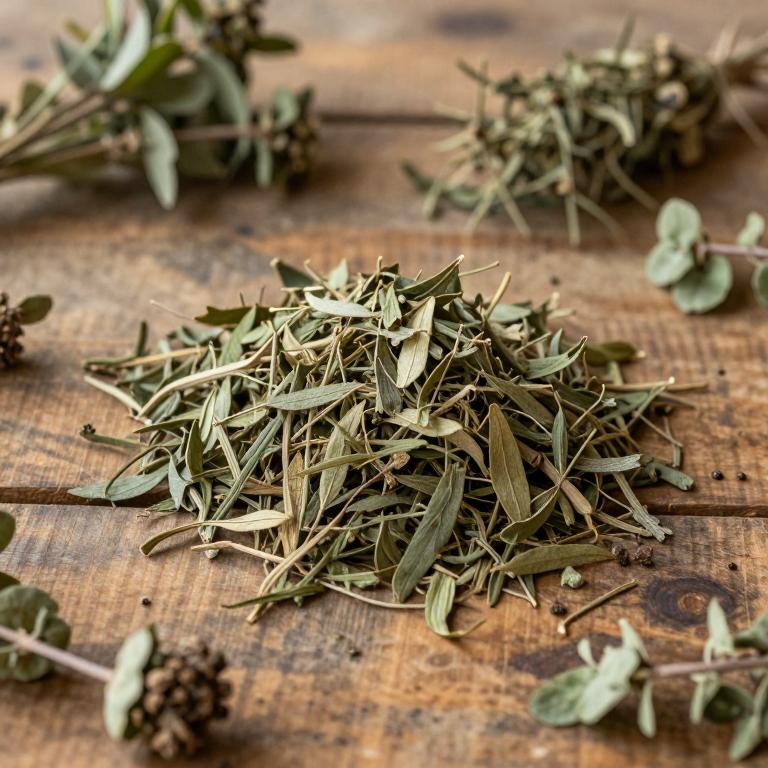
Swamp locust, scientifically known as Gleitdsia aquatica, is a remarkable medicinal plant thriving in wetland ecosystems. Renowned for its diverse therapeutic properties, it is frequently utilized in traditional medicine to treat various ailments. Understanding its chemical composition and ecological significance is essential for unlocking its full potential in pharmacology.
Names and Synonyms
Common Names
- swamp-locust
- water-locust
- Water locust
Scientific Names
Accepted name
Gleditsia aquaticaSynonyms
- Gleditsia triacanthos var. monosperma
- Asacara aquatica
- Caesalpiniodes monospermum
- Gleditsia caroliniensis
- Gleditsia monosperma
- Gleditsia triacanthos var. aquatica
Regional and Traditional Names
German:
- Wasser-Gleditschie
Sources: Wikidata, Catalogue of Life
Taxonomical Classification
This plant belongs to the kingdom Plantae and is classified under the phylum Streptophyta within the class Equisetopsida. Following its subclass Magnoliidae, it is organized under the order Fabales and the family Fabaceae. Finally, its specific taxonomic identity is defined by the genus Gleditsia.
| Rank | Classification |
|---|---|
| Kingdom | Plantae |
| Phylum | Streptophyta |
| Class | Equisetopsida |
| Subclass | Magnoliidae |
| Order | Fabales |
| Family | Fabaceae |
| Genus | Gleditsia |
Sources: The World Checklist of Vascular Plants (WCVP)
Distribution
This plant exhibits a specific range of occurrence across several regions of the United States. In the North-Central region, it can be found growing in the states of Illinois and Missouri. Its presence extends into the Northeastern part of the country as well. Within this Northeastern area, the species is documented in Indiana, New York, and West Virginia. These locations define the primary geographical distribution for this medicinal species.
| Region | Area |
|---|---|
| North-Central U.S.A. | Illinois |
| North-Central U.S.A. | Missouri |
| Northeastern U.S.A. | Indiana |
| Northeastern U.S.A. | New York |
| Northeastern U.S.A. | West Virginia |
| South-Central U.S.A. | Texas |
| Southeastern U.S.A. | Alabama |
| Southeastern U.S.A. | Arkansas |
| Southeastern U.S.A. | Florida |
| Southeastern U.S.A. | Georgia |
Sources: The World Checklist of Vascular Plants (WCVP)
Botanical Identification
Life history
The life history of Gleditsia aquatica is characterized by its status as a perennial organism, allowing it to persist in its environment through multiple growing seasons. As a perennial species, it undergoes complex developmental stages that involve establishing a robust root system to support long-term survival and seasonal regrowth. Unlike annuals that complete their life cycle in a single year or biennials that require two years to reach reproductive maturity, this plant maintains its biological presence over an extended duration, often developing woody structures that contribute to its longevity and ability to withstand environmental fluctuations.
- Lifecycle :
- perennial
Morphology
The morphology of Gleditsia aquatica is characterized by a woody growth habit that manifests in both tree and shrub forms. It is a self-supporting species, lacking the climbing mechanisms found in obligatory or facultative climbers. The plant reaches a substantial stature, with a mean plant height of approximately 13.62 m.
- Climber :
- self-supporting
- Growth form :
- tree
- Growth form :
- shrub
- Plant height mean:
- 13.62 m
- Woodiness :
- woody
Physiology
The physiology of Gleditsia aquatica is characterized by a metabolic framework consistent with the C3 photosynthetic pathway. In this process, carbon fixation occurs through the Calvin cycle, where atmospheric carbon dioxide is directly incorporated into organic molecules via the enzyme ribulose-1,5-bisphosphate carboxylase/oxygenase (RuBisCO). This pathway involves the initial formation of a three-carbon compound, 3-phosphoglycerate, during the carboxylation phase. Because it utilizes the C3 mechanism, the plant's gas exchange and energy production are closely tied to environmental variables such as light intensity, water availability, and ambient temperature, which influence the efficiency of carbon assimilation and the rate of photorespiration.
- Photosynthetic pathway :
- C3
Reproduction
Reproduction in Gleditsia aquatica is primarily achieved through the production of seeds contained within woody, dehiscent pods that develop from the flowering structures. The reproductive cycle involves the maturation of these seeds, which serve as the primary units of dispersal and propagation. Quantitative analysis of the reproductive output reveals that the seeds possess a specific weight profile, characterized by a seed mass mean of 0.1512 g. This seed mass is a critical factor in the plant's life history, influencing both the energy reserves available to the emerging seedling and the efficiency of its dispersal mechanisms within its natural habitat.
- Seed mass mean:
- 0.1512 g
Sources: Global Inventory of Floras and Traits (GIFT)
Chemicals
Gleditsia aquatica has 1 reported phytochemicals identified across 0 scientific publications and several other databases. The most consistently reported chemicals include Galactomannan.
| Chemical | Supporting sources | Consensus |
|---|---|---|
| Galactomannan | 1 supporting sources | ★☆☆☆☆ |
Galactomannan
- Phytochemistry