ground-ivy
Glechoma · Accepted scientific name
Scientific literature: Very Sparse (10 studies) · ★☆☆☆☆
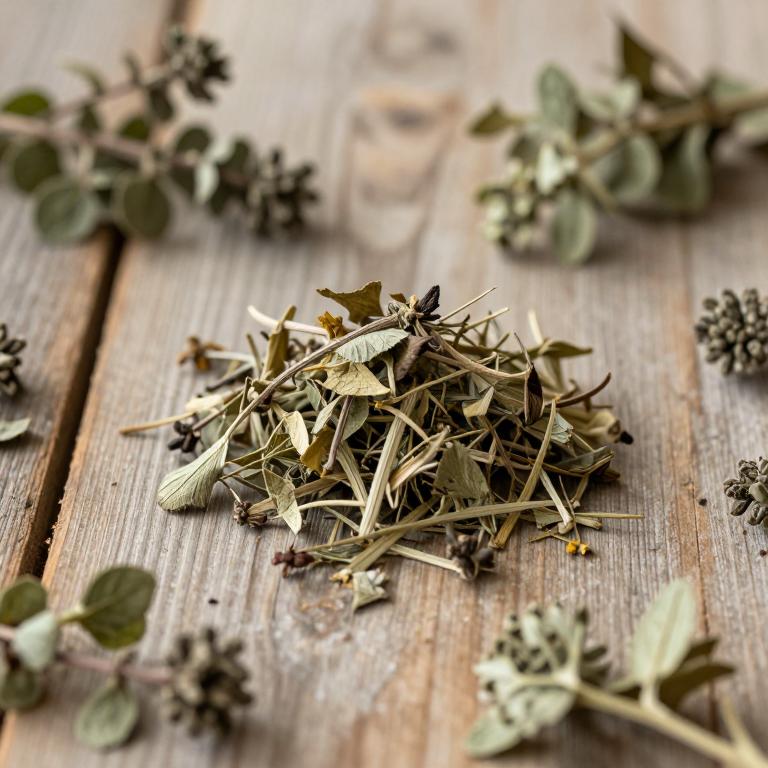
ground-ivy, scientifically known as Glechoma, is a creeping perennial herb cherished in traditional herbalism. Often found in moist, shaded woodlands, this resilient plant is valued for its potent medicinal properties. Renowned for its ability to support kidney health and soothe inflammatory conditions, it remains a vital botanical remedy.
- Family
- Lamiaceae
- Native range
- Europe
- Parts used
- Not available
- Common names
- Ground-Ivy · Ground-Ivies
- Scientific synonyms
- Meehaniopsis · Glechonion · 2 more
Names and Synonyms
Common Names
- ground-ivy
- ground-ivies
Scientific Names
Accepted name
GlechomaSynonyms
- Meehaniopsis
- Glechonion
- Chamaecissos
- Chamaeclema
Regional and Traditional Names
German:
- Gundermann
- Gundermann
- Gundelreben
Sources: Wikidata, Catalogue of Life
Taxonomical Classification
This plant belongs to the kingdom Plantae within the phylum Streptophyta and the class Equisetopsida. As a member of the subclass Magnoliidae and the order Lamiales, it is further classified under the family Lamiaceae. Ultimately, its specific taxonomic identity is defined by the genus Glechoma.
| Rank | Classification |
|---|---|
| Kingdom | Plantae |
| Phylum | Streptophyta |
| Class | Equisetopsida |
| Subclass | Magnoliidae |
| Order | Lamiales |
| Family | Lamiaceae |
| Genus | Glechoma |
Sources: The World Checklist of Vascular Plants (WCVP)
Distribution
This plant exhibits a specific geographical distribution across the northern regions of Europe. Within Northern Europe, it can be found growing in the landscapes of Denmark. Its presence also extends to the territories of Finland and Norway. Additionally, the species is documented throughout Great Britain. Finally, the plant is also located within the country of Ireland.
| Region | Area |
|---|---|
| Northern Europe | Denmark |
| Northern Europe | Finland |
| Northern Europe | Great Britain |
| Northern Europe | Ireland |
| Northern Europe | Norway |
| Northern Europe | Sweden |
| Middle Europe | Austria |
| Middle Europe | Belgium |
| Middle Europe | Czechia-Slovakia |
| Middle Europe | Germany |
Sources: The World Checklist of Vascular Plants (WCVP)
Activities
Glechoma has 6 reported activities identified across 0 scientific publications and several other databases. The most consistently reported activities include Analgesic, Anticancer, Anticomplement, Antimicrobial, Antioxidant.
| Activity | Supporting sources | Consensus |
|---|---|---|
| Analgesic | 1 supporting sources | ★☆☆☆☆ |
| Anticancer | 1 supporting sources | ★☆☆☆☆ |
| Anticomplement | 1 supporting sources | ★☆☆☆☆ |
| Antimicrobial | 1 supporting sources | ★☆☆☆☆ |
| Antioxidant | 1 supporting sources | ★☆☆☆☆ |
| Antiviral | 1 supporting sources | ★☆☆☆☆ |
Analgesic
- Journal of ethnopharmacology
Anticancer
- Journal of ethnopharmacology
Anticomplement
- Journal of ethnopharmacology
Antimicrobial
- Journal of ethnopharmacology
Antioxidant
- Journal of ethnopharmacology
Antiviral
- Journal of ethnopharmacology
Conditions
Glechoma has 4 reported investigations on conditions identified across 0 scientific publications and several other databases. The most consistently reported conditions include cholelithiasis, inflammation, nephrolithiasis, urolithiasis.
| Condition | Supporting sources | Consensus |
|---|---|---|
| Cholelithiasis | 1 supporting sources | ★☆☆☆☆ |
| Inflammation | 1 supporting sources | ★☆☆☆☆ |
| Nephrolithiasis | 1 supporting sources | ★☆☆☆☆ |
| Urolithiasis | 1 supporting sources | ★☆☆☆☆ |
Cholelithiasis
- Journal of ethnopharmacology
Inflammation
- Journal of ethnopharmacology
Nephrolithiasis
- Journal of ethnopharmacology
Urolithiasis
- Journal of ethnopharmacology