Glechoma hirsuta
Glechoma hirsuta · Accepted scientific name
Scientific literature: Very Sparse (16 studies) · ★☆☆☆☆
, scientifically known as Glechoma hirsuta, is a creeping perennial herb belonging to the Lamiaceae family. Commonly referred to as hairy scotch mint, this medicinal plant is valued in traditional medicine for its anti-inflammatory and antioxidant properties, often utilized to support respiratory health and alleviate various systemic ailments.
- Family
- Lamiaceae
- Native range
- Europe
- Parts used
- Not available
- Common names
- Not available
- Scientific synonyms
- Glechoma Hirsuta Var. Lamiifolia · Glechoma Hirsuta Var. Fruska-Gorae · 1 more
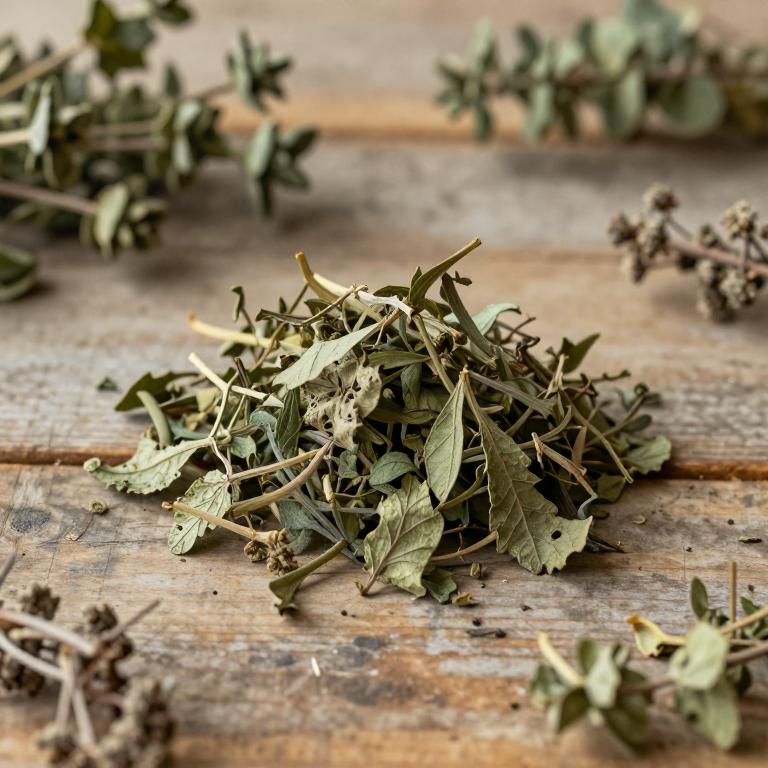
Names and Synonyms
Scientific Names
Accepted name
Glechoma hirsutaSynonyms
- Glechoma hirsuta var. lamiifolia
- Glechoma hirsuta var. fruska-gorae
- Glechoma lamiifolia
Regional and Traditional Names
German:
- Behaarter Gundermann
- Langhaar-Gundelrebe
French:
- Lierre terrestre hérissé
Sources: Wikidata, Catalogue of Life
Taxonomical Classification
This plant belongs to the kingdom Plantae and is classified under the phylum Streptophyta within the class Equisetopsida. As a member of the subclass Magnoliidae and the order Lamiales, it falls under the family Lamiaceae. Finally, it is specifically categorized within the genus Glechoma.
| Rank | Classification |
|---|---|
| Kingdom | Plantae |
| Phylum | Streptophyta |
| Class | Equisetopsida |
| Subclass | Magnoliidae |
| Order | Lamiales |
| Family | Lamiaceae |
| Genus | Glechoma |
Sources: The World Checklist of Vascular Plants (WCVP)
Distribution
This plant is primarily found across several regions within Middle Europe. Its distribution includes specific territories such as Austria and Germany. It can also be identified throughout the areas of Czechia and Slovakia. Furthermore, the species is present in Hungary. Finally, its geographical range extends into Poland.
| Region | Area |
|---|---|
| Middle Europe | Austria |
| Middle Europe | Czechia-Slovakia |
| Middle Europe | Germany |
| Middle Europe | Hungary |
| Middle Europe | Poland |
| Southeastern Europe | Albania |
| Southeastern Europe | Bulgaria |
| Southeastern Europe | Greece |
| Southeastern Europe | Italy |
| Southeastern Europe | Romania |
Sources: The World Checklist of Vascular Plants (WCVP)
Botanical Identification
Ecology
The ecology of Glechoma hirsuta is fundamentally defined by its preference for shaded, moist environments, primarily thriving within forest ecosystems. As a plant adapted to the understory, it seeks out the filtered light and stable microclimates provided by dense canopy cover, which protects it from direct solar radiation and excessive transpiration. These forest habitats provide the necessary accumulation of organic leaf litter, resulting in nutrient-rich, well-drained, yet consistently damp soils that support its vegetative growth. The high humidity levels typically found in these woodland settings are crucial for maintaining its physiological functions and supporting its sprawling growth habit across the forest floor.
- Habitat :
- forest
Life history
The life history of Glechoma hirsuta is characterized by its classification as a perennial plant, allowing it to persist through multiple growing seasons. In terms of its structural growth patterns and survival strategies, the species exhibits a dual life form classification, functioning as both a chamaephyte and a hemicryptophyte. As a hemicryptophyte, it maintains its perennable nature by protecting its overwintering buds at or just below the soil surface, often utilizing leaf litter or organic debris for protection. Simultaneously, its chamaephyte characteristics indicate that its persistent shoots remain close to the ground level, facilitating its ability to thrive in various shaded or disturbed habitats.
- Life form :
- chamaephyte
- Life form :
- hemicryptophyte
- Lifecycle :
- perennial
Morphology
The morphology of Glechoma hirsuta is characterized by its growth form as a non-woody herb, specifically categorized as a forb. This species is a self-supporting plant that does not function as a climber or a liana, maintaining its structure without the need for external support. It exhibits a terrestrial habit, existing as a terrestrial organism rather than an aquatic, semiaquatic, or epiphytic plant. As an independent species, it does not exhibit parasitic behavior. In terms of physical dimensions, the plant maintains a relatively low stature, with a height ranging from a minimum of 0.2 m to a maximum of 0.8 m.
- Aquatic :
- terrestrial
- Climber :
- self-supporting
- Epiphyte :
- terrestrial
- Growth form :
- herb
- Parasite :
- independent
- Plant height max:
- 0.8 m
- Plant height min:
- 0.2 m
- Woodiness :
- non-woody
Physiology
The physiology of Glechoma hirsuta is characterized by a metabolic framework centered on the C3 photosynthetic pathway, which dictates its carbon fixation processes and resource acquisition strategies. As a C3 plant, it utilizes the enzyme Ribulose-1,5-bisphosphate carboxylase/oxygenase (RuBisCO) to fix atmospheric carbon dioxide directly into a three-carbon compound during the Calvin cycle. This pathway is highly efficient under cool, temperate, and moist environmental conditions, allowing the plant to optimize gas exchange through its stomata while maintaining high photosynthetic rates in shaded or semi-shaded habitats. Because it lacks the specialized adaptations of C4 or CAM metabolism, its physiological performance is closely tied to moisture availability and temperature regulation, as it is susceptible to photorespiration when faced with high light intensities and heat. Consequently, its physiological vigor is most pronounced in environments where water loss through transpiration can be managed effectively without significantly compromising the rate of carbon assimilation.
- Photosynthetic pathway :
- C3
Reproduction
The reproduction of Glechoma hirsuta is primarily driven by its flowering cycle, which follows a seasonal pattern depending on the environmental conditions. The flowering period typically begins in April and extends through June, though the timing can be variable across different months. This reproductive phase is a critical window for the plant to facilitate pollination and ensure the development of seeds for the next generation.
- Flowering time :
- Apr
- Flowering time :
- Jun
Sources: Global Inventory of Floras and Traits (GIFT)
Chemicals
Glechoma hirsuta has 3 reported phytochemicals identified across 0 scientific publications and several other databases. The most consistently reported chemicals include Betulin, OLEANOLIC ACID, Ursolic acid.
| Chemical | Supporting sources | Consensus |
|---|---|---|
| Betulin | 1 supporting sources | ★☆☆☆☆ |
| OLEANOLIC ACID | 1 supporting sources | ★☆☆☆☆ |
| Ursolic acid | 1 supporting sources | ★☆☆☆☆ |
Betulin
- Dr. Duke
OLEANOLIC ACID
- Planta medica
Ursolic acid
- Planta medica
Activities
Glechoma hirsuta has 12 reported activities identified across 0 scientific publications and several other databases. The most consistently reported activities include AntiHIV, Anticarcinomic, Antifeedant, Antiflu, Antiinflammatory.
| Activity | Supporting sources | Consensus |
|---|---|---|
| AntiHIV | 1 supporting sources | ★☆☆☆☆ |
| Anticarcinomic | 1 supporting sources | ★☆☆☆☆ |
| Antifeedant | 1 supporting sources | ★☆☆☆☆ |
| Antiflu | 1 supporting sources | ★☆☆☆☆ |
| Antiinflammatory | 1 supporting sources | ★☆☆☆☆ |
| Antitumor | 1 supporting sources | ★☆☆☆☆ |
| Antiviral | 1 supporting sources | ★☆☆☆☆ |
| Aphidifuge | 1 supporting sources | ★☆☆☆☆ |
| Cytotoxic | 1 supporting sources | ★☆☆☆☆ |
| Hypolipemic | 1 supporting sources | ★☆☆☆☆ |
AntiHIV
- Dr. Duke
Anticarcinomic
- Dr. Duke
Antifeedant
- Dr. Duke
Antiflu
- Dr. Duke
Antiinflammatory
- Dr. Duke
Antitumor
- Dr. Duke
Antiviral
- Dr. Duke
Aphidifuge
- Dr. Duke
Cytotoxic
- Dr. Duke
Hypolipemic
- Dr. Duke