garland chrysanthemum
Glebionis coronaria · Accepted scientific name
Scientific literature: Very Extensive (285 studies) · ★★★★★
Garland chrysanthemum, scientifically known as Glebionis coronaria, is a versatile medicinal herb prized in traditional Asian medicine. Renowned for its aromatic leaves, it possesses potent anti-inflammatory and antioxidant properties. Often used to treat respiratory ailments and skin conditions, this nutrient-rich plant serves as both a culinary delicacy and healer.
- Family
- Asteraceae
- Native range
- Europe
- Parts used
- Seed
- Common names
- Not available
- Scientific synonyms
- Chrysanthemum Coronarium · Dendranthema Coronarium · 19 more
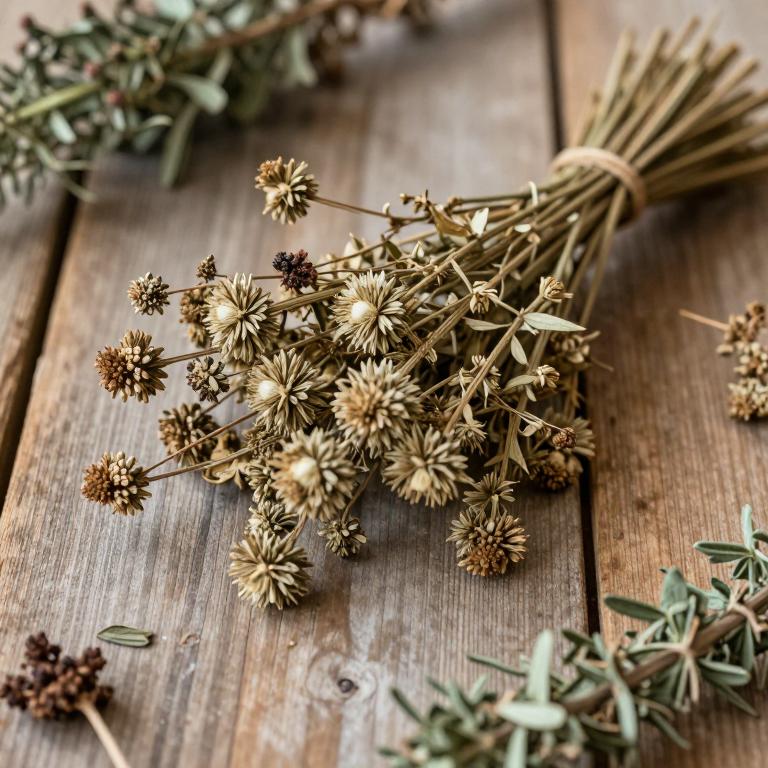
Names and Synonyms
Scientific Names
Accepted name
Glebionis coronariaSynonyms
- Chrysanthemum coronarium
- Dendranthema coronarium
- Chrysanthemum roxburghii
- Glebionis coronaria var. discolor
- Glebionis discolor
- Matricaria coronaria
- Xantophtalmum coronarium
- Chamaemelum coronarium
- Pinardia coronaria
- Xantophtalmum coronarium var. discolor
- Chrysanthemum coronarium subsp. discolor
- Glebionis roxburghii
- Chrysanthemum coronarium var. concolor
- Chrysanthemum coronarium alboplenum
- Matricaria oleracea
- Chrysanthemum breviradiatum
- Buphthalmum oleraceum
- Chrysanthemum coronarium var. spatiosum
- Chrysanthemum coronarium var. discolor
- Chrysanthemum matricariodes
- Chrysanthemum coronarium alboflavum
Regional and Traditional Names
Spanish:
- Chrysanthemum coronarium
German:
- Kronenwucherblume
- Speisechrysantheme
- Salatchrysantheme
- Garland-Chrysantheme
Sources: Wikidata, Catalogue of Life
Taxonomical Classification
This plant, known scientifically as Glebionis coronaria, belongs to the kingdom Plantae and the phylum Streptophyta. It is classified within the class Equisetopsida and the subclass Magnoliidae, falling under the order Asterales. Finally, it is a member of the family Asteraceae and is situated within the genus Glebionis.
| Rank | Classification |
|---|---|
| Kingdom | Plantae |
| Phylum | Streptophyta |
| Class | Equisetopsida |
| Subclass | Magnoliidae |
| Order | Asterales |
| Family | Asteraceae |
| Genus | Glebionis |
Sources: The World Checklist of Vascular Plants (WCVP)
Distribution
This plant exhibits a broad distribution across several regions of the European continent. In Northern Europe, its presence is documented in Great Britain, Ireland, and Norway. The species also extends its reach into the central parts of the continent. Specifically, it can be found within the borders of Middle Europe, including Austria and Belgium. These varying locations highlight the diverse environmental range inhabited by the species.
| Region | Area |
|---|---|
| Northern Europe | Great Britain |
| Northern Europe | Ireland |
| Northern Europe | Norway |
| Middle Europe | Austria |
| Middle Europe | Belgium |
| Middle Europe | Czechia-Slovakia |
| Middle Europe | Germany |
| Middle Europe | Hungary |
| Middle Europe | Poland |
| Middle Europe | Switzerland |
Sources: The World Checklist of Vascular Plants (WCVP)
Botanical Identification
Ecology
The ecology of Glebionis coronaria is characterized by its distribution within lowland environments, where it thrives in low-altitude territories. The species occupies an elevational range that extends from sea level (0 m AMSL) up to a maximum altitude of 1000 m AMSL.
- Elevational range max:
- 1000 m AMSL
- Elevational range min:
- 0 m AMSL
- Habitat :
- Lowland
Life history
The life history of Glebionis coronaria is characterized by an annual lifecycle, meaning the plant completes its entire developmental process from germination to seed production within a single growing season. In terms of its structural growth strategy, it is classified as a therophyte, a life form that survives the unfavorable seasons primarily in the form of seeds, with the vegetative body dying off completely once the reproductive cycle is finished.
- Life form :
- therophyte
- Lifecycle :
- annual
Morphology
The morphology of Gleboionia coronaria is characterized by its growth form as a non-woody herb and forb. It is a terrestrial species that functions as an independent organism, lacking parasitic tendencies. The plant exhibits an erect shoot orientation and is self-supporting rather than acting as a liana, vine, or climber. In terms of stature, the plant height is variable, with a minimum height of 0.15 m, a mean height of approximately 0.7 m, and a maximum height reaching up to 1.5 m.
- Aquatic :
- terrestrial
- Climber :
- self-supporting
- Epiphyte :
- terrestrial
- Growth form :
- herb
- Growth form :
- forb
- Parasite :
- independent
- Plant height max:
- 1.5 m
- Plant height mean:
- 0.7 m
- Plant height min:
- 0.15 m
- Shoot orientation :
- erect
- Woodiness :
- non-woody
Physiology
The physiology of Glebioinis coronaaria is characterized by a C3 photosynthetic pathway, which dictates its carbon fixation processes and metabolic efficiency. The plant's vegetative structure is defined by an alternate leaf arrangement, featuring leaves that exhibit a pinnatisect form. These leaves vary significantly in dimensions, with a minimum leaf length of 2 cm and a maximum length reaching up to 10 cm, while the width fluctuates between a minimum of 1 cm and a maximum of 5 cm.
- Leaf arrangement :
- alternate
- Leaf form :
- pinnatisect
- Leaf length max:
- 10 cm
- Leaf length min:
- 2 cm
- Leaf width max:
- 5 cm
- Leaf width min:
- 1 cm
- Photosynthetic pathway :
- C3
Reproduction
The reproduction of Glebionis coronaria is characterized by a bisexual sexual reproduction system where self-fertilization is absent, necessitating biotic pollination. The plant utilizes an insect-based pollination syndrome to facilitate fertilization. The flowering period is highly variable, typically beginning in December and concluding in April, with flowers featuring a white color and widths ranging from 3 to 6 cm. Following pollination, the plant produces fruit in the form of an indehiscent achene, which measures between 0.25 and 0.35 cm in length. Each fruit is highly prolific, containing more than 1000 seeds. The seeds themselves are uniform in length at 2.8 mm, with a mean mass of approximately 0.0020766665 g (ranging from a minimum of 0.0005 g to a maximum of 0.00491 g). Dispersal is achieved through a combination of autochorous and anthropochorous syndromes, allowing the seeds to spread via self-dispersal mechanisms and human activity.
- Dehiscence :
- indehiscent
- Dispersal syndrome :
- autochorous
- Dispersal syndrome :
- anthropochorous
- Flower colour :
- white
- Flower width max:
- 6 cm
- Flower width min:
- 3 cm
- Flowering time :
- Dec
- Flowering time :
- Apr
- Fruit length max:
- 0.35 cm
- Fruit length min:
- 0.25 cm
- Fruit type :
- achene
- Pollination syndrome :
- insect
- Pollination syndrome :
- biotic
- Reproduction sexual :
- bisexual
- Seed length mean:
- 2.8 mm
- Seed mass max:
- 0.00491 g
- Seed mass mean:
- 0.0020766665 g
- Seed mass min:
- 5e-04 g
- Seeds_per_fruit :
- >1000
- Self fertilization :
- absent
Sources: Global Inventory of Floras and Traits (GIFT)
Plant Parts
Glebionis coronaria has 1 reported plant parts identified across 1 scientific publications and several other databases that are studied for medicinal purposes. The most consistently reported plant part include seed.
| Plant part | Supporting sources | Consensus |
|---|---|---|
| Seed | 1 supporting sources | ★☆☆☆☆ |
Seed
- Biological chemistry
Chemicals
Glebionis coronaria has 31 reported phytochemicals identified across 1 scientific publications and several other databases. The most consistently reported chemicals include ascorbic acid, quercetin, Ash, CALCIUM, Carotenoids.
| Chemical | Supporting sources | Consensus |
|---|---|---|
| ascorbic acid | 2 supporting sources | ★☆☆☆☆ |
| quercetin | 2 supporting sources | ★☆☆☆☆ |
| Ash | 1 supporting sources | ★☆☆☆☆ |
| CALCIUM | 1 supporting sources | ★☆☆☆☆ |
| Carotenoids | 1 supporting sources | ★☆☆☆☆ |
| Chrysazin | 1 supporting sources | ★☆☆☆☆ |
| Chrysophanol | 1 supporting sources | ★☆☆☆☆ |
| Coronaric acid | 1 supporting sources | ★☆☆☆☆ |
| Dihydrocumambrin A | 1 supporting sources | ★☆☆☆☆ |
| FAT | 1 supporting sources | ★☆☆☆☆ |
ascorbic acid
- Dr. Duke
- Prikladnaia biokhimiia i mikrobiologiia
quercetin
- RSC advances
- Prikladnaia biokhimiia i mikrobiologiia
Ash
- Dr. Duke
CALCIUM
- Dr. Duke
Carotenoids
- Prikladnaia biokhimiia i mikrobiologiia
Chrysazin
- Prikladnaia biokhimiia i mikrobiologiia
Chrysophanol
- Prikladnaia biokhimiia i mikrobiologiia
Coronaric acid
- Dr. Duke
Dihydrocumambrin A
- Dr. Duke
FAT
- Dr. Duke
Activities
Glebionis coronaria has 236 reported activities identified across 1 scientific publications and several other databases. The most consistently reported activities include Laxative, Acidulant, Aldose-Reductase-Inhibitor, Allergenic, Analgesic.
| Activity | Supporting sources | Consensus |
|---|---|---|
| Laxative | 2 supporting sources | ★☆☆☆☆ |
| Acidulant | 1 supporting sources | ★☆☆☆☆ |
| Aldose-Reductase-Inhibitor | 1 supporting sources | ★☆☆☆☆ |
| Allergenic | 1 supporting sources | ★☆☆☆☆ |
| Analgesic | 1 supporting sources | ★☆☆☆☆ |
| Androgenic? | 1 supporting sources | ★☆☆☆☆ |
| Angiotensin-Receptor-Blocker | 1 supporting sources | ★☆☆☆☆ |
| AntiAGE | 1 supporting sources | ★☆☆☆☆ |
| AntiCFS | 1 supporting sources | ★☆☆☆☆ |
| AntiCTS | 1 supporting sources | ★☆☆☆☆ |
Laxative
- Dr. Duke
- Prikladnaia biokhimiia i mikrobiologiia
Acidulant
- Dr. Duke
Aldose-Reductase-Inhibitor
- Dr. Duke
Allergenic
- Dr. Duke
Analgesic
- Dr. Duke
Androgenic?
- Dr. Duke
Angiotensin-Receptor-Blocker
- Dr. Duke
AntiAGE
- Dr. Duke
AntiCFS
- Dr. Duke
AntiCTS
- Dr. Duke
Preparations
Glebionis coronaria has 2 reported preparations identified across 1 scientific publications and several other databases. The most consistently reported preparations include Methanolic extracts, seeds.
| Preparation | Supporting sources | Consensus |
|---|---|---|
| Methanolic extracts | 1 supporting sources | ★☆☆☆☆ |
| Seeds | 1 supporting sources | ★☆☆☆☆ |
Methanolic extracts
- Journal of infection in developing countries
Seeds
- Biological chemistry