Fine-Leafed Verbena
Glandularia aristigera · Accepted scientific name
Scientific literature: Very Sparse (3 studies) · ★☆☆☆☆
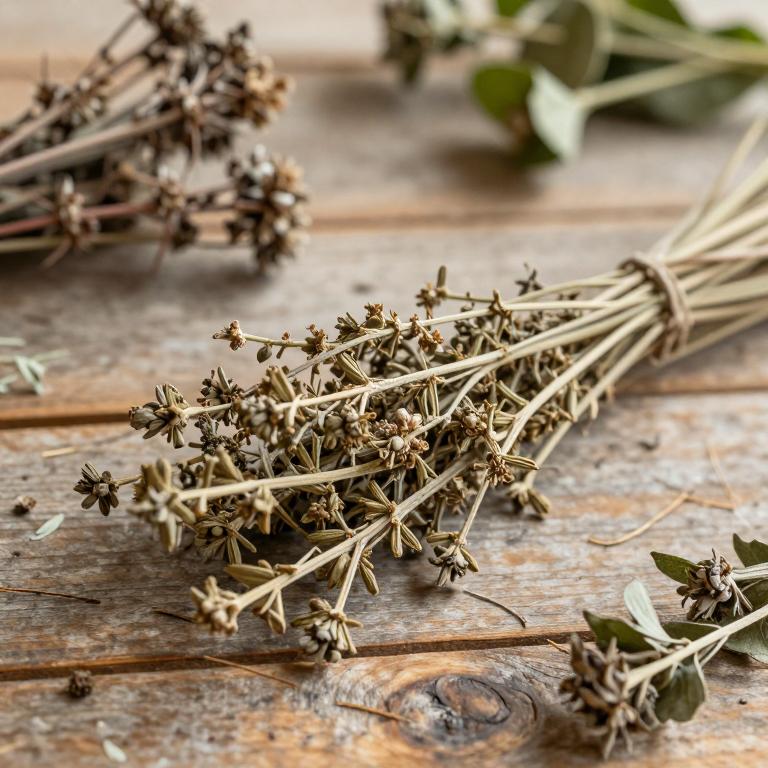
Fine-Leafed Verbena, scientifically known as Glandularia aristigera, is a resilient perennial herb native to the Americas. Renowned for its delicate, lance-shaped foliage and vibrant purple blooms, this plant is valued in traditional medicine for its potential antiseptic and anti-inflammatory properties, making it a fascinating subject for botanical study.
Names and Synonyms
Common Names
- Fine-Leafed Verbena
- Fine-Leaved Verbena
- Mayne's Pest
- Mock Verbena
- Moss Verbena
- South American mock vervain
- Tuber Vervain
Scientific Names
Accepted name
Glandularia aristigeraSynonyms
- Glandularia tenuisecta
- Glandularia cochabambensis
- Verbena tenuisecta var. alba
- Verbena tenuisecta f. rubella
- Verbena cochabambensis
- Verbena aristigera
- Verbena tenuisecta
Sources: Wikidata, Catalogue of Life
Taxonomical Classification
This plant belongs to the kingdom Plantae and the phylum Streptophyta, falling under the class Equisetopsida and subclass Magnoliidae. Within the order Lamiales, it is classified under the family Verbenaceae. Finally, it is identified by its specific genus, Glandularia.
| Rank | Classification |
|---|---|
| Kingdom | Plantae |
| Phylum | Streptophyta |
| Class | Equisetopsida |
| Subclass | Magnoliidae |
| Order | Lamiales |
| Family | Verbenaceae |
| Genus | Glandularia |
Sources: The World Checklist of Vascular Plants (WCVP)
Distribution
This plant exhibits a remarkably broad and diverse geographical distribution spanning multiple continents. In Middle Europe, its presence can be documented within the borders of Germany. Moving toward the Mediterranean region, it is also found throughout Southeastern Europe, specifically in Greece. The species extends into West Tropical Africa, where it inhabits countries such as Nigeria. Finally, its range reaches into West-Central Tropical Africa, encompassing the nations of Burundi and Rwanda.
| Region | Area |
|---|---|
| Middle Europe | Germany |
| Southeastern Europe | Greece |
| West Tropical Africa | Nigeria |
| West-Central Tropical Africa | Burundi |
| West-Central Tropical Africa | Rwanda |
| West-Central Tropical Africa | DR Congo |
| East Tropical Africa | Kenya |
| East Tropical Africa | Tanzania |
| South Tropical Africa | Malawi |
| South Tropical Africa | Mozambique |
Sources: The World Checklist of Vascular Plants (WCVP)
Chemicals
Glandularia aristigera has 1 reported phytochemicals identified across 0 scientific publications and several other databases. The most consistently reported chemicals include Silver nanoparticles.
| Chemical | Supporting sources | Consensus |
|---|---|---|
| Silver nanoparticles | 1 supporting sources | ★☆☆☆☆ |
Silver nanoparticles
- World journal of microbiology & biotechnology
Activities
Glandularia aristigera has 2 reported activities identified across 0 scientific publications and several other databases. The most consistently reported activities include Antimicrobial, Antioxidant.
| Activity | Supporting sources | Consensus |
|---|---|---|
| Antimicrobial | 1 supporting sources | ★☆☆☆☆ |
| Antioxidant | 1 supporting sources | ★☆☆☆☆ |
Antimicrobial
- World journal of microbiology & biotechnology
Antioxidant
- World journal of microbiology & biotechnology
Preparations
Glandularia aristigera has 3 reported preparations identified across 0 scientific publications and several other databases. The most consistently reported preparations include Silver nanoparticles, extracts, methanolic extracts.
| Preparation | Supporting sources | Consensus |
|---|---|---|
| Silver nanoparticles | 1 supporting sources | ★☆☆☆☆ |
| Extracts | 1 supporting sources | ★☆☆☆☆ |
| Methanolic extracts | 1 supporting sources | ★☆☆☆☆ |
Silver nanoparticles
- World journal of microbiology & biotechnology
Extracts
- World journal of microbiology & biotechnology
Methanolic extracts
- World journal of microbiology & biotechnology