Field Gladiolus
Gladiolus italicus · Accepted scientific name
Scientific literature: Very Sparse (8 studies) · ★☆☆☆☆
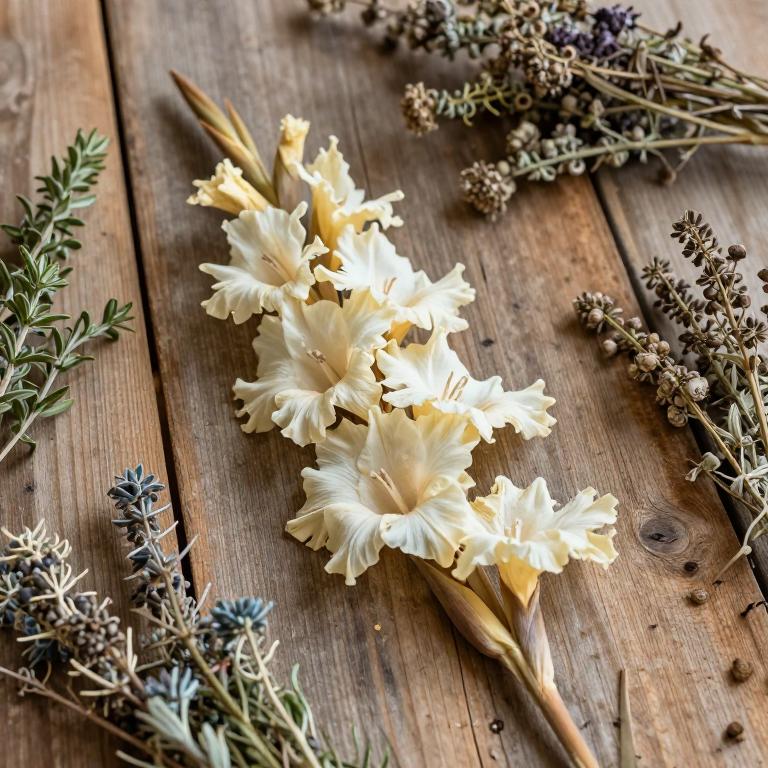
Field Gladiolus, scientifically known as Gladiolus italicus, is a resilient perennial herb native to the Mediterranean region. Characterized by its striking, funnel-shaped flowers, this plant holds significant ethnobotanical value. Traditionally used in folk medicine, its various parts are utilized to treat inflammatory conditions, skin ailments, and digestive issues.
Names and Synonyms
Common Names
- Field Gladiolus
- Common Sword Lily
- Cornfield Gladiolus
- Italian Gladiolus
- common sword-lily
- Cornflag
Scientific Names
Accepted name
Gladiolus italicusSynonyms
- Ballosporum segetum
- Gladiolus segetum subsp. commutatus
- Gladiolus segetum f. sterilis
- Gladiolus segetum var. ludovicae
- Gladiolus segetum subsp. guepinii
- Gladiolus communis var. parviflorus
- Gladiolus segetalis
- Gladiolus turkmenorum
- Gladiolus communis var. distichus
- Gladiolus segetum var. guepinii
- Gladiolus segetum subsp. ludovicae
- Gladiolus segetum var. infestus
- Gladiolus segetum var. grandiflorus
- Gladiolus infestus
- Gladiolus guepinii
- Gladiolus ludovicae
- Gladiolus leucanthus
- Gladiolus tenuiflorus
- Gladiolus ruricola
- Gladiolus rigescens
- Gladiolus proteiflorus
- Gladiolus segetum
- Gladiolus dalmaticus
- Gladiolus commutatus
- Gladiolus cyclocarpus
- Gladiolus arvaticus
- Gladiolus communis var. grandiflorus
Regional and Traditional Names
Spanish:
- Gladiolo silvestre
German:
- Saat-Siegwurz
- Italienische Gladiole
- Italienische Siegwurz
- Ackergladiole
- Feldsiegwurz
French:
- Glaïeul des moissons
- Gladiolus segetum
- Glaieul des moissons
- Glaieul d'Italie
- Glaïeul d'Italie
- Glaïeul des moissons
Sources: Wikidata, Catalogue of Life
Taxonomical Classification
This plant belongs to the kingdom Plantae and is classified under the phylum Streptophyta within the class Equisetopsida. Following the subclass Magnoliidae, it is organized under the order Asparagales and the family Iridaceae. Finally, it is identified by the genus Gladiolus, specifically as the species Gladiolus italicus.
| Rank | Classification |
|---|---|
| Kingdom | Plantae |
| Phylum | Streptophyta |
| Class | Equisetopsida |
| Subclass | Magnoliidae |
| Order | Asparagales |
| Family | Iridaceae |
| Genus | Gladiolus |
Sources: The World Checklist of Vascular Plants (WCVP)
Distribution
This plant exhibits a specific geographical range that spans across several regions of Europe. In Middle Europe, its presence can be documented in Switzerland. The species also extends into Southwestern Europe, where it is found in France and Portugal. Furthermore, its distribution includes the island territories of Corse and the Baleares. Together, these locations highlight the Mediterranean and central European habitats preferred by the species.
| Region | Area |
|---|---|
| Middle Europe | Switzerland |
| Southwestern Europe | Baleares |
| Southwestern Europe | Corse |
| Southwestern Europe | France |
| Southwestern Europe | Portugal |
| Southwestern Europe | Sardegna |
| Southwestern Europe | Spain |
| Southeastern Europe | Albania |
| Southeastern Europe | Bulgaria |
| Southeastern Europe | Greece |
Sources: The World Checklist of Vascular Plants (WCVP)
Botanical Identification
Ecology
The ecology of Gladiolus italicus is characterized by its ability to thrive across a diverse altitudinal gradient, ranging from lowlands at 200 m AMSL to higher mountainous regions reaching up to a maximum of 1800 m AMSL. This species frequently establishes itself in disturbed or anthropogenically influenced landscapes, commonly occurring within crop fields where it integrates into the local agricultural environment.
- Elevational range max:
- 1800 m AMSL
- Elevational range min:
- 200 m AMSL
- Habitat :
- crop fields
Life history
The life history of Gladiolus italicus is characterized by its existence as a perennial plant, allowing it to persist through multiple growing seasons. As a member of the cryptophyte group, it utilizes specialized underground structures to survive unfavorable environmental conditions, ensuring its long-term survival in its natural habitat. Specifically, the species functions as a geophyte, storing essential nutrients and energy within underground organs such as corms, which protect the plant during periods of dormancy and facilitate its seasonal regrowth.
- Life form :
- geophyte
- Life form :
- cryptophyte
- Lifecycle :
- perennial
Morphology
The morphology of Gladiolus italicus is characterized by its growth form as a non-woody herb, specifically classified as a forb. The plant is an independent organism, functioning as a terrestrial species rather than an aquatic, semiaquatic, or epiphytic one. It is a self-supporting plant that does not exhibit climbing habits such as a liana or vine. In terms of stature, it maintains a relatively modest height, typically ranging from a minimum of 0.3 m to a maximum of 1.2 m.
- Aquatic :
- terrestrial
- Climber :
- self-supporting
- Epiphyte :
- terrestrial
- Growth form :
- herb
- Growth form :
- forb
- Parasite :
- independent
- Plant height max:
- 1.2 m
- Plant height min:
- 0.3 m
- Woodiness :
- non-woody
Physiology
The physiological profile of Gladiolus italicus is characterized by its specialized metabolic and morphological adaptations, most notably its utilization of the C3 photosynthetic pathway for carbon fixation. This metabolic strategy dictates its efficiency in gas exchange and light utilization within its specific ecological niche. Morphologically, the plant exhibits distinct foliar characteristics, featuring linear leaf forms that optimize surface area for light interception while minimizing water loss. These leaves are structurally slender, reaching a maximum width of 2 cm, and can extend to a significant length of up to 50 cm. These integrated physiological and structural traits work in tandem to support the plant's vegetative growth and energy production requirements.
- Leaf form :
- linear
- Leaf length max:
- 50 cm
- Leaf width max:
- 2 cm
- Photosynthetic pathway :
- C3
Reproduction
The reproduction of Gladiolus italicus is characterized by a specific flowering period that typically begins in April and concludes in May, though the timing can be variable. During this reproductive phase, the plant produces pink flowers arranged in a spike inflorescence, with individual flowers measuring between 2.5 cm and 3.5 cm in length. The production of seeds follows pollination, resulting in very small seeds with a mean mass of approximately 0.00656 g, ranging from a minimum of 0.00644 g to a maximum of 0.00668 g. Regarding the dispersal of these seeds, the plant utilizes an autochorous syndrome, meaning it relies on self-dispersal mechanisms to distribute its offspring.
- Dispersal syndrome :
- autochorous
- Flower colour :
- pink
- Flower length max:
- 3.5 cm
- Flower length min:
- 2.5 cm
- Flowering time :
- Apr
- Flowering time :
- May
- Inflorescence :
- spike
- Seed mass max:
- 0.00668 g
- Seed mass mean:
- 0.00656 g
- Seed mass min:
- 0.00644 g
Sources: Global Inventory of Floras and Traits (GIFT)
Chemicals
Gladiolus italicus has 4 reported phytochemicals identified across 0 scientific publications and several other databases. The most consistently reported chemicals include Hyperoside, Isoquercitrin, kaempferol-3-glucoside, myricetin.
| Chemical | Supporting sources | Consensus |
|---|---|---|
| Hyperoside | 1 supporting sources | ★☆☆☆☆ |
| Isoquercitrin | 1 supporting sources | ★☆☆☆☆ |
| kaempferol-3-glucoside | 1 supporting sources | ★☆☆☆☆ |
| myricetin | 1 supporting sources | ★☆☆☆☆ |
Hyperoside
- Toxicology mechanisms and methods
Isoquercitrin
- Toxicology mechanisms and methods
kaempferol-3-glucoside
- Toxicology mechanisms and methods
myricetin
- Toxicology mechanisms and methods
Activities
Gladiolus italicus has 1 reported activities identified across 0 scientific publications and several other databases. The most consistently reported activities include Antioxidant.
| Activity | Supporting sources | Consensus |
|---|---|---|
| Antioxidant | 1 supporting sources | ★☆☆☆☆ |
Antioxidant
- Toxicology mechanisms and methods
Conditions
Gladiolus italicus has 3 reported investigations on conditions identified across 0 scientific publications and several other databases. The most consistently reported conditions include chronic diseases, diabetic complications, non-communicable diseases.
| Condition | Supporting sources | Consensus |
|---|---|---|
| Chronic diseases | 1 supporting sources | ★☆☆☆☆ |
| Diabetic complications | 1 supporting sources | ★☆☆☆☆ |
| Non-communicable diseases | 1 supporting sources | ★☆☆☆☆ |
Chronic diseases
- Toxicology mechanisms and methods
Diabetic complications
- Toxicology mechanisms and methods
Non-communicable diseases
- Toxicology mechanisms and methods