Gladiolus dalenii
Gladiolus dalenii · Accepted scientific name
Scientific literature: Very Sparse (2 studies) · ★☆☆☆☆
Gladiolus dalenii is a plant species recognized for its diverse range of therapeutic applications in traditional medicine. Researchers have noted its significant pharmacological activities, particularly its potential as an anticonvulsant and sedative. When prepared as a macerated extract, this botanical resource is utilized to address various health concerns. Specifically, it is studied for its ability to manage conditions such as epilepsy, insomnia, and snakebite envenomation. Furthermore, emerging interests have even explored its relevance in the context of COVID-19 treatments.
- Synonyms
- Not available
- Common names
- Not available
- Family
- Iridaceae
- Distribution
- Not available
- Plant Parts
- Not available
Classification
Common Names
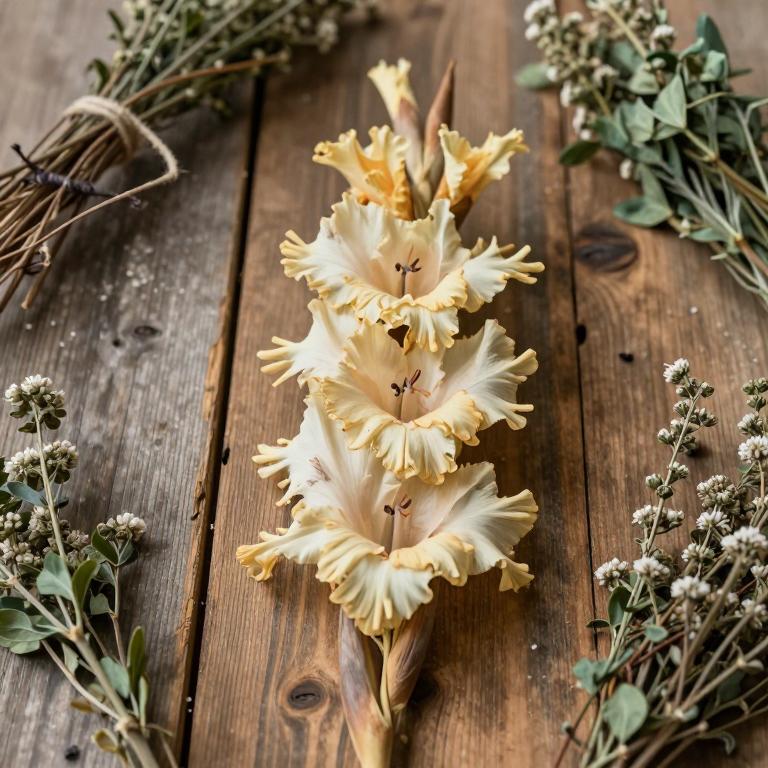
Gladiolus dalenii is a versatile species known by several distinct regional and descriptive names. It is frequently referred to as the common African Gladiolus or the Natal-lily, reflecting its natural origins. Many enthusiasts also call it the Dragon's-head Lily or the Dragonhead Gladiolus due to its striking floral shape. In certain Spanish-speaking regions, it is commonly recognized as the Gladiolo naranja. These various monikers highlight the plant's diverse identity across different cultures and landscapes.
Sources: Catalogue of Life (COL)
Taxonomy
Gladiolus dalenii is a fascinating botanical specimen that belongs to the diverse kingdom Plantae. Within this vast realm, it is specifically classified under the class Equisetopsida. Its lineage continues through the order Asparagales, showcasing its unique evolutionary path. Furthermore, this plant is a prominent member of the Iridaceae family. Ultimately, it is identified by its scientific genus, Gladiolus.
| Rank | Classification |
|---|---|
| Kingdom | Plantae |
| Phylum | Streptophyta |
| Class | Equisetopsida |
| Subclass | Magnoliidae |
| Order | Asparagales |
| Family | Iridaceae |
| Genus | Gladiolus |
Sources: The World Checklist of Vascular Plants (WCVP)
Distribution
Geographic Regions
Gladiolus dalenii is a resilient species with a broad geographical presence across the African continent. Within East Tropical Africa, it can be found flourishing in the diverse landscapes of Kenya, Tanzania, and Uganda. Beyond the mainland, the plant also reaches the Atlantic islands of Macaronesia. Specifically, its distribution extends to the unique environments of both the Azores and Madeira. This wide-ranging habitat demonstrates the plant's remarkable ability to adapt to various regional climates.
Sources: The World Checklist of Vascular Plants (WCVP)
Identification
Morphology
Gladiolus dalenii is a self-supporting herb that exhibits a diverse range of physical dimensions. This plant typically maintains a modest presence, though its height can vary significantly depending on environmental conditions. While some specimens may reach a minimum height of only 0.34 meters, others grow more robustly to exceed 1.13 meters. At its most expansive, the species can achieve a maximum height of approximately 1.6 meters. Such variability in stature highlights the adaptable nature of this unique herbaceous species.
Sources: Global Inventory of Floras and Traits (GIFT)
Biological Activities
Gladiolus dalenii is a medicinal plant widely utilized in traditional African medicine to address various ailments, including epilepsy. Recent studies using in vivo mouse models have demonstrated that the plant's extracts possess significant anticonvulsant activity. Specifically, different preparations of the plant showed high protection rates against both PTZ- and MES-induced seizures. Beyond its ability to prevent convulsions, the plant also exhibits notable sedative properties by increasing the duration of sleep. These combined effects suggest that Gladiolus dalenii could potentially serve as an effective treatment for insomnia and various types of generalized seizures in humans.
Compounds
Conditions
Gladiolus dalenii serves as a key component of the herbal combination PHELA, which has demonstrated the potential to treat COVID-19 through the inhibition of SARS-CoV-2. In neurological studies, this medicinal plant has proven effective in treating epilepsy through its significant anticonvulsant properties. Specifically, extracts of the plant were shown to protect mice against both MES-induced and PTZ-induced seizures. Additionally, the plant exhibits sedative effects by successfully treating diazepam-induced sleep by increasing its total duration.
Preparations
Gladiolus dalenii is prepared as a macerated extract to investigate its various pharmacological properties. This specific preparation was utilized in studies to evaluate its efficacy in protecting mice against seizure-induced convulsions. Beyond its anticonvulsant potential, the macerate was also tested for its ability to exert sedative activity. The research demonstrated that this extract could significantly increase the total duration of sleep in mouse models. These findings highlight the functional application of the macerated form of the plant in medicinal contexts.