Common African Gladiolus
Gladiolus dalenii subsp. dalenii · Accepted scientific name
Scientific literature: Very Sparse (3 studies) · ★☆☆☆☆
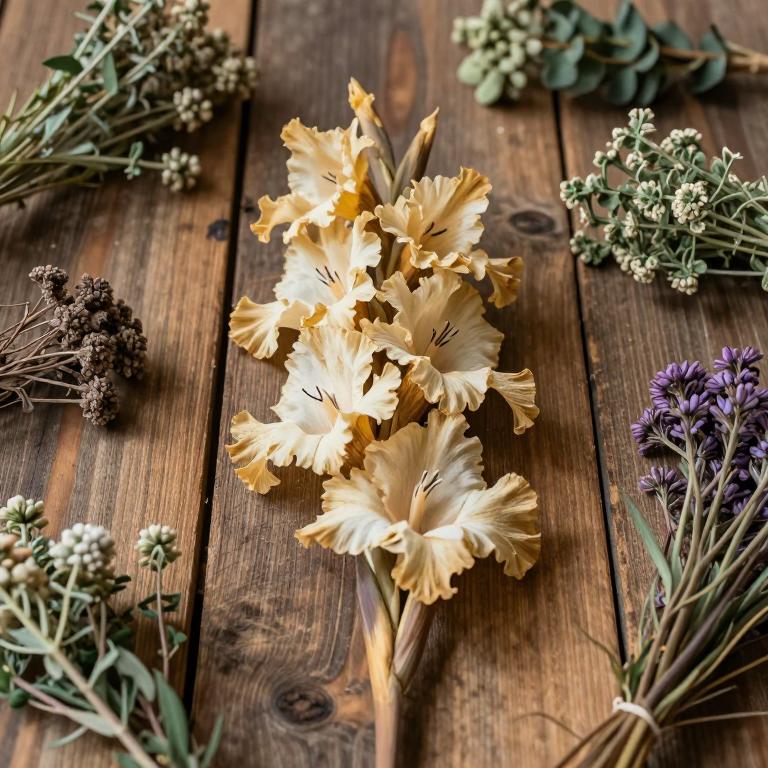
Common African Gladiolus, scientifically known as Gladiolus dalenii subsp. dalenii, is a resilient geophyte native to Southern Africa. Renowned for its striking, bell-shaped blooms, this plant holds significant ethnobotanical value. It is traditionally utilized in various folk remedies to treat ailments, showcasing the profound intersection of biodiversity and medicine.
Names and Synonyms
Common Names
- Common African Gladiolus
- Common Dragon's-head Lily
- Dragonhead Gladiolus
- Natal Lily
- Parrot Gladiolus
- maid of the mist
Scientific Names
Accepted name
Gladiolus dalenii subsp. daleniiSynonyms
- Watsonia psittacina
- Bobartia natalensis
- Antholyza laxiflora
- Gladiolus cooperi
- Watsonia natalensis
- Gladiolus newii
- Gladiolus schimperianus
- Gladiolus quartinianus
- Gladiolus retrocurvus
- Gladiolus saltatorum
- Gladiolus splendidus
- Gladiolus taylorianus
- Gladiolus tysonii
- Gladiolus leptophyllus
- Gladiolus leichtlinii
- Gladiolus luteolus
- Gladiolus luembensis
- Gladiolus louwii
- Gladiolus kilimandscharicus
- Gladiolus hockii
- Gladiolus ignescens
- Gladiolus nebulicola
- Gladiolus pageae
- Gladiolus primulinus
- Gladiolus platyphyllus
- Gladiolus psittacinus
- Gladiolus gallaensis
- Gladiolus garuanus
- Gladiolus fuscoviridis
- Gladiolus dracocephalus
- Gladiolus corneus
- Gladiolus boehmii
- Gladiolus buettneri
- Gladiolus caffensis
- Gladiolus calothyrsus
- Gladiolus barnardii
- Gladiolus angolensis
- Gladiolus adlamii
- Keitia natalensis
Sources: Wikidata, Catalogue of Life
Taxonomical Classification
This plant belongs to the kingdom Plantae and is classified within the phylum Streptophyta and the class Equisetopsida. It falls under the subclass Magnoliidae and the order Asparagales, specifically within the family Iridaceae. Finally, it is identified under the genus Gladiolus as the subspecies Gladiolus dalenii subsp. dalenii.
| Rank | Classification |
|---|---|
| Kingdom | Plantae |
| Phylum | Streptophyta |
| Class | Equisetopsida |
| Subclass | Magnoliidae |
| Order | Asparagales |
| Family | Iridaceae |
| Genus | Gladiolus |
Sources: The World Checklist of Vascular Plants (WCVP)
Distribution
This plant exhibits a wide and diverse geographical distribution spanning across different continental regions. In the Macaronesian islands, it can be found growing in the Azores and Madeira. Its range also extends significantly into West Tropical Africa. Within this African region, the species is specifically documented in Benin and Burkina. Additionally, its presence is confirmed in the coastal nation of Ghana.
| Region | Area |
|---|---|
| Macaronesia | Azores |
| Macaronesia | Madeira |
| West Tropical Africa | Benin |
| West Tropical Africa | Burkina |
| West Tropical Africa | Ghana |
| West Tropical Africa | Guinea-Bissau |
| West Tropical Africa | Guinea |
| West Tropical Africa | Ivory Coast |
| West Tropical Africa | Mali |
| West Tropical Africa | Nigeria |
Sources: The World Checklist of Vascular Plants (WCVP)
Activities
Gladiolus dalenii subsp. dalenii has 2 reported activities identified across 0 scientific publications and several other databases. The most consistently reported activities include Antidiabetic, Antihyperlipidemic.
| Activity | Supporting sources | Consensus |
|---|---|---|
| Antidiabetic | 1 supporting sources | ★☆☆☆☆ |
| Antihyperlipidemic | 1 supporting sources | ★☆☆☆☆ |
Antidiabetic
- Journal of complementary & integrative medicine
Antihyperlipidemic
- Journal of complementary & integrative medicine
Preparations
Gladiolus dalenii subsp. dalenii has 2 reported preparations identified across 0 scientific publications and several other databases. The most consistently reported preparations include aqueous extract, corm.
| Preparation | Supporting sources | Consensus |
|---|---|---|
| Aqueous extract | 1 supporting sources | ★☆☆☆☆ |
| Corm | 1 supporting sources | ★☆☆☆☆ |
Aqueous extract
- Journal of complementary & integrative medicine
Corm
- Journal of complementary & integrative medicine