Geum macrophyllum
Geum macrophyllum · Accepted scientific name
Scientific literature: Very Sparse (2 studies) · ★☆☆☆☆
Geum macrophyllum, scientifically known as Geum macrophyllum, is a perennial herb native to East Asia. Renowned in traditional medicine, its roots contain bioactive compounds used to treat inflammation, digestive issues, and respiratory ailments. This versatile plant serves as a vital resource in herbal pharmacology and natural wellness practices.
- Family
- Not available
- Native range
- Europe
- Parts used
- Root
- Common names
- Not available
- Scientific synonyms
- Not available
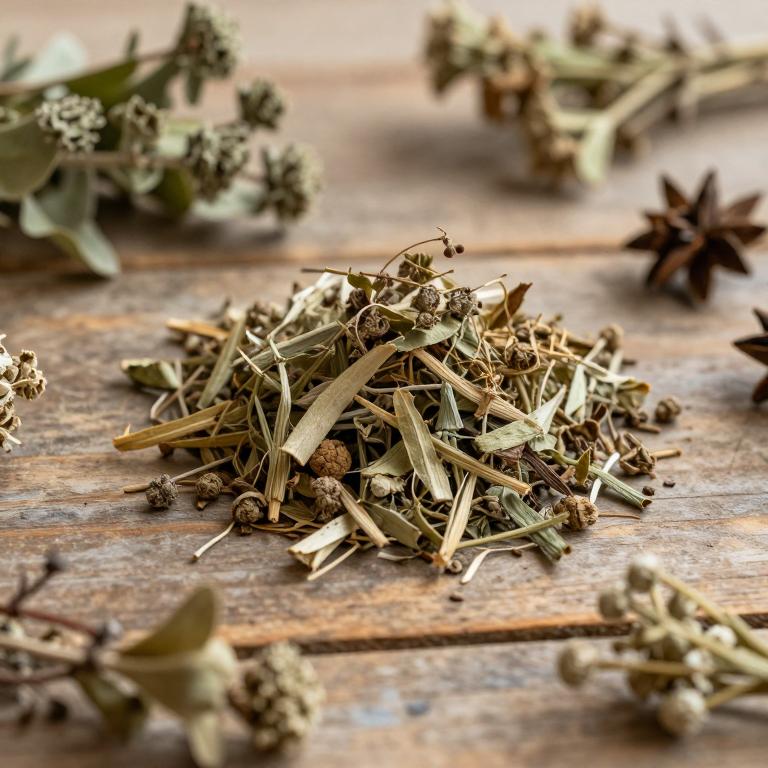
Names and Synonyms
Scientific Names
Accepted name
Geum macrophyllumDistribution
This plant exhibits a widespread presence across several regions of Northern Europe. Specifically, its habitat extends through the countries of Finland, Norway, and Sweden. It can also be found growing within the landscape of Great Britain. Additionally, the species reaches into Middle Europe, specifically within Belgium. Together, these locations define the documented geographical distribution of Geum macrophyllum.
| Region | Area |
|---|---|
| Northern Europe | Finland |
| Northern Europe | Great Britain |
| Northern Europe | Norway |
| Northern Europe | Sweden |
| Middle Europe | Belgium |
| Middle Europe | Germany |
| Middle Europe | Netherlands |
| Eastern Europe | Belarus |
| Eastern Europe | Central European Russia |
| Eastern Europe | North European Russia |
Sources: The World Checklist of Vascular Plants (WCVP)
Botanical Identification
Ecology
The ecology of Geum macrophyllum is characterized by its preference for moisture-rich and partially shaded environments. It is primarily found thriving within forest ecosystems, where the canopy provides the necessary filtered light and organic soil layers required for its development. Additionally, this species colonizes the margins of rivers, benefiting from the constant availability of water and the nutrient-dense alluvial deposits common in riparian zones. Beyond forested and riverine areas, it also occupies shrubberies, where the dense vegetation offers a protective microclimate and structural support within the understory.
- Habitat :
- forest, rivers, shrubberies
Genetics
The genetics of Geum macrophyllum are characterized by a specific chromosomal configuration where the fundamental haploid number is denoted as n. This ploidy level serves as the baseline for its reproductive biology and genetic inheritance patterns, establishing the foundation for its genomic complexity within the Rosaceae family. The determination of this haploid state is critical for understanding the species' potential for polyploidization events, which can lead to variations in morphological traits and ecological adaptation. By establishing the value of n, researchers can further investigate the karyotype, genome size, and the evolutionary mechanisms that drive the genetic diversity of this medicinal plant.
- Ploidy :
- n
Life history
The life history of Geum macrophyllum is characterized by its classification as a perennial species, meaning it completes its reproductive cycle over multiple years rather than a single growing season. As a perennial, the plant establishes a persistent root system or rhizome that allows it to survive through dormant periods, typically during unfavorable seasonal shifts, before re-emerging to continue its vegetative and reproductive growth. This life cycle enables the plant to accumulate resources over time, often leading to more robust flowering and seed production in subsequent years compared to annual or biennial counterparts. Through this continuous lifecycle, Geum macrophyllum maintains a stable presence within its ecological niche, utilizing its perennial nature to withstand environmental fluctuations.
- Lifecycle :
- perennial
Morphology
The morphology of Geum macrophyllum is characterized by a growth form consisting of a non-woody herb and forb. It is a self-supporting plant that does not function as a climber or a liana, maintaining a self-supporting structure throughout its development. As a terrestrial species, it does not exhibit aquatic or epiphytic tendencies and functions as an independent organism rather than a parasite. In terms of stature, the plant typically reaches a mean height of 0.61 m, with individual specimens ranging from a minimum height of 0.25 m to a maximum height of 0.75 m.
- Aquatic :
- terrestrial
- Climber :
- self-supporting
- Epiphyte :
- terrestrial
- Growth form :
- herb
- Growth form :
- forb
- Parasite :
- independent
- Plant height max:
- 0.75 m
- Plant height mean:
- 0.61 m
- Plant height min:
- 0.25 m
- Woodiness :
- non-woody
Physiology
The physiology of Geum macrophyllum is characterized by a C3 photosynthetic pathway, a metabolic strategy typical of most temperate herbaceous perennials. Under this pathway, carbon fixation is mediated by the enzyme RuBisCO, which facilitates the carboxylation of ribulose-1,5-bisphosphate to produce 3-phosphoglycerate. This process occurs primarily within the mesophyll cells during daylight hours, necessitating efficient stomatal regulation to balance the intake of carbon dioxide with the prevention of excessive transpirational water loss. The plant's physiological efficiency is closely tied to its ability to manage photorespiration, which can increase when environmental temperatures rise or CO2 concentrations drop. Consequently, its growth and biomass accumulation are highly dependent on the availability of moisture and the optimization of light interception within its specific ecological niche.
- Photosynthetic pathway :
- C3
Reproduction
The reproduction of Geum macrophyllum is characterized by a specific seasonal flowering period that begins in June and concludes in July. During this reproductive phase, the plant produces seeds with a highly specific mass profile, ranging from a minimum of 0.00042 g to a maximum of 0.000786 g, with an average seed mass calculated at approximately 0.0005958 g. The dispersal of these seeds is facilitated through an unspecialized dispersal syndrome, which incorporates various mechanisms such as anemochory, zoochory, autochory, and hydrochory. Additionally, the plant exhibits anthropochorous dispersal, indicating that human activity also plays a role in the movement and distribution of its seeds within its environment.
- Dispersal syndrome :
- unspecialized
- Dispersal syndrome :
- anthropochorous
- Flowering time :
- Jun
- Flowering time :
- Jul
- Seed mass max:
- 0.000786 g
- Seed mass mean:
- 0.0005958 g
- Seed mass min:
- 0.00042 g
Sources: Global Inventory of Floras and Traits (GIFT)
Plant Parts
Geum macrophyllum has 1 reported plant parts identified across 1 scientific publications and several other databases that are studied for medicinal purposes. The most consistently reported plant part include root.
| Plant part | Supporting sources | Consensus |
|---|---|---|
| Root | 1 supporting sources | ★☆☆☆☆ |
Root
- Journal of ethnopharmacology
Conditions
Geum macrophyllum has 1 reported investigations on conditions identified across 1 scientific publications and several other databases. The most consistently reported conditions include myocardial infarction.
| Condition | Supporting sources | Consensus |
|---|---|---|
| Myocardial infarction | 1 supporting sources | ★☆☆☆☆ |
Myocardial infarction
- Evidence-based complementary and alternative medicine : eCAM
Preparations
Geum macrophyllum has 1 reported preparations identified across 1 scientific publications and several other databases. The most consistently reported preparations include roots.
| Preparation | Supporting sources | Consensus |
|---|---|---|
| Roots | 1 supporting sources | ★☆☆☆☆ |
Roots
- Journal of ethnopharmacology