Small-flowered Crane's-bill
Geranium pusillum · Accepted scientific name
Scientific literature: Very Sparse (15 studies) · ★☆☆☆☆
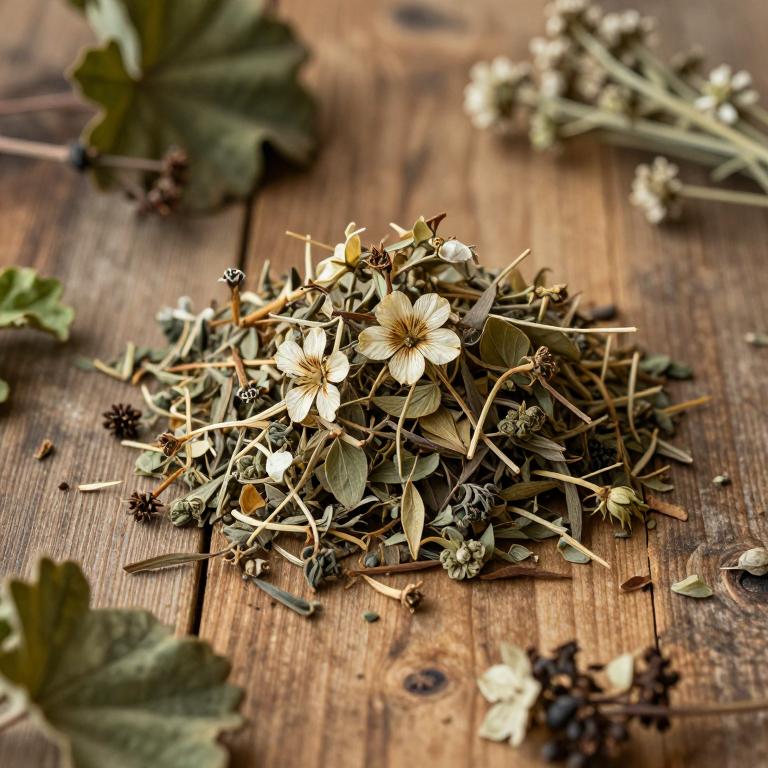
Small-flowered Crane's-bill, scientifically known as Geranium pusillum, is a delicate annual herb native to various regions. Characterized by its tiny pink blossoms and fine, dissected leaves, this plant thrives in disturbed soils. Historically utilized in traditional medicine, it offers unique botanical properties valued for its subtle therapeutic potential.
Names and Synonyms
Common Names
- small geranium
- small-flowered crane's-bill
- small-flowered geranium
- small-flower crane's-bill
Scientific Names
Accepted name
Geranium pusillumSynonyms
- Geranium pusillum var. humile
- Geranium pusillum var. viscidulifolium
- Geranium baumgartenianum
- Geranium pusillum var. rigidum
- Geranium pseudopusillum
- Geranium pusillum var. tenuilobum
- Geranium pusillum var. albiflorum
- Geranium pusillum var. axilliflorum
- Geranium pusillum var. condensatum
- Geranium pusillum var. elatum
- Geranium pusillum var. gracillimum
- Geranium pusillum var. majus-grandifolium
- Geranium dubium
- Geranium haussknechtii
- Geranium circinatum
- Geranium delicatulum
- Geranium delicatulum
- Geranium parviflorum var. humile
Regional and Traditional Names
Spanish:
- Geranium schrenkianum
- Geranium parviflorum
- Geranium elatum
- Geranium humile
- Geranium dubium
- Geranium multiflorum
- Geranium divaricatum var tenuisectum
- Geranium circinatum
- Geranium malvifolium
- Geranium parviflorum var. humile
- Geranium pseudopusillum
- Geranium delicatulum
- Aguja de Salamanca
- Geranium parviflorum var humile
- Geranium divaricatum var. tenuisectum
- Geranium x hybridum
German:
- Kleiner Storchschnabel
- Zwerg-Storchschnabel
- Kleiner Storchschnabel
- Zwerg-Storchschnabel
French:
- Géranium fluet
- Geranium pusilum
- Geranium a tiges greles
- géranium fluet
- géranium fluet
- géranium à tige grêle
- Geranium fluet
- Geranium a tiges greles
Sources: Wikidata, Catalogue of Life
Taxonomical Classification
This plant belongs to the kingdom Plantae and is classified under the phylum Streptophyta within the class Equisetopsida. As a member of the subclass Magnoliidae and the order Geraniales, it is further categorized into the family Geraniaceae. Finally, its taxonomic identity is defined by the genus Geranium, specifically the species Geranium pusillum.
| Rank | Classification |
|---|---|
| Kingdom | Plantae |
| Phylum | Streptophyta |
| Class | Equisetopsida |
| Subclass | Magnoliidae |
| Order | Geraniales |
| Family | Geraniaceae |
| Genus | Geranium |
Sources: The World Checklist of Vascular Plants (WCVP)
Distribution
This plant exhibits a specific geographical presence across several regions of Northern Europe. Its documented distribution includes the coastal and inland areas of Denmark. Furthermore, it can be found growing within the natural landscapes of Finland. The species is also known to inhabit various parts of Great Britain and Ireland. Finally, its range extends northward to include the territories of Norway.
| Region | Area |
|---|---|
| Northern Europe | Denmark |
| Northern Europe | Finland |
| Northern Europe | Great Britain |
| Northern Europe | Ireland |
| Northern Europe | Norway |
| Northern Europe | Sweden |
| Middle Europe | Austria |
| Middle Europe | Belgium |
| Middle Europe | Czechia-Slovakia |
| Middle Europe | Germany |
Sources: The World Checklist of Vascular Plants (WCVP)
Botanical Identification
Ecology
The ecology of Geranium pusillum is characterized by its ability to thrive across a broad altitudinal gradient, ranging from sea level (0 m AMSL) up to an elevation of 2000 m AMSL. It is commonly found in disturbed and anthropogenic environments, frequently colonizing habitats such as cropfields, oldfields, and parks. This adaptability to open, human-impacted landscapes allows it to establish itself effectively in varied ecological niches within its elevational range.
- Elevational range max:
- 2000 m AMSL
- Elevational range min:
- 0 m AMSL
- Habitat :
- cropfields,oldfields,parks
Genetics
The genetics of Geranium pusillum are characterized by notable chromosomal variability, which plays a significant role in its cytogenetic profile. Scientific observations of its genome reveal distinct variations in chromosome number, specifically documented at 26 and 34 chromosomes. This presence of different chromosomal counts suggests a complex genetic makeup that may be influenced by processes such as polyploidy or aneuploidy, which are common within the Geraniaceae family. Such genomic flexibility often contributes to the species' ability to adapt to diverse ecological niches and varying environmental pressures.
- Chromosome number :
- 26, 34
Life history
The life history of Geranium pusillum is characterized by its existence as an annual plant, completing its entire reproductive cycle within a single growing season. As a therophyte, it survives the unfavorable periods of its environment by persisting in the form of seeds, which remain dormant until conditions are favorable for germination. This life form allows the species to rapidly colonize disturbed areas and seasonal habitats. Throughout its active growth phase, the plant maintains an evergreen status, retaining its foliage to maximize photosynthetic efficiency during its brief life cycle.
- Deciduousness :
- evergreen
- Life form :
- therophyte
- Lifecycle :
- annual
Morphology
The morphology of Geranium pusillum is characterized by its growth form as a non-woody herb and specifically a forb. It is a terrestrial plant that functions as an independent organism, rather than acting as a parasite or an epiphyte. The plant is self-supporting rather than being a climber (such as a liana or vine), exhibiting an ascending shoot orientation. In terms of stature, it is a relatively small plant with a height that typically ranges from a minimum of 0.05 m to a maximum of 0.5 m, maintaining a mean plant height of approximately 0.183 m.
- Aquatic :
- terrestrial
- Climber :
- self-supporting
- Epiphyte :
- terrestrial
- Growth form :
- herb
- Growth form :
- forb
- Parasite :
- independent
- Plant height max:
- 0.5 m
- Plant height mean:
- 0.183 m
- Plant height min:
- 0.05 m
- Shoot orientation :
- ascending
- Woodiness :
- non-woody
Physiology
The physiology of Geranium pusillum is characterized by a C3 photosynthetic pathway, indicating a standard carbon fixation process typical of many temperate herbaceous plants. As a non-carnivorous species, it relies on autotrophic nutrition rather than the capture of prey for nutrient supplementation. The leaf morphology exhibits significant variability, with leaf lengths ranging from a minimum of 0.5 cm to a maximum of 2 cm, while leaf widths fluctuate between 1 cm and 3 cm. These dimensions contribute to a mean leaf size of approximately 18.98667 cm². Furthermore, the plant displays a mean Specific Leaf Area (SLA) of 255 cm²/g, reflecting its leaf mass per area and its physiological strategy for optimizing light interception and gas exchange within its environment.
- Carnivory :
- non-carnivorous
- Leaf length max:
- 2 cm
- Leaf length min:
- 0.5 cm
- Leaf size mean:
- 18.98667 cm²
- Leaf width mean:
- 3 cm
- Leaf width min:
- 1 cm
- Photosynthetic pathway :
- C3
- Specific Leaf Area (SLA) mean:
- 255 cm²/g
Reproduction
The reproduction of Geranium pusillum is characterized by a sexual reproductive cycle that relies on biotic pollination and specific seasonal timing. The flowering period typically begins in May and concludes in June, during which the plant utilizes a biotic pollination syndrome specifically involving bees and other insects. Self-fertilization is present within the species, ensuring reproductive success even under varying pollinator availability. Following successful pollination, the plant produces small fruits with a mean length of 0.2 cm. The resulting seeds are minute, with a maximum length of 1 mm and a seed mass ranging from a minimum of 0.00067 g to a maximum of 0.00073 g, resulting in a mean seed mass of approximately 0.000747 g. Seed dispersal follows an unspecialized syndrome, lacking highly specific mechanisms for wind, water, or animal transport. Notably, asexual reproduction is absent in this species, meaning its propagation is strictly dependent on the sexual production of seeds.
- Dispersal syndrome :
- unspecialized
- Flowering time :
- May
- Flowering time :
- Jun
- Fruit length mean:
- 0.2 cm
- Pollination syndrome :
- insect
- Pollination syndrome :
- bee
- Pollination syndrome :
- biotic
- Reproduction asexual :
- absent
- Seed length max:
- 1 mm
- Seed mass max:
- 0.00073 g
- Seed mass mean:
- 0.000747 g
- Seed mass min:
- 0.00067 g
- Self fertilization :
- present
Sources: Global Inventory of Floras and Traits (GIFT)
Plant Parts
Geranium pusillum has 1 reported plant parts identified across 1 scientific publications and several other databases that are studied for medicinal purposes. The most consistently reported plant part include leaf.
| Plant part | Supporting sources | Consensus |
|---|---|---|
| Leaf | 1 supporting sources | ★☆☆☆☆ |
Leaf
- Microscopy research and technique
Chemicals
Geranium pusillum has 7 reported phytochemicals identified across 1 scientific publications and several other databases. The most consistently reported chemicals include Cardiac Glycosides, Flavonoids, Phenols, Saponins, Steroids.
| Chemical | Supporting sources | Consensus |
|---|---|---|
| Cardiac Glycosides | 1 supporting sources | ★☆☆☆☆ |
| Flavonoids | 1 supporting sources | ★☆☆☆☆ |
| Phenols | 1 supporting sources | ★☆☆☆☆ |
| Saponins | 1 supporting sources | ★☆☆☆☆ |
| Steroids | 1 supporting sources | ★☆☆☆☆ |
| Tannins | 1 supporting sources | ★☆☆☆☆ |
| Terpenoids | 1 supporting sources | ★☆☆☆☆ |
Cardiac Glycosides
- Microscopy research and technique
Flavonoids
- Microscopy research and technique
Phenols
- Microscopy research and technique
Saponins
- Microscopy research and technique
Steroids
- Microscopy research and technique
Tannins
- Microscopy research and technique
Terpenoids
- Microscopy research and technique
Activities
Geranium pusillum has 3 reported activities identified across 1 scientific publications and several other databases. The most consistently reported activities include Antibacterial, Antioxidant, Cytotoxic.
| Activity | Supporting sources | Consensus |
|---|---|---|
| Antibacterial | 1 supporting sources | ★☆☆☆☆ |
| Antioxidant | 1 supporting sources | ★☆☆☆☆ |
| Cytotoxic | 1 supporting sources | ★☆☆☆☆ |
Antibacterial
- Microscopy research and technique
Antioxidant
- Microscopy research and technique
Cytotoxic
- Microscopy research and technique
Conditions
Geranium pusillum has 4 reported investigations on conditions identified across 1 scientific publications and several other databases. The most consistently reported conditions include Aspergillus flavus, Aspergillus niger, Escherichia coli, Staphylococcus aureus.
| Condition | Supporting sources | Consensus |
|---|---|---|
| Aspergillus flavus | 1 supporting sources | ★☆☆☆☆ |
| Aspergillus niger | 1 supporting sources | ★☆☆☆☆ |
| Escherichia coli | 1 supporting sources | ★☆☆☆☆ |
| Staphylococcus aureus | 1 supporting sources | ★☆☆☆☆ |
Aspergillus flavus
- Microscopy research and technique
Aspergillus niger
- Microscopy research and technique
Escherichia coli
- Microscopy research and technique
Staphylococcus aureus
- Microscopy research and technique
Preparations
Geranium pusillum has 9 reported preparations identified across 1 scientific publications and several other databases. The most consistently reported preparations include Chloroform extract, acetone, acetone extract, aqueous solvents, chloroform.
| Preparation | Supporting sources | Consensus |
|---|---|---|
| Chloroform extract | 1 supporting sources | ★☆☆☆☆ |
| Acetone | 1 supporting sources | ★☆☆☆☆ |
| Acetone extract | 1 supporting sources | ★☆☆☆☆ |
| Aqueous solvents | 1 supporting sources | ★☆☆☆☆ |
| Chloroform | 1 supporting sources | ★☆☆☆☆ |
| Dichloromethane | 1 supporting sources | ★☆☆☆☆ |
| Ethanol extract | 1 supporting sources | ★☆☆☆☆ |
| Methanol | 1 supporting sources | ★☆☆☆☆ |
| N-hexane | 1 supporting sources | ★☆☆☆☆ |
Chloroform extract
- Microscopy research and technique
Acetone
- Microscopy research and technique
Acetone extract
- Microscopy research and technique
Aqueous solvents
- Microscopy research and technique
Chloroform
- Microscopy research and technique
Dichloromethane
- Microscopy research and technique
Ethanol extract
- Microscopy research and technique
Methanol
- Microscopy research and technique
N-hexane
- Microscopy research and technique