Geranium niveum
Geranium niveum · Accepted scientific name
Scientific literature: Very Sparse (14 studies) · ★☆☆☆☆
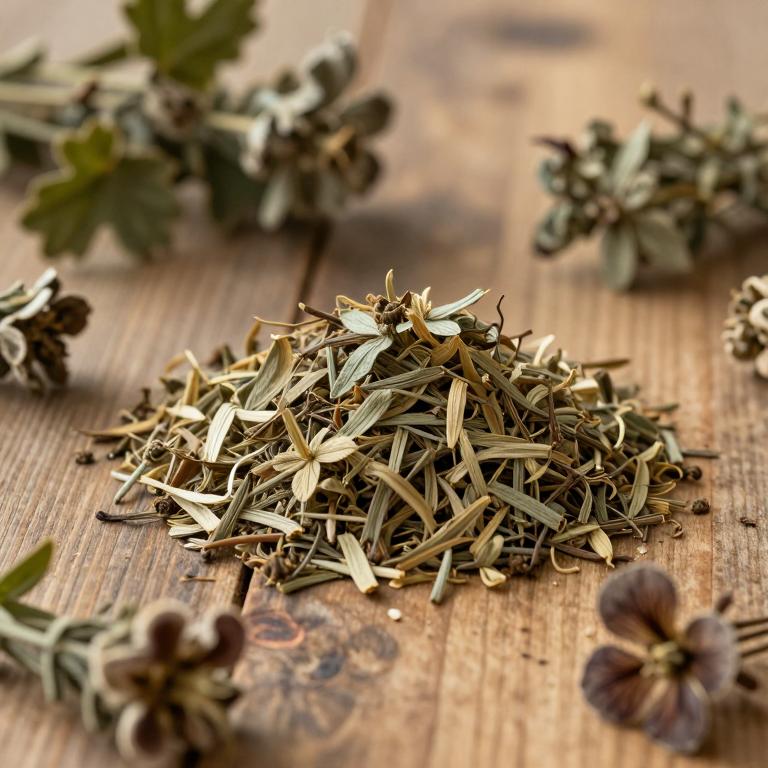
Geranium niveum, scientifically known as Geranium niveum, is a distinctive medicinal herb valued for its unique therapeutic properties. Often characterized by its delicate white blooms, this plant holds significant importance in traditional herbal medicine. It is widely studied for its potential bioactive compounds and various health-promoting medicinal applications.
- Family
- Geraniaceae
- Native range
- Northern America
- Parts used
- Root
- Common names
- Not available
- Scientific synonyms
- Not available
Names and Synonyms
Scientific Names
Accepted name
Geranium niveumSources: Wikidata
Taxonomical Classification
This plant belongs to the kingdom Plantae and the phylum Streptophyta. Within the class Equisetopsida and subclass Magnoliidae, it is categorized under the order Geraniales and the family Geraniaceae. Finally, it is classified under the genus Geranium.
| Rank | Classification |
|---|---|
| Kingdom | Plantae |
| Phylum | Streptophyta |
| Class | Equisetopsida |
| Subclass | Magnoliidae |
| Order | Geraniales |
| Family | Geraniaceae |
| Genus | Geranium |
Sources: The World Checklist of Vascular Plants (WCVP)
Distribution
This plant exhibits a specific geographical distribution within the country of Mexico. It can be found growing in the diverse landscapes of Northeast Mexico. Additionally, its presence extends into the regions of Northwest Mexico. These distinct areas represent the primary habitats where the species is naturally located. Consequently, its range is characterized by these two specific Mexican territories.
| Region | Area |
|---|---|
| Mexico | Mexico Northeast |
| Mexico | Mexico Northwest |
Sources: The World Checklist of Vascular Plants (WCVP)
Botanical Identification
Morphology
The morphology of Geranium niveum is characterized by its growth form as a herb, exhibiting a non-woody structure throughout its vegetative body. This plant is primarily terrestrial in its ecological habit, lacking aquatic or semiaquatic adaptations, and it does not function as an epiphyte. In terms of its structural support, it is classified as a self-supporting plant rather than an obligatory or facultative climber, such as a liana or vine. Furthermore, the species is an independent organism, showing no parasitic tendencies toward host plants.
- Aquatic :
- terrestrial
- Climber :
- self-supporting
- Epiphyte :
- terrestrial
- Growth form :
- herb
- Parasite :
- independent
- Woodiness :
- non-woody
Sources: Global Inventory of Floras and Traits (GIFT)
Plant Parts
Geranium niveum has 1 reported plant parts identified across 1 scientific publications and several other databases that are studied for medicinal purposes. The most consistently reported plant part include root.
| Plant part | Supporting sources | Consensus |
|---|---|---|
| Root | 1 supporting sources | ★☆☆☆☆ |
Root
- Journal of agricultural and food chemistry
Chemicals
Geranium niveum has 4 reported phytochemicals identified across 1 scientific publications and several other databases. The most consistently reported chemicals include GERANIN D, GERANIN A, GERANIN C, Proanthocyanidins.
| Chemical | Supporting sources | Consensus |
|---|---|---|
| GERANIN D | 2 supporting sources | ★☆☆☆☆ |
| GERANIN A | 1 supporting sources | ★☆☆☆☆ |
| GERANIN C | 1 supporting sources | ★☆☆☆☆ |
| Proanthocyanidins | 1 supporting sources | ★☆☆☆☆ |
GERANIN D
- Planta medica
- Journal of agricultural and food chemistry
GERANIN A
- Journal of agricultural and food chemistry
GERANIN C
- Planta medica
Proanthocyanidins
- Journal of agricultural and food chemistry
Activities
Geranium niveum has 5 reported activities identified across 1 scientific publications and several other databases. The most consistently reported activities include Antibacterial, Antiinflammatory, Antioxidant, Antiprotozoal, Antiviral.
| Activity | Supporting sources | Consensus |
|---|---|---|
| Antibacterial | 1 supporting sources | ★☆☆☆☆ |
| Antiinflammatory | 1 supporting sources | ★☆☆☆☆ |
| Antioxidant | 1 supporting sources | ★☆☆☆☆ |
| Antiprotozoal | 1 supporting sources | ★☆☆☆☆ |
| Antiviral | 1 supporting sources | ★☆☆☆☆ |
Antibacterial
- Journal of agricultural and food chemistry
Antiinflammatory
- Journal of agricultural and food chemistry
Antioxidant
- Journal of agricultural and food chemistry
Antiprotozoal
- Planta medica
Antiviral
- Journal of agricultural and food chemistry
Conditions
Geranium niveum has 3 reported investigations on conditions identified across 1 scientific publications and several other databases. The most consistently reported conditions include Giardia lamblia, fevers, pain.
| Condition | Supporting sources | Consensus |
|---|---|---|
| Giardia lamblia | 1 supporting sources | ★☆☆☆☆ |
| Fevers | 1 supporting sources | ★☆☆☆☆ |
| Pain | 1 supporting sources | ★☆☆☆☆ |
Giardia lamblia
- Planta medica
Fevers
- Journal of agricultural and food chemistry
Pain
- Journal of agricultural and food chemistry