Gentiana crassa subsp. rigescens
Gentiana crassa subsp. rigescens · Accepted scientific name
Scientific literature: Moderate (115 studies) · ★★★☆☆
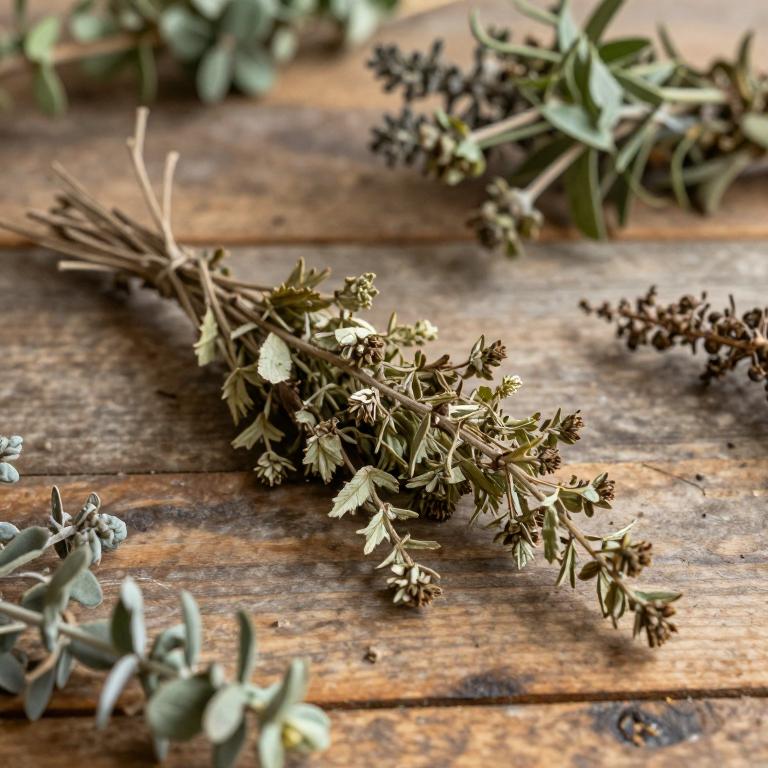
, scientifically known as Gentiana crassa subsp. rigescens, is a specialized medicinal perennial native to high-altitude alpine regions. Renowned for its potent bitter compounds, this subspecies is traditionally utilized in herbal medicine to support digestive health, stimulate appetite, and alleviate various gastrointestinal ailments through its unique bioactive properties.
- Family
- Gentianaceae
- Native range
- Asia-Temperate
- Parts used
- Root · Leaf
- Common names
- Not available
- Scientific synonyms
- Gentianodes Rigescens · Dasystephana Rigescens · 3 more
Names and Synonyms
Scientific Names
Accepted name
Gentiana crassa subsp. rigescensSynonyms
- Gentianodes rigescens
- Dasystephana rigescens
- Gentiana rigescens
- Gentiana esquirolii
- Gentiana rigescens var. stictantha
Sources: Wikidata
Taxonomical Classification
This plant belongs to the kingdom Plantae and is classified within the phylum Streptophyta and class Equisetopsida. It is further categorized under the subclass Magnoliidae and the order Gentianales. Finally, it is a member of the family Gentianaceae and falls under the genus Gentiana.
| Rank | Classification |
|---|---|
| Kingdom | Plantae |
| Phylum | Streptophyta |
| Class | Equisetopsida |
| Subclass | Magnoliidae |
| Order | Gentianales |
| Family | Gentianaceae |
| Genus | Gentiana |
Sources: The World Checklist of Vascular Plants (WCVP)
Distribution
This plant exhibits a specific geographical distribution across parts of East and Southeast Asia. Within China, its presence is primarily concentrated in the South-Central regions. Moving into the Indo-China peninsula, the species can also be found in Myanmar. Additionally, it occupies habitats within the territory of Vietnam. These locations highlight the plant's range across diverse mountainous or subtropical landscapes.
| Region | Area |
|---|---|
| China | China South-Central |
| Indo-China | Myanmar |
| Indo-China | Vietnam |
Sources: The World Checklist of Vascular Plants (WCVP)
Plant Parts
Gentiana crassa subsp. rigescens has 4 reported plant parts identified across 9 scientific publications and several other databases that are studied for medicinal purposes. The most consistently reported plant part include root, leaf, rhizome, stem.
| Plant part | Supporting sources | Consensus |
|---|---|---|
| Root | 5 supporting sources | ★★★☆☆ |
| Leaf | 2 supporting sources | ★☆☆☆☆ |
| Rhizome | 1 supporting sources | ★☆☆☆☆ |
| Stem | 1 supporting sources | ★☆☆☆☆ |
Root
- Botanical studies
- Journal of analytical methods in chemistry
- Journal of natural products
- International journal of molecular sciences
- Molecules (Basel, Switzerland)
Leaf
- Botanical studies
- Molecules (Basel, Switzerland)
Rhizome
- Molecules (Basel, Switzerland)
Stem
- Molecules (Basel, Switzerland)
Chemicals
Gentiana crassa subsp. rigescens has 31 reported phytochemicals identified across 9 scientific publications and several other databases. The most consistently reported chemicals include Gentiopicroside, Sweroside, Swertiamarin, Loganic acid, Flavonoids.
| Chemical | Supporting sources | Consensus |
|---|---|---|
| Gentiopicroside | 10 supporting sources | ★★★★★ |
| Sweroside | 7 supporting sources | ★★★★☆ |
| Swertiamarin | 7 supporting sources | ★★★★☆ |
| Loganic acid | 6 supporting sources | ★★★☆☆ |
| Flavonoids | 3 supporting sources | ★★☆☆☆ |
| CA | 2 supporting sources | ★☆☆☆☆ |
| CU | 2 supporting sources | ★☆☆☆☆ |
| FE | 2 supporting sources | ★☆☆☆☆ |
| Iridoids | 2 supporting sources | ★☆☆☆☆ |
| MG | 2 supporting sources | ★☆☆☆☆ |
Gentiopicroside
- Botanical studies
- Journal of analytical methods in chemistry
- Frontiers in plant science
- Frontiers in chemistry
- International journal of molecular sciences
View 5 additional sources
- Zhongguo Zhong yao za zhi = Zhongguo zhongyao zazhi = China journal of Chinese materia medica
- Journal of natural medicines
- Chemistry & biodiversity
- Biomedical chromatography : BMC
- Molecules (Basel, Switzerland)
Sweroside
- Journal of analytical methods in chemistry
- Frontiers in plant science
- Frontiers in chemistry
- Zhongguo Zhong yao za zhi = Zhongguo zhongyao zazhi = China journal of Chinese materia medica
- Biomedical chromatography : BMC
View 2 additional sources
- Molecules (Basel, Switzerland)
- Chemistry & biodiversity
Swertiamarin
- Journal of analytical methods in chemistry
- Frontiers in plant science
- Frontiers in chemistry
- Zhongguo Zhong yao za zhi = Zhongguo zhongyao zazhi = China journal of Chinese materia medica
- Biomedical chromatography : BMC
View 2 additional sources
- Molecules (Basel, Switzerland)
- Chemistry & biodiversity
Loganic acid
- Journal of analytical methods in chemistry
- Frontiers in chemistry
- Zhongguo Zhong yao za zhi = Zhongguo zhongyao zazhi = China journal of Chinese materia medica
- Biomedical chromatography : BMC
- Chemistry & biodiversity
View 1 additional sources
- Frontiers in plant science
Flavonoids
- Botanical studies
- Biomedical chromatography : BMC
- Chemistry & biodiversity
CA
- Frontiers in plant science
- Biological trace element research
CU
- Frontiers in plant science
- Biological trace element research
FE
- Frontiers in plant science
- Biological trace element research
Iridoids
- Chemistry & biodiversity
- Journal of food and drug analysis
MG
- Frontiers in plant science
- Biological trace element research
Activities
Gentiana crassa subsp. rigescens has 1 reported activities identified across 9 scientific publications and several other databases. The most consistently reported activities include Choleretic.
| Activity | Supporting sources | Consensus |
|---|---|---|
| Choleretic | 1 supporting sources | ★☆☆☆☆ |
Choleretic
- Molecules (Basel, Switzerland)
Preparations
Gentiana crassa subsp. rigescens has 3 reported preparations identified across 9 scientific publications and several other databases. The most consistently reported preparations include absolute ethyl alcohol extracts, chloroform extracts, water extracts.
| Preparation | Supporting sources | Consensus |
|---|---|---|
| Absolute ethyl alcohol extracts | 1 supporting sources | ★☆☆☆☆ |
| Chloroform extracts | 1 supporting sources | ★☆☆☆☆ |
| Water extracts | 1 supporting sources | ★☆☆☆☆ |
Absolute ethyl alcohol extracts
- Guang pu xue yu guang pu fen xi = Guang pu
Chloroform extracts
- Guang pu xue yu guang pu fen xi = Guang pu
Water extracts
- Guang pu xue yu guang pu fen xi = Guang pu