Genista tridentata
Genista tridentata · Accepted scientific name
Scientific literature: Sparse (82 studies) · ★★☆☆☆
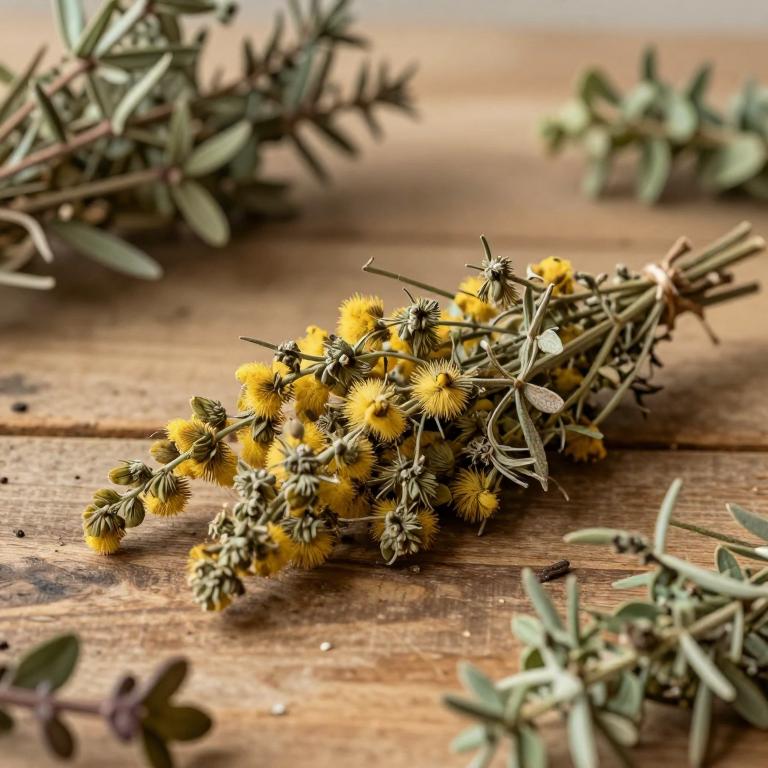
Genista tridentata, scientifically known as Genista tridentata, is a resilient, evergreen shrub native to the Mediterranean region. Characterized by its trifoliate leaves and vibrant yellow blooms, this hardy species is valued in traditional ethnobotany for its potential medicinal properties and its ecological role in stabilizing nutrient-poor, rocky soils.
- Family
- Fabaceae
- Native range
- Europe
- Parts used
- Not available
- Common names
- Not available
- Scientific synonyms
- Chamaespartium Tridentatum · Cytisus Tridentatus · 2 more
Names and Synonyms
Scientific Names
Accepted name
Genista tridentataSynonyms
- Chamaespartium tridentatum
- Cytisus tridentatus
- Genistella tridentata
- Pterospartum tridentatum
Regional and Traditional Names
Spanish:
- Chamaespartium tridentatum
- Pterospartum tridentatum
- Genistella tridentata
- Carquesa
- Carquesa
French:
- Genêt tridenté
Sources: Wikidata, Catalogue of Life
Taxonomical Classification
This plant belongs to the kingdom Plantae and the phylum Streptophyta, specifically classified under the class Equisetopsida and subclass Magnoliidae. Within the order Fabales, it is a member of the Fabaceae family. Finally, it is identified by its genus, Genista.
| Rank | Classification |
|---|---|
| Kingdom | Plantae |
| Phylum | Streptophyta |
| Class | Equisetopsida |
| Subclass | Magnoliidae |
| Order | Fabales |
| Family | Fabaceae |
| Genus | Genista |
Sources: The World Checklist of Vascular Plants (WCVP)
Distribution
This plant is primarily found throughout the Mediterranean region, spanning two distinct continents. In Southwestern Europe, its presence is documented within the countries of Portugal and Spain. Moving across the sea to Northern Africa, the species holds a significant distribution in Algeria. It is also commonly located throughout the territories of Morocco. Finally, the geographical range of this medicinal plant extends to include Tunisia.
| Region | Area |
|---|---|
| Southwestern Europe | Portugal |
| Southwestern Europe | Spain |
| Northern Africa | Algeria |
| Northern Africa | Morocco |
| Northern Africa | Tunisia |
Sources: The World Checklist of Vascular Plants (WCVP)
Botanical Identification
Life history
The life history of Genista tridentata is characterized by its status as a perennial species, allowing it to persist in its environment through multiple growing seasons. As a long-lived woody shrub, it establishes itself within its habitat and undergoes seasonal cycles of growth, flowering, and seed production. This perennial nature enables the plant to develop a robust root system and woody structure over time, providing stability and resilience against environmental fluctuations. Throughout its lifespan, the plant follows a developmental trajectory that involves vegetative maturation followed by reproductive phases, ensuring its continued presence and contribution to the ecosystem via successive generations of seeds.
- Lifecycle :
- perennial
Morphology
The morphology of Genista tridentata is characterized by its growth form as a woody shrub, typically reaching an average height of approximately 1 meter. As a terrestrial species, it thrives in land-based environments and functions as an independent organism, neither acting as a parasite nor an epiphyte. Structurally, the plant is self-supporting rather than behaving as a climber, liana, or vine, maintaining a stable upright posture through its woody composition.
- Aquatic :
- terrestrial
- Climber :
- self-supporting
- Epiphyte :
- terrestrial
- Growth form :
- shrub
- Parasite :
- independent
- Plant height mean:
- 1 m
- Woodiness :
- woody
Physiology
The physiology of Genista tridentata is characterized by a metabolic framework that utilizes the C3 photosynthetic pathway, a process where carbon dioxide is fixed directly into a three-carbon compound during the initial stage of the Calvin cycle. This metabolic strategy involves the enzyme RuBisCO facilitating the carboxylation of ribulose-1,5-bisphosphate within the mesophyll cells. As a member of the Fabaceae family, its physiological processes are further defined by a symbiotic relationship with nitrogen-fixing bacteria, typically Rhizobium, housed within specialized root nodules. This nitrogen fixation is an energy-intensive process that integrates closely with the plant's carbon assimilation, providing the necessary nutrients for protein synthesis and structural growth. Additionally, its physiological adaptations include efficient water regulation and nutrient uptake mechanisms tailored to its specific ecological niche, supporting its metabolic demands through the steady production of carbohydrates derived from its C3 photosynthetic activity.
- Photosynthetic pathway :
- C3
Reproduction
The reproduction of Genista tridentata is characterized by specific seed and dispersal mechanisms tailored to its survival. The plant produces seeds with a uniform mass, where the mean, maximum, and minimum values are all recorded at 0.0042 g, indicating a highly consistent seed size. The fruit produced by this species is categorized as dry, rather than fleshy, which plays a critical role in its reproductive cycle. In terms of dispersal, the plant utilizes an autochorous syndrome, meaning it relies on internal mechanisms for seed dispersal. This reproductive strategy is further defined by its autochorous nature, facilitating the distribution of its seeds within its environment.
- Dispersal syndrome :
- autochorous
- Fruit dryness :
- dry
- Seed mass mean:
- 0.0042 g
Sources: Global Inventory of Floras and Traits (GIFT)
Chemicals
Genista tridentata has 6 reported phytochemicals identified across 0 scientific publications and several other databases. The most consistently reported chemicals include 1-OCTEN-3-OL, Linalool, TNF alpha, fructose, genistein.
| Chemical | Supporting sources | Consensus |
|---|---|---|
| 1-OCTEN-3-OL | 1 supporting sources | ★☆☆☆☆ |
| Linalool | 1 supporting sources | ★☆☆☆☆ |
| TNF alpha | 1 supporting sources | ★☆☆☆☆ |
| fructose | 1 supporting sources | ★☆☆☆☆ |
| genistein | 1 supporting sources | ★☆☆☆☆ |
| n-Nonanal | 1 supporting sources | ★☆☆☆☆ |
1-OCTEN-3-OL
- Journal of nematology
Linalool
- Journal of nematology
TNF alpha
- Journal of ethnopharmacology
fructose
- International journal of food science
genistein
- Dr. Duke
n-Nonanal
- Journal of nematology
Activities
Genista tridentata has 73 reported activities identified across 0 scientific publications and several other databases. The most consistently reported activities include Antioxidant, Abortifacient, Aldose-Reductase-Inhibitor, Alpha-Reductase-Inhibitor, Antiaggregant.
| Activity | Supporting sources | Consensus |
|---|---|---|
| Antioxidant | 2 supporting sources | ★☆☆☆☆ |
| Abortifacient | 1 supporting sources | ★☆☆☆☆ |
| Aldose-Reductase-Inhibitor | 1 supporting sources | ★☆☆☆☆ |
| Alpha-Reductase-Inhibitor | 1 supporting sources | ★☆☆☆☆ |
| Antiaggregant | 1 supporting sources | ★☆☆☆☆ |
| Antiangiogenic | 1 supporting sources | ★☆☆☆☆ |
| Antiatherosclerotic | 1 supporting sources | ★☆☆☆☆ |
| Anticancer (Breast) | 1 supporting sources | ★☆☆☆☆ |
| Anticarcinomic (Breast) | 1 supporting sources | ★☆☆☆☆ |
| Anticlimacteric | 1 supporting sources | ★☆☆☆☆ |
Antioxidant
- Dr. Duke
- Molecules (Basel, Switzerland)
Abortifacient
- Dr. Duke
Aldose-Reductase-Inhibitor
- Dr. Duke
Alpha-Reductase-Inhibitor
- Dr. Duke
Antiaggregant
- Dr. Duke
Antiangiogenic
- Dr. Duke
Antiatherosclerotic
- Dr. Duke
Anticancer (Breast)
- Dr. Duke
Anticarcinomic (Breast)
- Dr. Duke
Anticlimacteric
- Dr. Duke
Conditions
Genista tridentata has 1 reported investigations on conditions identified across 0 scientific publications and several other databases. The most consistently reported conditions include antioxidant.
| Condition | Supporting sources | Consensus |
|---|---|---|
| Antioxidant | 1 supporting sources | ★☆☆☆☆ |
Antioxidant
- Molecules (Basel, Switzerland)
Preparations
Genista tridentata has 3 reported preparations identified across 0 scientific publications and several other databases. The most consistently reported preparations include infusions, essential oils, hydroethanolic extracts.
| Preparation | Supporting sources | Consensus |
|---|---|---|
| Infusions | 2 supporting sources | ★☆☆☆☆ |
| Essential oils | 1 supporting sources | ★☆☆☆☆ |
| Hydroethanolic extracts | 1 supporting sources | ★☆☆☆☆ |
Infusions
- Food chemistry
- Molecules (Basel, Switzerland)
Essential oils
- Journal of nematology
Hydroethanolic extracts
- Molecules (Basel, Switzerland)