Madeira Broom
Genista tenera · Accepted scientific name
Scientific literature: Very Sparse (4 studies) · ★☆☆☆☆
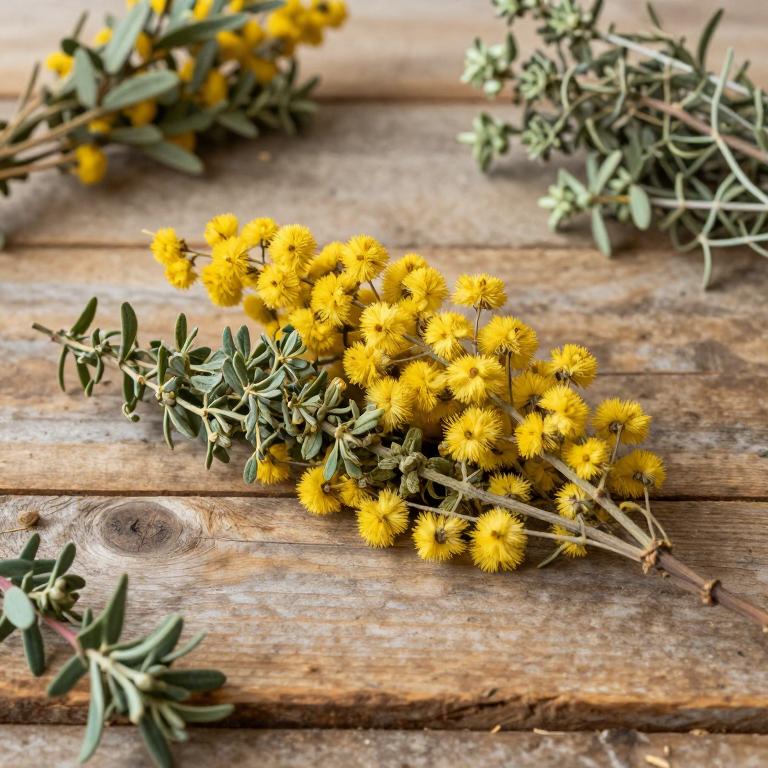
Madeira Broom, scientifically known as Genista tenera, is an endemic shrub native to the Macaronesian islands. Renowned for its vibrant yellow blossoms, this resilient plant plays a vital role in stabilizing volcanic soils. While primarily ornamental, its unique biological properties offer fascinating potential for exploring traditional Mediterranean medicinal applications.
- Family
- Fabaceae
- Native range
- Africa
- Parts used
- Not available
- Common names
- Madeira Broom
- Scientific synonyms
- Telinaria Congesta · Cytisus Congestus · 7 more
Names and Synonyms
Common Names
- Madeira Broom
Scientific Names
Accepted name
Genista teneraSynonyms
- Telinaria congesta
- Cytisus congestus
- Telinaria virgata
- Cytisus tener
- Spartium virgatum
- Genista congesta
- Galactia tenera
- Teline congesta
- Spartium congestum
Sources: Wikidata, Catalogue of Life
Taxonomical Classification
This plant belongs to the kingdom Plantae within the phylum Streptophyta and the class Equisetopsida. It is further classified under the subclass Magnoliidae and the order Fabales. Ultimately, it resides in the family Fabaceae under the genus Genista.
| Rank | Classification |
|---|---|
| Kingdom | Plantae |
| Phylum | Streptophyta |
| Class | Equisetopsida |
| Subclass | Magnoliidae |
| Order | Fabales |
| Family | Fabaceae |
| Genus | Genista |
Sources: The World Checklist of Vascular Plants (WCVP)
Distribution
This plant is specifically recognized for its limited and unique geographical distribution. It is found exclusively within the Macaronesian region, which is a volcanic archipelago in the Atlantic Ocean. More precisely, its natural habitat is restricted to the island of Madeira. This highly localized range suggests that the species is an endemic element of the island's unique flora. Consequently, the survival of Genista tenera is closely tied to the specific environmental conditions provided by its Madeiran home.
| Region | Area |
|---|---|
| Macaronesia | Madeira |
Sources: The World Checklist of Vascular Plants (WCVP)
Botanical Identification
Morphology
The morphology of Genista tenera is characterized by its growth form as a shrub, exhibiting a perennial and structural habit. It possesses a distinctly woody nature, with its stems developing permanent, lignified tissue that provides the necessary rigidity for its shrubby architecture.
- Growth form :
- shrub
- Woodiness :
- woody
Physiology
The physiology of Genista tenera is characterized by its efficient metabolic processes and adaptation to its specific environmental niche. A fundamental aspect of its metabolic framework is its photosynthetic pathway, which follows the C3 mechanism; this involves the direct fixation of atmospheric carbon dioxide via the enzyme RuBisCO during the Calvin cycle, a trait typical of most woody legumes in the Fabaceae family. This C3 photosynthetic pathway dictates the plant's water-use efficiency and gas exchange patterns, influencing how it manages transpiration and carbon assimilation under varying light intensities and temperature gradients. Furthermore, its physiological regulation is integrated with nitrogen-fixing capabilities through symbiotic relationships with rhizobia, which complements its carbon metabolism by providing the necessary nitrogenous compounds for protein synthesis and enzymatic functions.
- Photosynthetic pathway :
- C3
Reproduction
The reproduction of Genista tenera is centered on the production of small, specialized seeds that exhibit specific morphological variations in weight. The seed mass within this species is characterized by a relatively low range, with a recorded mean seed mass of 0.00531 g. Individual seeds demonstrate a degree of variability, reaching a maximum mass of 0.0076 g and a minimum mass of 0.00302 g. This distribution of seed weight plays a critical role in the plant's dispersal and establishment strategies within its natural habitat.
- Seed mass max:
- 0.0076 g
- Seed mass mean:
- 0.00531 g
- Seed mass min:
- 0.00302 g
Sources: Global Inventory of Floras and Traits (GIFT)
Chemicals
Genista tenera has 1 reported phytochemicals identified across 0 scientific publications and several other databases. The most consistently reported chemicals include Isoflavones.
| Chemical | Supporting sources | Consensus |
|---|---|---|
| Isoflavones | 1 supporting sources | ★☆☆☆☆ |
Isoflavones
- Rapid communications in mass spectrometry : RCM
Conditions
Genista tenera has 1 reported investigations on conditions identified across 0 scientific publications and several other databases. The most consistently reported conditions include antidiabetic.
| Condition | Supporting sources | Consensus |
|---|---|---|
| Antidiabetic | 1 supporting sources | ★☆☆☆☆ |
Antidiabetic
- Electrophoresis
Preparations
Genista tenera has 2 reported preparations identified across 0 scientific publications and several other databases. The most consistently reported preparations include ethanol extract of its powdered aerial parts, infusion of the aerial parts.
| Preparation | Supporting sources | Consensus |
|---|---|---|
| Ethanol extract of its powdered aerial parts | 1 supporting sources | ★☆☆☆☆ |
| Infusion of the aerial parts | 1 supporting sources | ★☆☆☆☆ |
Ethanol extract of its powdered aerial parts
- Rapid communications in mass spectrometry : RCM
Infusion of the aerial parts
- Electrophoresis