Genista sagittalis
Genista sagittalis · Accepted scientific name
Scientific literature: Sparse (73 studies) · ★★☆☆☆
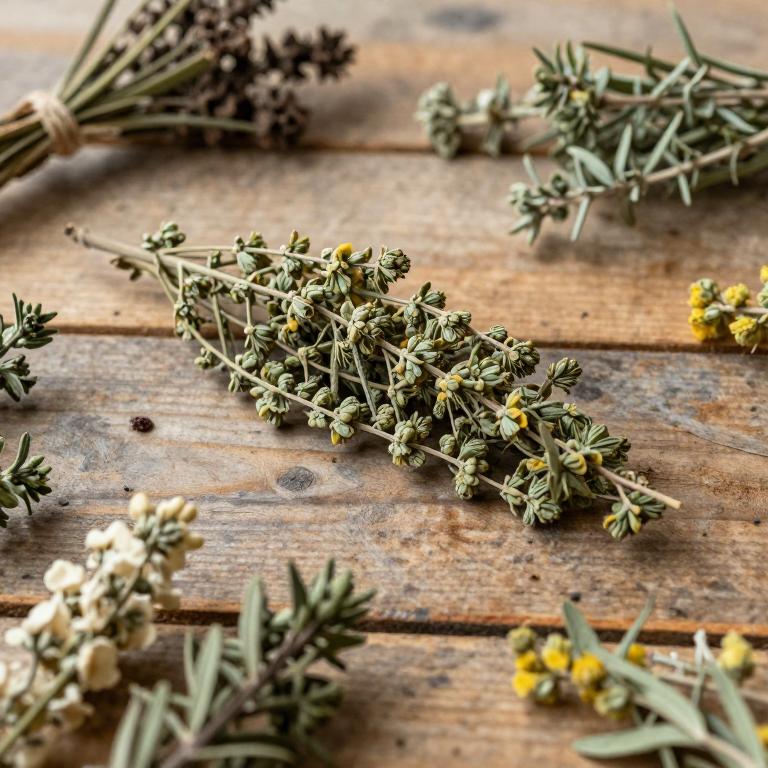
Genista sagittalis, scientifically known as Genista sagittalis, is a distinctive perennial shrub belonging to the Fabaceae family. Native to the Mediterranean regions, this plant is characterized by its vibrant yellow blooms and unique foliage. It holds significant interest in ethnobotany due to its diverse bioactive compounds and traditional medicinal applications.
- Family
- Not available
- Native range
- Europe
- Parts used
- Not available
- Common names
- Not available
- Scientific synonyms
- Not available
Names and Synonyms
Scientific Names
Accepted name
Genista sagittalisDistribution
This plant is primarily distributed throughout various regions of Middle Europe. It can be found growing within the borders of Austria and Germany. Additionally, its presence extends to the western parts of the continent, including Belgium and the Netherlands. The species is also documented across the territory of Czechia-Slovakia. Together, these locations define its specific geographical range in the central part of Europe.
| Region | Area |
|---|---|
| Middle Europe | Austria |
| Middle Europe | Belgium |
| Middle Europe | Czechia-Slovakia |
| Middle Europe | Germany |
| Middle Europe | Netherlands |
| Middle Europe | Poland |
| Middle Europe | Switzerland |
| Southwestern Europe | France |
| Southwestern Europe | Spain |
| Southeastern Europe | Albania |
Sources: The World Checklist of Vascular Plants (WCVP)
Botanical Identification
Life history
The life history of Genista sagittalis is characterized by its nature as a perennial plant, ensuring its long-term presence within its ecological niche. It adopts a chamaephyte life form, maintaining its photosynthetic structures close to the soil surface, which is further defined by its classification as a chamaephyte under both life form assessments. This species exhibits an evergreen deciduousness, retaining its foliage throughout much of its life cycle rather than shedding it seasonally.
- Deciduousness :
- evergreen
- Life form :
- chamaephyte
- Lifecycle :
- perennial
Morphology
The morphology of Genista sagittalis is characterized by its stature as a small, woody subshrub that typically reaches a height ranging from a minimum of 0.1 m to a maximum of 0.25 m, with an average height of approximately 0.2 m. As a self-supporting plant, it does not exhibit climbing behavior and functions as an independent organism rather than a parasite or epiphyte. Its growth form is categorized as both a shrub and a subshrub, displaying distinct woodiness in its structure. Furthermore, the plant is strictly terrestrial in its habitat, showing no aquatic or semiaquatic tendencies.
- Aquatic :
- terrestrial
- Climber :
- self-supporting
- Epiphyte :
- terrestrial
- Growth form :
- shrub
- Growth form :
- subshrub
- Parasite :
- independent
- Plant height max:
- 0.25 m
- Plant height mean:
- 0.2 m
- Plant height min:
- 0.1 m
- Woodiness :
- woody
Physiology
The physiology of Genista sagittalis is characterized by a C3 photosynthetic pathway, which dictates its carbon fixation processes and metabolic efficiency under typical environmental conditions. This plant exhibits a Specific Leaf Area (SLA) with a mean value of 257.8 cm²/g, reflecting its leaf structural properties and its strategy for balancing light interception with water conservation and biomass investment.
- Photosynthetic pathway :
- C3
- Specific Leaf Area (SLA) mean:
- 257.8 cm²/g
Reproduction
The reproduction of Genista sagittalis is characterized by a biotic pollination syndrome, specifically relying on insects to facilitate the transfer of pollen. The species exhibits a lack of self-fertilization, meaning that the absence of selfing necessitates cross-pollination to ensure reproductive success. Once fertilization has occurred, the plant utilizes an autochorous dispersal syndrome, employing mechanisms to disperse its seeds internally or through self-release. The resulting seeds are relatively small, with a mean seed mass of 0.0025 g.
- Dispersal syndrome :
- autochorous
- Pollination syndrome :
- insect
- Pollination syndrome :
- biotic
- Seed mass mean:
- 0.0025 g
- Self fertilization :
- absent
Sources: Global Inventory of Floras and Traits (GIFT)
Chemicals
Genista sagittalis has 1 reported phytochemicals identified across 0 scientific publications and several other databases. The most consistently reported chemicals include genistein.
| Chemical | Supporting sources | Consensus |
|---|---|---|
| genistein | 1 supporting sources | ★☆☆☆☆ |
genistein
- Dr. Duke
Activities
Genista sagittalis has 72 reported activities identified across 0 scientific publications and several other databases. The most consistently reported activities include Abortifacient, Aldose-Reductase-Inhibitor, Alpha-Reductase-Inhibitor, Antiaggregant, Antiangiogenic.
| Activity | Supporting sources | Consensus |
|---|---|---|
| Abortifacient | 1 supporting sources | ★☆☆☆☆ |
| Aldose-Reductase-Inhibitor | 1 supporting sources | ★☆☆☆☆ |
| Alpha-Reductase-Inhibitor | 1 supporting sources | ★☆☆☆☆ |
| Antiaggregant | 1 supporting sources | ★☆☆☆☆ |
| Antiangiogenic | 1 supporting sources | ★☆☆☆☆ |
| Antiatherosclerotic | 1 supporting sources | ★☆☆☆☆ |
| Anticancer (Breast) | 1 supporting sources | ★☆☆☆☆ |
| Anticarcinomic (Breast) | 1 supporting sources | ★☆☆☆☆ |
| Anticlimacteric | 1 supporting sources | ★☆☆☆☆ |
| Antiendoccytotic | 1 supporting sources | ★☆☆☆☆ |
Abortifacient
- Dr. Duke
Aldose-Reductase-Inhibitor
- Dr. Duke
Alpha-Reductase-Inhibitor
- Dr. Duke
Antiaggregant
- Dr. Duke
Antiangiogenic
- Dr. Duke
Antiatherosclerotic
- Dr. Duke
Anticancer (Breast)
- Dr. Duke
Anticarcinomic (Breast)
- Dr. Duke
Anticlimacteric
- Dr. Duke
Antiendoccytotic
- Dr. Duke