Genista halacsyi
Genista halacsyi · Accepted scientific name
Scientific literature: Very Sparse (4 studies) · ★☆☆☆☆
, scientifically known as Genista halacsyi, is a distinctive medicinal shrub valued for its therapeutic potential. Belonging to the Fabaceae family, this plant contains bioactive alkaloids traditionally used in folk medicine. Researchers are currently exploring its phytochemical properties to understand its role in treating inflammatory and various physiological conditions.
- Family
- Fabaceae
- Native range
- Europe
- Parts used
- Not available
- Common names
- Not available
- Scientific synonyms
- Not available
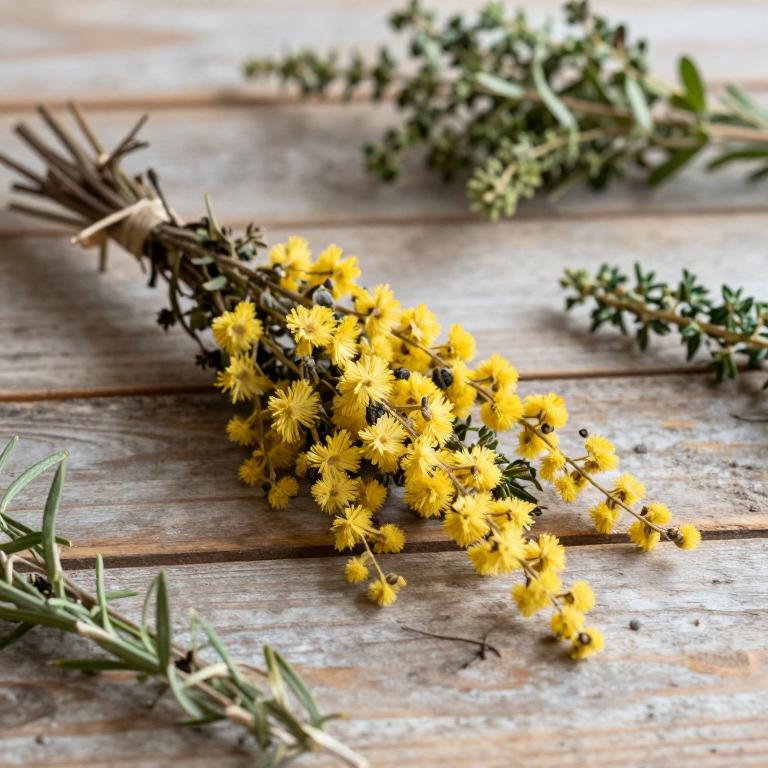
Names and Synonyms
Scientific Names
Accepted name
Genista halacsyiSources: Wikidata
Taxonomical Classification
This plant belongs to the kingdom Plantae and the phylum Streptophyta, placing it within the class Equisetopsida and subclass Magnoliidae. It is further classified under the order Fabales and the family Fabaceae, specifically within the genus Genista. As a member of the species Genista halacsyi, it follows this distinct hierarchical lineage.
| Rank | Classification |
|---|---|
| Kingdom | Plantae |
| Phylum | Streptophyta |
| Class | Equisetopsida |
| Subclass | Magnoliidae |
| Order | Fabales |
| Family | Fabaceae |
| Genus | Genista |
Sources: The World Checklist of Vascular Plants (WCVP)
Distribution
This plant, known scientifically as Genista halacsyi, possesses a very limited and specific geographical range. Its natural distribution is confined primarily to the southeastern region of Europe. Within this area, the species is specifically found inhabiting the landscapes of Greece. Because its presence is restricted to such a localized territory, it is considered a regional specialist. Consequently, the plant's survival is closely tied to the unique environmental conditions found within the Greek peninsula.
| Region | Area |
|---|---|
| Southeastern Europe | Greece |
Sources: The World Checklist of Vascular Plants (WCVP)
Botanical Identification
Life history
The life history of Genista halacsyi is characterized by its specific growth habit and survival strategy, classified under the life form categories of both chamaephyte and chamaephyte. As a chamaephyte, the plant maintains its perennating buds at or just above the soil surface, a strategy that allows it to withstand varying environmental conditions by protecting its regenerative tissues close to the ground. This growth form ensures its persistence across seasonal cycles, positioning it within a structural niche that balances accessibility to light with resilience against external stressors.
- Life form :
- chamaephyte
Morphology
The morphology of Genista halacsyi is characterized by its structural adaptation to diverse environmental niches, exhibiting a growth habit that ranges from aquatic and semiaquatic to terrestrial. As a member of the Fabaceae family, it typically presents as a woody shrub or subshrub with slender, often upright or ascending branches that may show slight flexibility to withstand moisture-heavy environments. The foliage consists of small, typically trifoliate or simple leaves that are adapted to its varying habitats, transitioning from submerged or floating forms in aquatic settings to more robust, leathery textures in terrestrial conditions. The reproductive structures consist of characteristic pea-like flowers, often bright in color, borne on pedicels that emerge from the axils of the leaves. The root system is equally versatile, capable of anchoring in saturated, muddy substrates in semiaquatic zones or developing more extensive lateral networks when situated in purely terrestrial soils.
- Aquatic :
- terrestrial
Sources: Global Inventory of Floras and Traits (GIFT)
Chemicals
Genista halacsyi has 3 reported phytochemicals identified across 0 scientific publications and several other databases. The most consistently reported chemicals include Isoprunetin, daidzein, genistein.
| Chemical | Supporting sources | Consensus |
|---|---|---|
| Isoprunetin | 1 supporting sources | ★☆☆☆☆ |
| daidzein | 1 supporting sources | ★☆☆☆☆ |
| genistein | 1 supporting sources | ★☆☆☆☆ |
Isoprunetin
- PloS one
daidzein
- PloS one
genistein
- PloS one