Genista corsica
Genista corsica · Accepted scientific name
Scientific literature: Very Sparse (12 studies) · ★☆☆☆☆
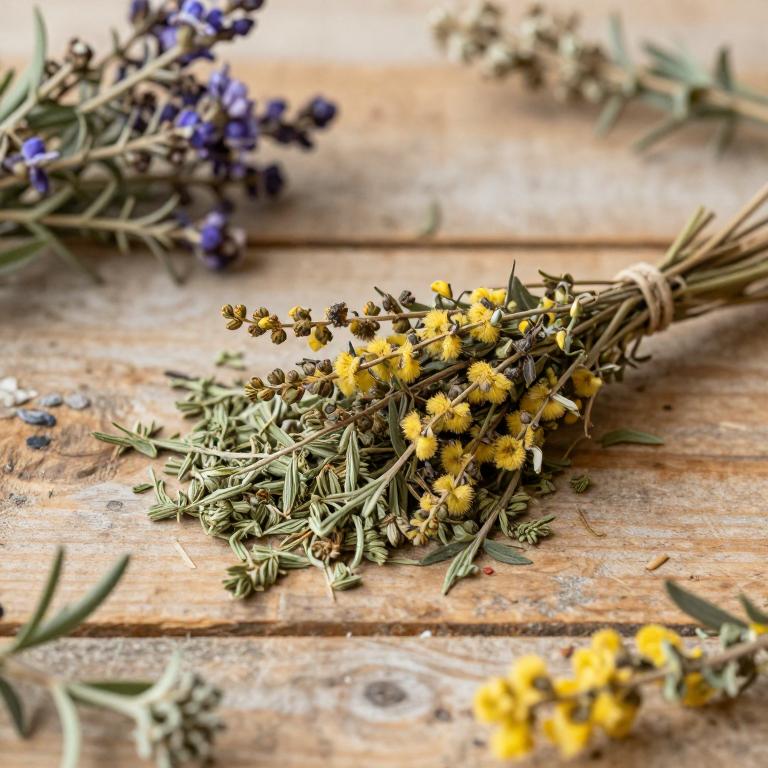
Genista corsica, scientifically known as Genista corsica, is a resilient shrub native to the Mediterranean landscapes. Renowned for its vibrant yellow blooms, this plant belongs to the Fabaceae family. Historically utilized in traditional herbalism, it offers unique botanical properties that continue to intrigue researchers studying natural bioactive compounds.
- Family
- Fabaceae
- Native range
- Europe
- Parts used
- Not available
- Common names
- Not available
- Scientific synonyms
- Argelasia Corsica · Cytisanthus Corsicus · 2 more
Names and Synonyms
Scientific Names
Accepted name
Genista corsicaSynonyms
- Argelasia corsica
- Cytisanthus corsicus
- Corniola corsica
- Spartium corsicum
Regional and Traditional Names
French:
- genêt de Corse
- genêt de Corse
Sources: Wikidata, Catalogue of Life
Taxonomical Classification
This plant belongs to the kingdom Plantae and the phylum Streptophyta, falling under the class Equisetopsida and subclass Magnoliidae. Within the order Fabales, it is classified under the family Fabaceae and the genus Genista.
| Rank | Classification |
|---|---|
| Kingdom | Plantae |
| Phylum | Streptophyta |
| Class | Equisetopsida |
| Subclass | Magnoliidae |
| Order | Fabales |
| Family | Fabaceae |
| Genus | Genista |
Sources: The World Checklist of Vascular Plants (WCVP)
Distribution
This plant is native to specific regions within Southwestern Europe. Its natural habitat is primarily centered around the Mediterranean islands. Specifically, Genista corsica can be found growing in the territory of Corse. Additionally, its distribution extends to the nearby island of Sardegna. Therefore, the species is geographically restricted to these two distinct locations.
| Region | Area |
|---|---|
| Southwestern Europe | Corse |
| Southwestern Europe | Sardegna |
Sources: The World Checklist of Vascular Plants (WCVP)
Chemicals
Genista corsica has 11 reported phytochemicals identified across 0 scientific publications and several other databases. The most consistently reported chemicals include D-Pinitol, Dihydroisoderrondiol, Isoprunetin, Luteolin 4'-O-beta-glucoside, TAXIFOLIN.
| Chemical | Supporting sources | Consensus |
|---|---|---|
| D-Pinitol | 1 supporting sources | ★☆☆☆☆ |
| Dihydroisoderrondiol | 1 supporting sources | ★☆☆☆☆ |
| Isoprunetin | 1 supporting sources | ★☆☆☆☆ |
| Luteolin 4'-O-beta-glucoside | 1 supporting sources | ★☆☆☆☆ |
| TAXIFOLIN | 1 supporting sources | ★☆☆☆☆ |
| daidzein | 1 supporting sources | ★☆☆☆☆ |
| ficuisoflavone | 1 supporting sources | ★☆☆☆☆ |
| isoderrone | 1 supporting sources | ★☆☆☆☆ |
| luteolin | 1 supporting sources | ★☆☆☆☆ |
| luteolin-7-O-beta-glucoside | 1 supporting sources | ★☆☆☆☆ |
D-Pinitol
- Journal of natural products
Dihydroisoderrondiol
- Journal of natural products
Isoprunetin
- Journal of natural products
Luteolin 4'-O-beta-glucoside
- Journal of natural products
TAXIFOLIN
- Journal of natural products
daidzein
- Journal of natural products
ficuisoflavone
- Journal of natural products
isoderrone
- Journal of natural products
luteolin
- Journal of natural products
luteolin-7-O-beta-glucoside
- Journal of natural products